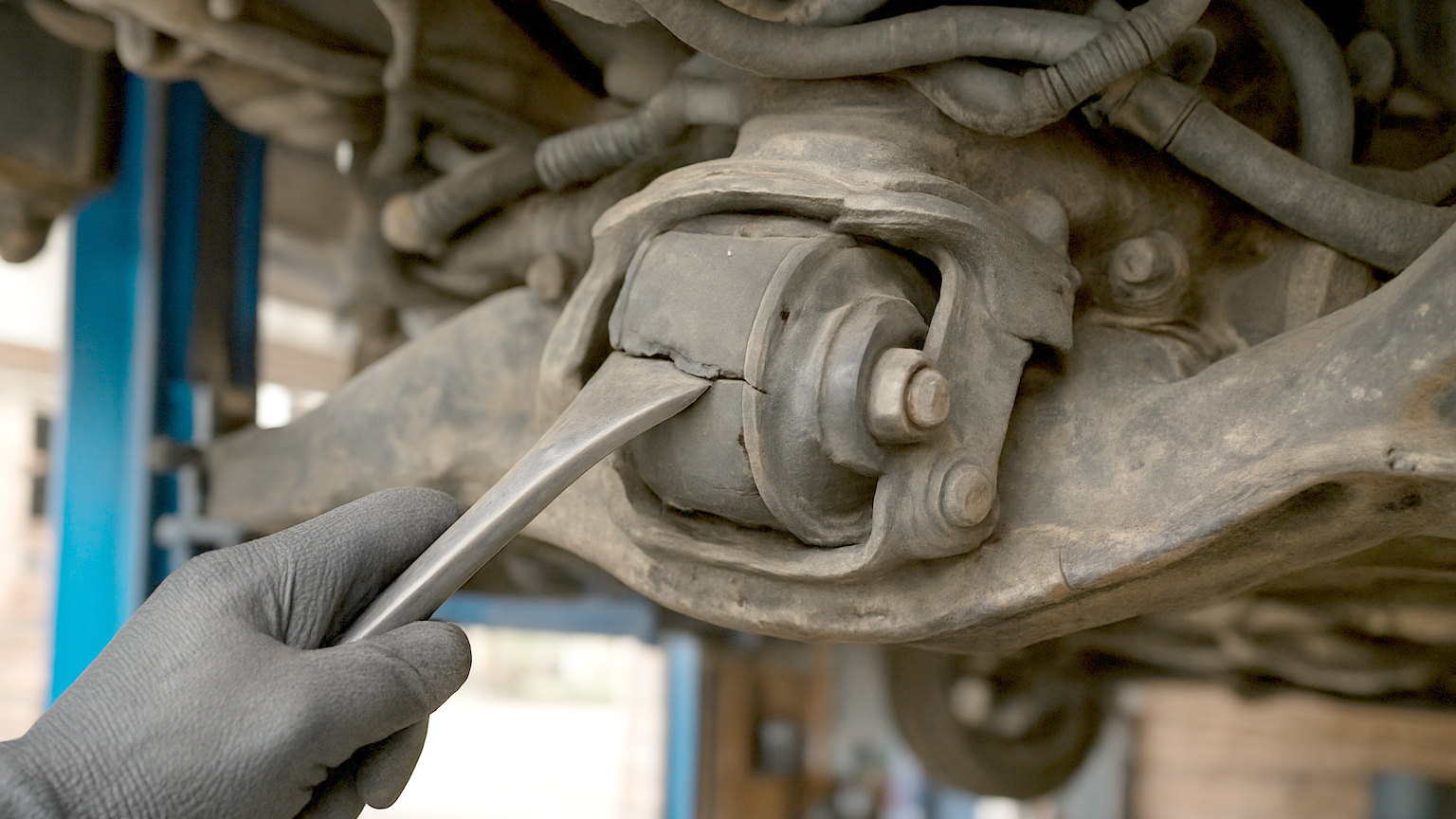
Shock absorbers, more properly dampers, control how quickly the springs compress and rebound. They wear continuously from the day the car is new, and they do so slowly enough that almost nobody notices. That gradual decline is why they are among the most neglected components on any car, and why a fresh set frequently transforms how a vehicle feels.
What is a realistic life?
Between fifty and eighty thousand miles for most cars, with a great deal of variation depending on road surfaces and loads. They rarely fail outright, so there is no obvious moment at which they stop working. Instead, they lose their damping effect progressively until the car is riding on springs that are barely controlled at all.
Why does the wear go unnoticed?
Because it happens over years and the driver adapts to it without realising. Each individual journey feels much like the last. It is only when the car is compared against a fresh example, or a new set is fitted, that the difference becomes obvious. That is exactly why a mileage based check matters more than waiting for symptoms.
What is the bounce test?
Push down firmly on one corner of the car and release it. A healthy damper allows the corner to rise back and settle immediately. One that continues bouncing two or three times has lost its control. It is crude and it will not detect a moderately worn damper, and it reliably identifies one that is genuinely finished.
What are the driving symptoms?
A floating sensation over undulations, the nose diving noticeably under braking, the car feeling unsettled through corners, and a tendency to wander on motorway surfaces. Uneven tyre wear with a scalloped or cupped pattern is another strong indicator, caused by the wheel bouncing rather than staying in contact with the road.
Does it affect braking?
Considerably, which is the safety argument. A damper that cannot keep the tyre pressed against the road surface means intermittent grip, and stopping distances lengthen measurably on anything other than smooth tarmac. The effect is greatest in exactly the conditions where it matters most, which is emergency braking on a poor surface in the wet.
What does a leak mean?
A damper works by forcing oil through valves, so oil on the outside of the body means it has lost the ability to do that. A slight misting is usually acceptable and a wet body with dirt stuck to it is not. Visible leakage is an MOT failure item and it is the clearest possible evidence that replacement is due.
Should they be replaced in pairs?
Always, across an axle. Fitting one new damper alongside a worn one produces different behaviour on each side of the car, which affects handling and braking stability. Replacing all four at once is ideal where the mileage justifies it, though front and rear pairs can reasonably be done separately if budget requires.
Is it worth doing preventatively?
On a car being kept, frequently. The improvement in ride, handling and braking is more noticeable than most owners expect, and it protects tyres from the cupped wear that worn dampers cause. Having them assessed at around sixty thousand miles, rather than waiting for a failure, is the sensible approach for a component that never announces itself.
Are coil springs part of the same job?
Not necessarily, and they are worth inspecting while the work is being done. Springs corrode and break, usually near the bottom coil where road salt collects, and a broken spring is an immediate MOT failure as well as a handling problem. Since the suspension is already dismantled when dampers are replaced, checking the springs and their top mounts at the same time costs almost nothing extra.
Top mounts in particular wear alongside dampers, and replacing a strut without them frequently produces a knock or a creak that was not there before the work, which is a frustrating outcome after paying for a suspension refresh.