
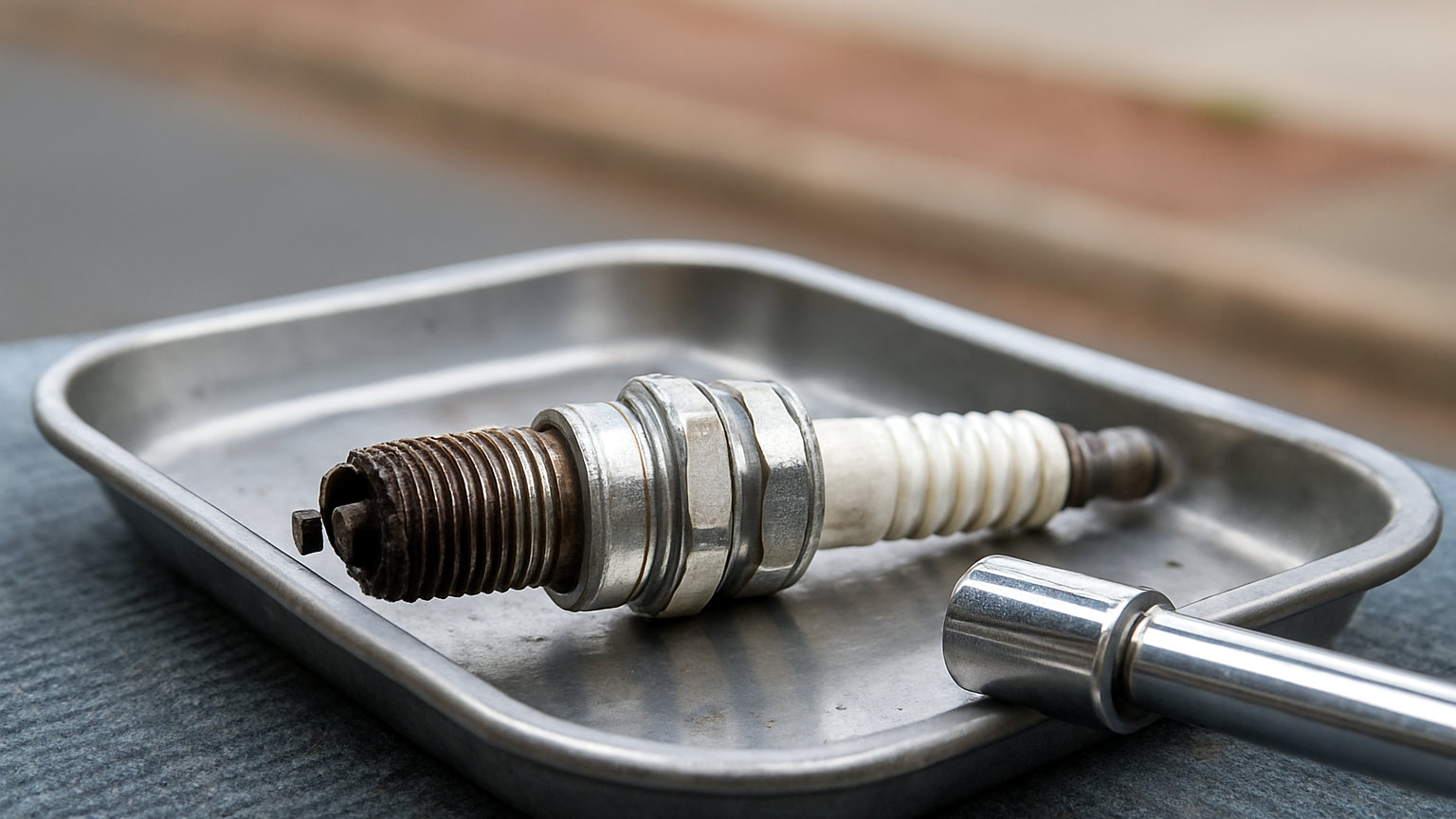
A car that refuses to start is rarely a mystery for long, because the noise it makes when you turn the key narrows the possibilities down enormously. Mechanics work through no-start faults in a fixed order for exactly that reason, and you can follow the same order on your own driveway without owning a single tool. What matters is paying close attention to the difference between silence, a click, and an engine that spins over happily but never catches.
What is the car actually doing when you turn the key?
There are only four outcomes, and each one sends you down a different path. Either nothing happens at all, or you get a click or a series of clicks, or the engine turns over but does not fire, or it fires briefly and dies again. Before you touch anything, turn the key once more and listen properly, because people routinely describe all four of these as the car not starting and they have almost nothing in common mechanically.
The reason this matters is that an engine needs three things to run: it needs to be turned over, it needs fuel, and it needs a spark at the right moment. A car that will not turn over has an electrical or starting problem. A car that turns over perfectly well has a fuelling, ignition or sensor problem. Sorting your car into one of those two groups takes five seconds and eliminates half the possible causes.
Why does absolutely nothing happen?
Total silence with no dashboard lights almost always means the battery has nothing left in it, or that the connection between the battery and the car has failed. Look at the battery terminals first, because a build-up of white or blue-green powder around the posts is enough on its own to stop everything, and a terminal clamp that moves when you wiggle it by hand is not making a reliable connection. This is the single most common no-start cause and it costs nothing to check.
If the dashboard lights up brightly but the car stays silent, the battery is probably fine and the fault lies further along, in the ignition switch, the starter circuit or an immobiliser that has not recognised the key. Automatics add one more possibility worth trying before anything else: shift into neutral and try again, because a worn inhibitor switch will often refuse to allow starting in park while working perfectly in neutral.
What does clicking mean?
Rapid machine-gun clicking is the classic sound of a battery with enough charge to energise the starter solenoid but not enough to spin the motor itself. A single heavy clunk, with lights that stay bright, points more towards the starter motor or its solenoid rather than the battery. Neither noise is a diagnosis on its own, but they do tell you which component to test first, which is the whole point of listening carefully.
Why would an engine crank but never fire?
An engine spinning over at a healthy speed has already proved the battery and starter are doing their jobs, so the problem is fuel, spark or timing. Listen for a short buzz from the rear of the car when you first turn the key to the second position, because that is the fuel pump priming and its absence is a strong clue. On a diesel in cold weather, glow plugs that have failed will produce exactly this symptom, with plenty of cranking and a great deal of white smoke but no start.
Which checks are worth doing before you call anyone?
Work through the cheap possibilities first, because they are also the most likely. Check that the terminals are clean and tight, try the spare key in case the immobiliser has lost the first one, look at the fuel gauge honestly, and try starting with everything electrical switched off so the battery is not powering anything else. If the car has been jump started successfully, the battery or charging system is the place to look, not the fuel system.
When should you stop guessing?
Repeated attempts at cranking do real damage. Starter motors overheat, batteries that are already low get flattened completely, and unburnt fuel washes oil off the cylinder walls. Give it three attempts of no more than ten seconds each, with a pause between them, and if the car has not started by then something is genuinely wrong and further cranking will only add to the bill rather than solve it.


