
Engine and transmission faults produce similar sensations and very different bills, which makes separating them the most valuable thing you can do before booking a car in. The good news is that a short sequence of tests distinguishes them reliably, needs no equipment beyond the instruments already in front of you, and can be completed on one quiet stretch of road.
What does the rev counter tell you?
The most important single indicator. If the revs judder in sympathy with the car, rising and falling with each surge, the engine is producing power unevenly. If the revs remain smooth while the car shudders, or flare without the speed following, something between the engine and the wheels is slipping or engaging unevenly. Watch the needle rather than trusting the sensation.
What is the high gear slip test?
Select a high gear at a low speed on a quiet road and accelerate firmly. If the revs climb noticeably faster than the speedometer, something is slipping, which on a manual means the clutch and on an automatic means the transmission. If the two rise together while the car shudders, nothing is slipping and the engine is misfiring. It takes thirty seconds and it is decisive.
Does it happen in neutral?
A judder or shake present in neutral at a standstill cannot be a transmission fault, since nothing is being transmitted. That immediately points at the engine or its mounts. Conversely, a car that is perfectly smooth in neutral and shudders the moment drive is engaged is describing something in the driveline. On an automatic, comparing neutral against drive with the brake held is particularly revealing.
Does it depend on which gear you are in?
Try the same road speed in two different gears. A fault that appears at the same road speed regardless of gear, and therefore at different engine speeds, is following the wheels. One that appears at the same engine speed in every gear is following the engine. This test separates the two more cleanly than almost anything else and it only needs an overlap between ratios.
What does the engine sound like?
Listen rather than feel. A misfiring engine sounds uneven and lumpy with an irregular beat, and the judder follows that rhythm. A transmission fault occurs while the engine note remains completely smooth. That distinction, made with your ears, is one of the quickest available and it costs nothing at all.
Do warning lights help?
Considerably. An engine management light with a stored misfire code naming a cylinder points firmly at the engine. A transmission warning or a gearbox message points the other way. Even without a light, misfire counters and fuel trims are recorded and can be read, and on an automatic the transmission module holds its own codes that a basic reader may not access.
Could it be neither?
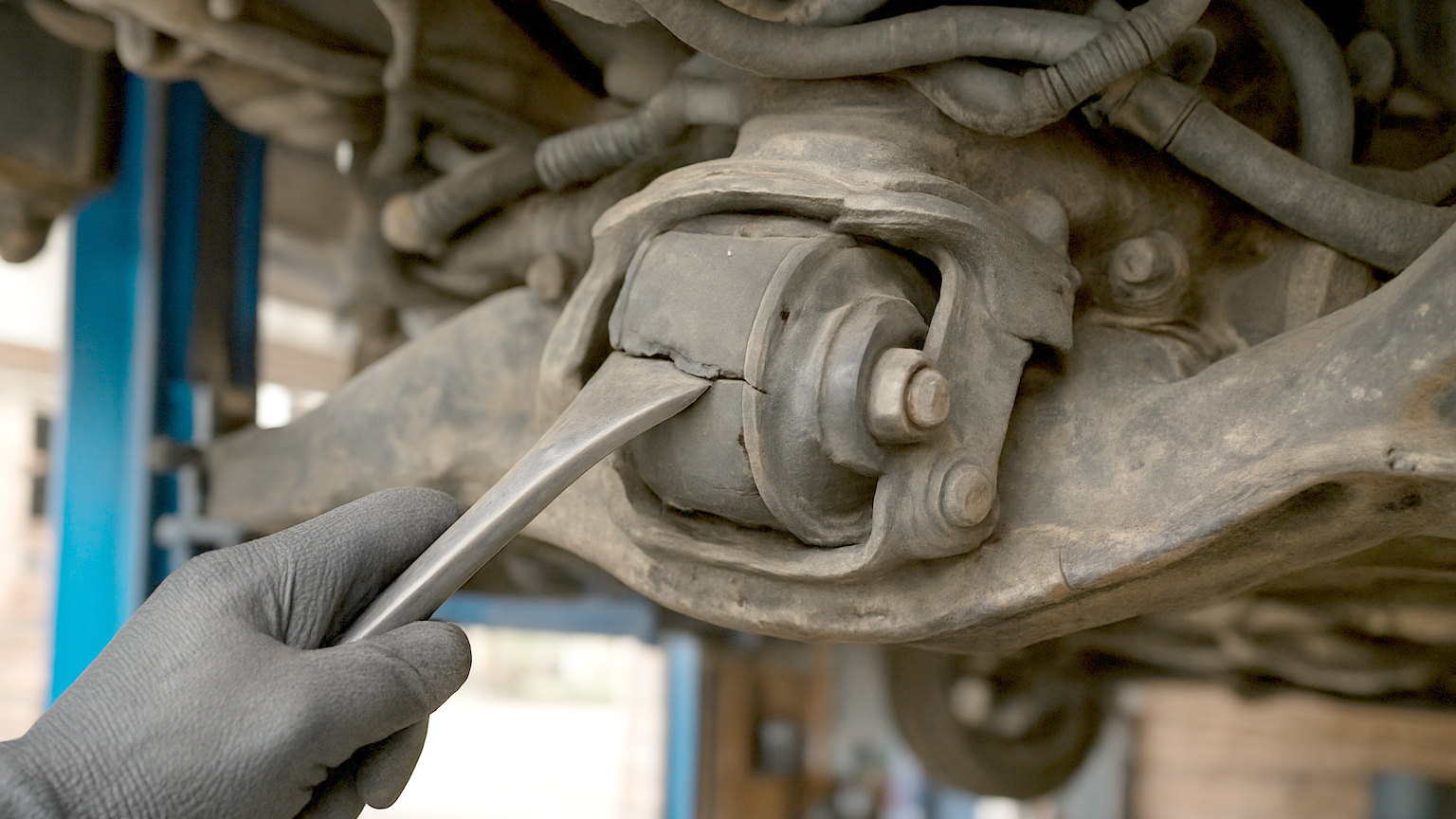
Occasionally, and it is worth remembering. Worn engine or gearbox mounts allow the powertrain to move under load, producing a shudder that belongs to neither the engine nor the transmission internally. Worn driveshaft joints do the same. Both are considerably cheaper than either alternative, which makes them worth checking before anything expensive is contemplated.
What should you take to the garage?
The results of these tests: whether the revs move with the judder, whether anything slips in a high gear, whether it happens in neutral, and whether it follows road speed or engine speed. A workshop given those four answers starts from a far better position than one handed a car that judders, and the diagnostic time saved is money that stays in your pocket.
Is any of this risky to test?
The tests described here are ordinary driving manoeuvres carried out deliberately, so they carry no particular risk provided you choose a quiet road with good visibility and reasonable surface. Accelerating firmly in a high gear briefly is not hard on the car, and it tells you more in thirty seconds than an hour of speculation.


