
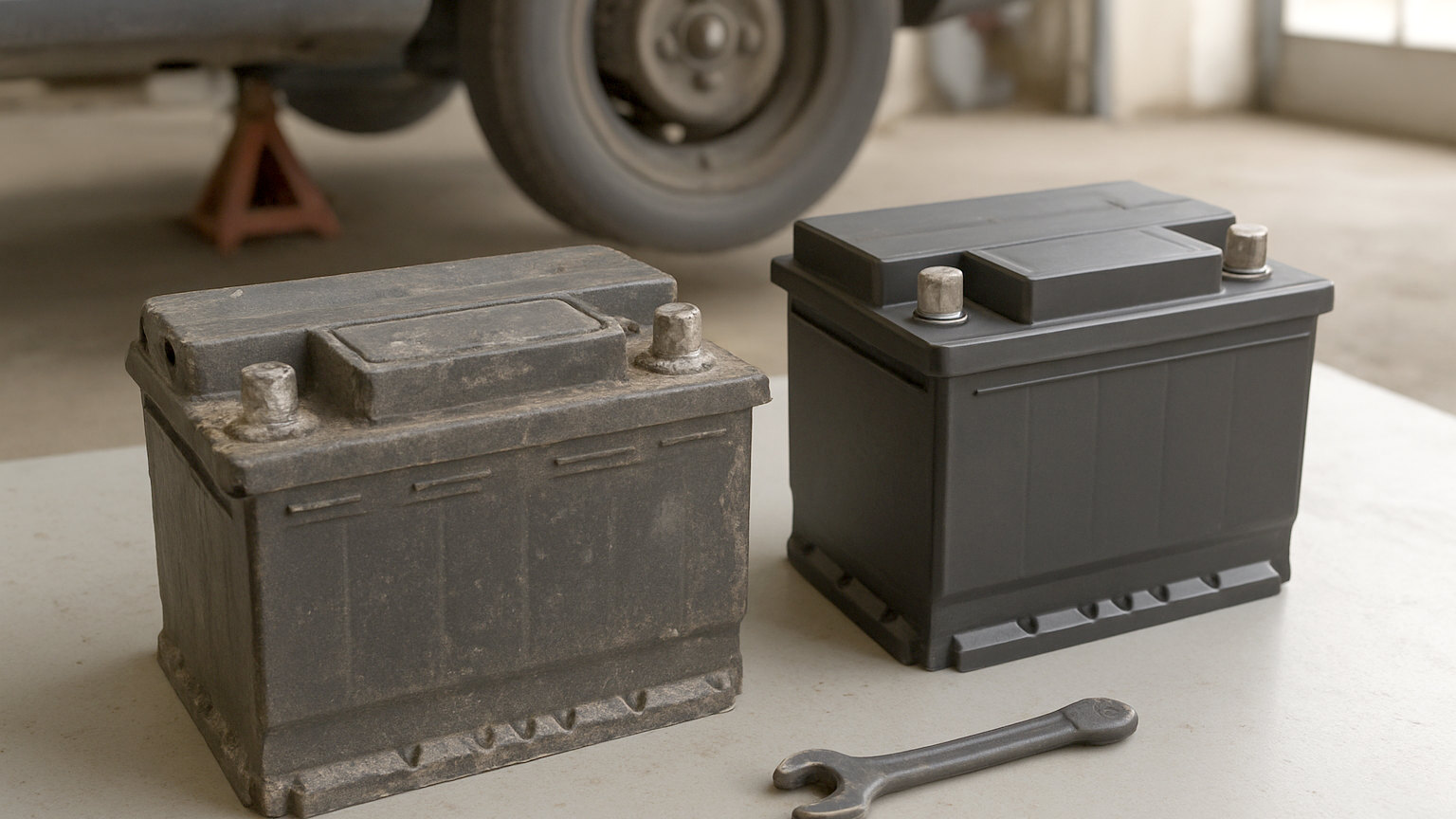
A battery that goes flat once has probably been left with something switched on. A battery that goes flat repeatedly is telling you about a fault somewhere else, and the most expensive mistake in this whole area is buying a replacement without establishing why the first one died. There are three possible explanations and they are straightforward to separate.
What are the three possibilities?
Either the battery itself has lost the ability to hold charge, or the charging system is not replacing what is being used, or something is drawing current while the car is parked. Those are the only options, and each has a distinct signature. A battery that is genuinely worn out will start the car after a charge and then decline over days. A charging fault leaves you stranded after driving. A parasitic drain flattens a healthy battery overnight or over a few days.
How do you tell if the battery is at fault?
Age is the first indicator, since most batteries give three to five years of reliable service and rather less on cars doing short journeys. Beyond that, a proper load test is the answer, and most garages and parts retailers will do one free in a few minutes. That test applies a realistic load and measures whether voltage holds up, which is quite different from measuring voltage at rest. A battery that reads twelve and a half volts sitting still can still fail completely under load.
How do you know if it is the alternator?
The classic sign is a battery warning light that comes on or flickers while driving, along with headlights that dim at idle and brighten as you rev. A car that runs perfectly until it is switched off and then refuses to restart has usually been running on the battery rather than being charged. A charging system test measures voltage at the battery with the engine running, which should sit noticeably above resting voltage, and it takes minutes.
What is a parasitic drain?
Every modern car draws a small current when parked, keeping the alarm, immobiliser and control modules in a sleeping state, and that is normal. A parasitic drain is a current far above that, caused by something that never switches off. Boot and glovebox lamps, aftermarket alarms, trackers and dashcams wired to a permanent live, and door switches that fail to register a closed door are the usual suspects. A drain like that will flatten a brand new battery within days.
How is a drain measured?
With a meter connected in series with the battery, after the car has been left long enough for all the modules to go to sleep, which on some vehicles takes half an hour or more. The reading is then compared against the manufacturer figure, and if it is too high the fuses are pulled one at a time until the current drops, identifying the circuit involved. It is a methodical job rather than a difficult one, and it is the only reliable way to find these faults.
Could the driving pattern be the cause?
Very often, and it is the explanation people least want to hear. Starting an engine uses a substantial amount of charge, and a five minute journey does not replace it, particularly with the heated screen, blower, lights and wipers all running. A car used exclusively for short winter trips can fall progressively further behind week by week until it will no longer start, with nothing actually wrong. A weekly run of half an hour changes that entirely.
Where should you start?
Clean and tighten the battery terminals and check the earth straps, since corrosion mimics every fault on this list and costs nothing to correct. Then get a free battery and charging system test. If both come back healthy and the battery still goes flat when parked, ask specifically for a parasitic drain test rather than another battery, because that is the only remaining explanation and no replacement will survive it.


