
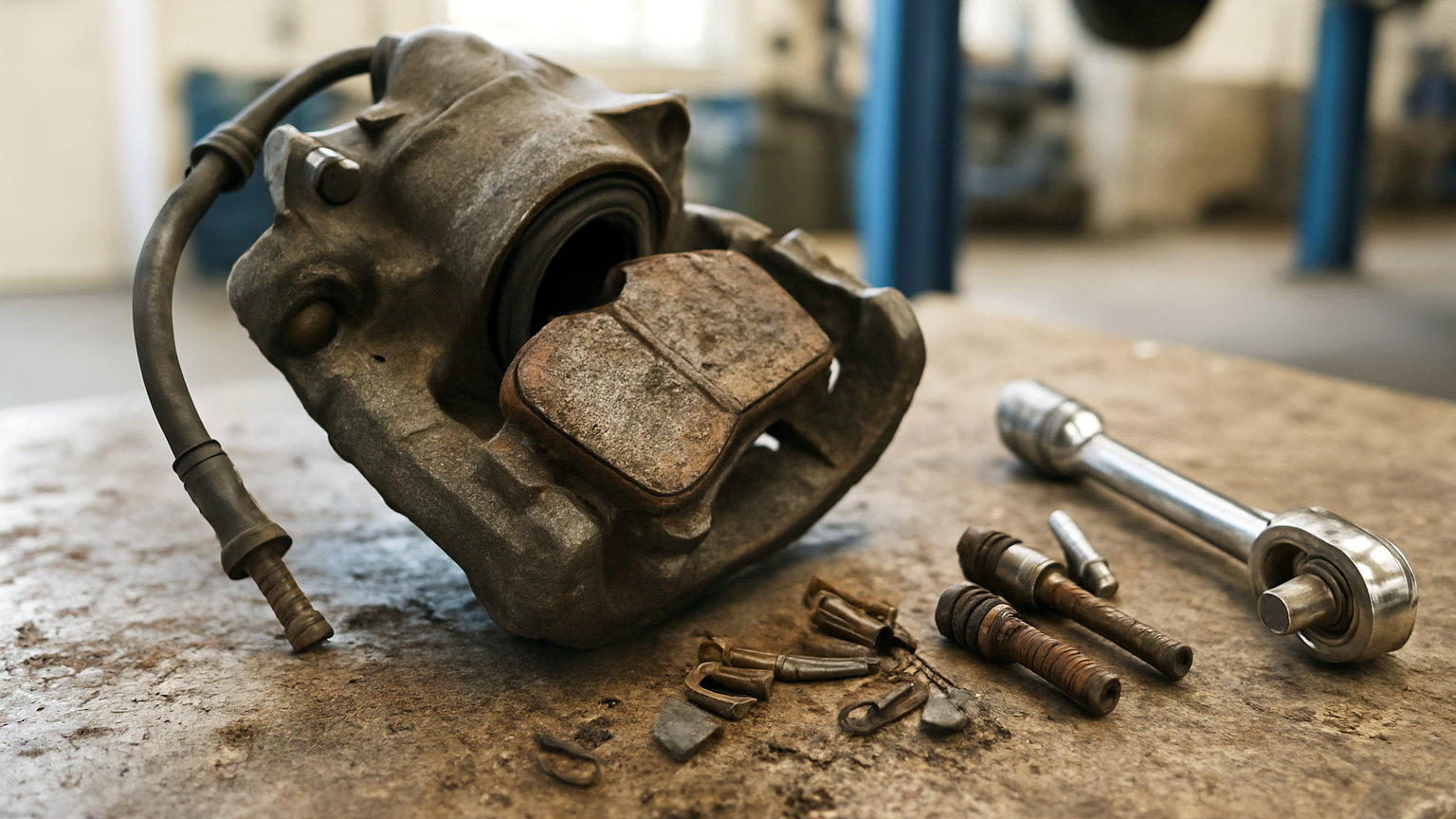
Brake pad life varies more than almost any other consumable on a car, and the range is genuinely wide. The same model can need front pads at eighteen thousand miles in one owner hands and last past fifty thousand in another. That is because pads wear when they are used rather than when the car is driven, and how often and how hard you brake is entirely a matter of how and where you drive.
What mileage is typical?
As a broad guide, front pads commonly last somewhere between twenty five and fifty thousand miles, and rear pads considerably longer on most front wheel drive cars. Manufacturers rarely quote a figure because the variation is so large. Treating pads as an inspection item at every service, rather than expecting a number, is a far more useful approach than working to a mileage.
Why does town driving wear them so much faster?
Because every set of traffic lights, every junction and every queue involves converting the car kinetic energy into heat at the pads. A motorway journey of a hundred miles might involve half a dozen brake applications. The same distance in urban traffic could involve several hundred. The pads do not care about the miles between those applications, only about the applications themselves.
Does driving style make a real difference?
A very large one. Anticipating traffic and lifting off early lets engine braking and air resistance do part of the work, so the pads absorb less energy each time. Braking late and hard for the same junction converts all of that energy into heat at the friction surface. Two drivers on identical routes can produce pad lives differing by a factor of two purely through anticipation.
What about hills and towing?
Both increase wear substantially. Descending a long hill on the brakes rather than in a lower gear generates enormous heat and wears pads rapidly, and it risks brake fade as well. Towing adds weight that must be stopped, so every application does more work. Cars used regularly in hilly areas or for towing should be expected to need pads sooner, and that is a running cost rather than a fault.
Do heavier cars wear pads faster?
Generally yes, since stopping a heavier vehicle from the same speed requires dissipating more energy. Electric and hybrid vehicles are an interesting exception, because regenerative braking does much of the work and the friction brakes are used far less. Their pads often last extremely well, though the discs can suffer from corrosion through underuse, which is a different problem entirely.
Why do fronts wear faster than rears?
Because weight transfers forward under braking, so the front tyres have more grip available and the braking system is designed to use it. The front brakes typically do around seventy percent of the work, and correspondingly wear far faster. It is entirely normal to replace front pads two or three times for every rear set on a front wheel drive car.
Can pads wear unevenly?
They can, and it usually indicates a fault rather than a driving pattern. One pad on a caliper worn far more than its partner suggests sticking slide pins. One side of the car wearing faster than the other suggests a seizing caliper. A pad worn at an angle rather than evenly across its face suggests a caliper not aligning correctly. All are worth investigating rather than simply replacing the pads.
How often should they be checked?
At every service, and it is worth asking for the remaining thickness in millimetres rather than accepting a verdict of fine or getting low. That number lets you plan, since a pad at seven millimetres has plenty of life and one at three does not. Many garages will note it on the invoice if asked, which gives you a record to compare against next time.
Can you make them last longer?
Anticipation does most of the work. Reading the road further ahead and lifting off earlier lets engine braking and air resistance take part of the load, so the pads absorb less energy on every application. Using a lower gear on long descents rather than riding the brakes makes a substantial difference, and it removes the risk of overheating at the same time. None of that requires driving slowly, only driving with a little more forward planning.


