
A car heater does not generate heat of its own. It takes hot coolant from the engine, passes it through a small radiator behind the dashboard called the heater matrix, and blows cabin air across it. That means a heater blowing cold is almost always reporting something about the cooling system rather than a fault in the heater, and the diagnosis follows from understanding that chain.
What should you check first?
The coolant level, when the engine is completely cold. The heater matrix sits high in the system on most cars, so it is one of the first components to be starved when the level falls. A car can run at a normal temperature on the gauge while producing no cabin heat at all, simply because there is not enough coolant to reach the matrix.
What does the temperature gauge tell you?
A great deal. If the engine never reaches normal operating temperature, the thermostat is probably stuck open, allowing coolant to circulate through the radiator constantly so it never gets hot enough to warm the cabin. If the gauge reads normal and there is still no heat, the engine is hot and something is preventing that heat reaching the matrix.
What is an airlock?
Trapped air in the cooling system, usually introduced after a coolant change, a repair or a leak. Air rises to the highest point, and on many cars that is the heater matrix, which then contains air rather than hot coolant. The symptom is no heat with an otherwise normal engine temperature, and the cure is bleeding the system rather than replacing anything.
Can the matrix be blocked?
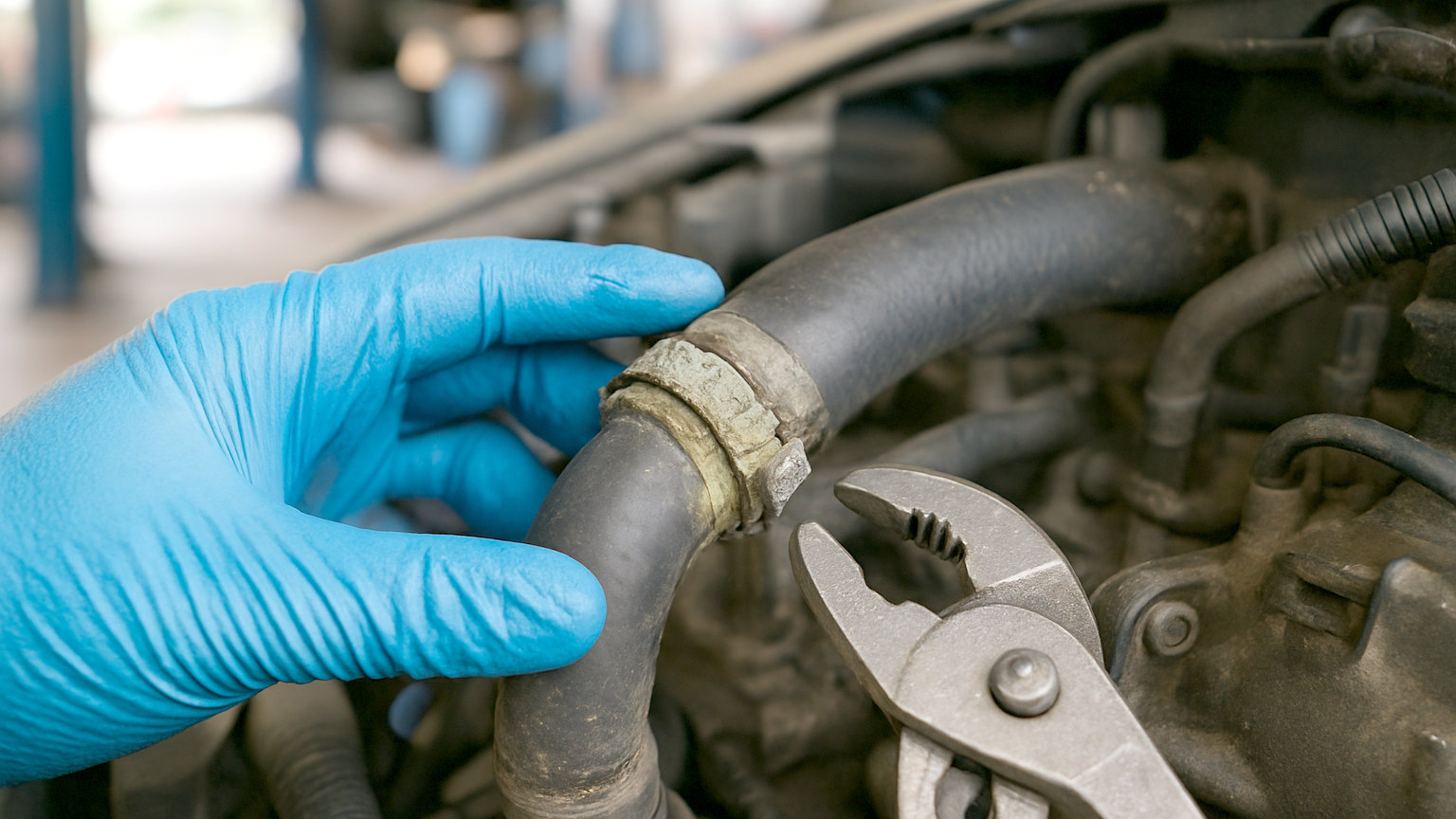
Yes, and it is common on older cars. The passages through the matrix are narrow, so corrosion products, sludge from neglected coolant or the residue of a leak sealant product can restrict flow. The characteristic sign is a matrix where one hose is hot and the other is only warm, indicating that coolant is not passing through properly.
What is a heater control valve?
A valve fitted on some cars to control how much hot coolant reaches the matrix, operated by cable, vacuum or an electric motor. When it sticks closed, no coolant reaches the matrix and the heater blows cold whatever the controls are set to. It is a relatively inexpensive component and worth checking before anything larger is suspected.
What about the blend flap?
Many modern cars have no heater valve at all and instead run hot coolant through the matrix constantly, using a blend flap to mix hot and cold air to the temperature you have selected. If that flap or its actuator motor fails, the system can be stuck on cold regardless of the setting. A clicking noise from behind the dashboard when adjusting the temperature is a strong clue.
Is it worse on one side?
On cars with dual zone climate control, heat on one side and cold on the other usually means a failed blend flap actuator on the cold side rather than anything to do with the coolant. That is a useful distinction, since it points at an electrical component behind the dashboard instead of a cooling system problem.
Does a head gasket problem cause it?
It can, and it is worth being alert to. Combustion gases forced into the cooling system create air pockets that behave exactly like an airlock, so heat comes and goes. If a car repeatedly loses heat, needs coolant topping up with no visible leak, or shows bubbling in the expansion tank, that combination deserves investigating promptly.
What order should you check things?
Coolant level on a cold engine first, since it is free and frequently the answer. Then the temperature gauge behaviour on a normal journey. Then whether both heater hoses are hot once the engine is warm, which tells you whether coolant is reaching the matrix at all. Those three steps cost nothing and they separate a cooling system problem from a heater control fault before any parts are considered.


