
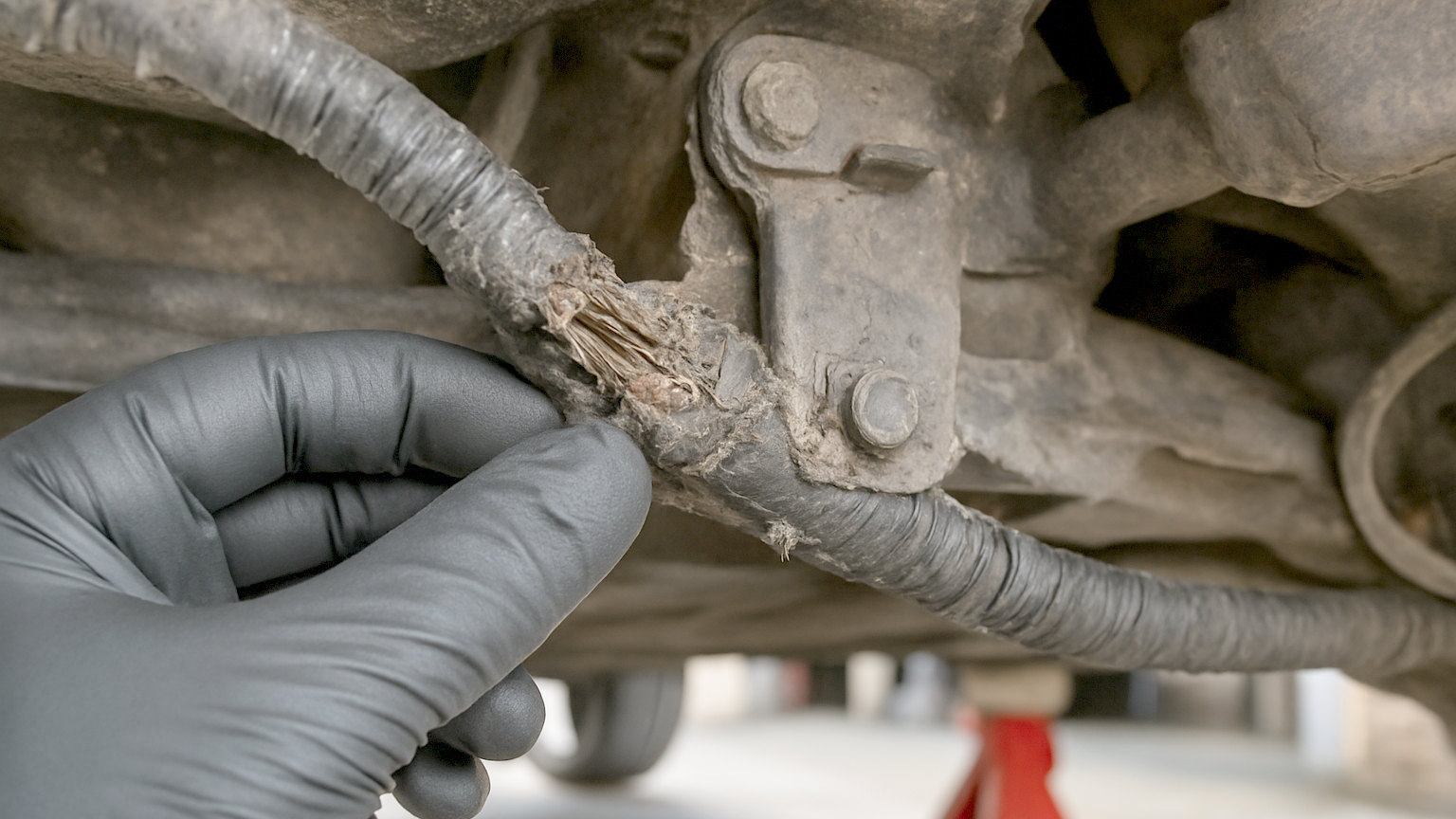
Rodent damage to vehicle wiring sounds like an unlikely explanation for an electrical fault, and it is a genuinely common one, particularly on cars parked near fields, garages, outbuildings or anywhere food is stored. Mice and rats seek warmth and shelter, an engine bay after a drive offers both, and once inside they gnaw for reasons that have nothing to do with hunger.
Why do they chew wiring at all?
Rodent incisors grow continuously and must be worn down, so gnawing is constant behaviour rather than feeding. Wire insulation is the right texture and it is conveniently placed. There is also a widely discussed theory that some modern soy and other plant based insulations, adopted for environmental reasons, are more attractive than the older petroleum based materials, though opinions on how much difference this makes vary.
Where do they nest?
Air filter boxes are a favourite, being enclosed, dry and warm. Also on top of the engine under plastic covers, in the cabin filter housing, inside the scuttle area below the windscreen, and in the spare wheel well. Any of these can hold a surprising quantity of nesting material, and finding shredded insulation, leaves, chewed plastic or droppings is the confirmation.
What symptoms does the damage cause?
Anything, which is what makes it difficult. Chewed sensor wiring produces engine management faults and running problems. Damaged earth wires cause multiple unrelated symptoms. A severed lighting circuit fails one lamp. Chewed insulation touching earth blows fuses. Because rodents chew whatever is in front of them, the fault pattern follows their route rather than any electrical logic.
How do you spot it?
Look before you test. Open the air filter box, lift any engine covers, check the cabin filter housing and look around the base of the windscreen. Nesting material, droppings, a smell of urine and shredded insulation are all obvious once you look. Bare copper visible on a loom, or insulation with clean tooth marks, is unmistakable. Photograph everything before you clean it up.
How should the damage be repaired?
Every affected wire needs proper repair, with the damaged section removed and replaced by soldered or correctly crimped joints protected with heat shrink, then re-loomed with tape or conduit. Patching over chewed insulation with tape is not adequate, since the copper beneath is often already nicked and will fail later. Where a loom has been extensively damaged, replacing that section is more reliable than a dozen joints.
Does insurance cover it?
Frequently, under comprehensive policies, since it is usually treated as accidental damage rather than wear and tear. It is worth asking before paying, particularly where the repair is extensive, and worth photographing the evidence for a claim. Policies differ considerably on this, so the answer depends on the wording rather than on any general rule.
What deters them?
Removing the attraction helps most. Do not store birdseed, pet food or compost near where the car is parked, and keep the garage tidy. Parking on hard standing rather than beside a hedge or long grass reduces the traffic. Opening the bonnet occasionally in a garage removes the dark enclosed feeling. Some owners use ultrasonic deterrents or scent based repellents, with mixed but occasionally good results.
What about tapes and sprays?
Capsaicin impregnated tape, sold specifically for wrapping vehicle looms, is used by some manufacturers and owners and has a reasonable reputation. Peppermint and similar scent based sprays need frequent reapplication and wash off. Neither is a guarantee, and both work better as part of removing the underlying attraction than as a substitute for it.
Why does it matter beyond the repair?
Because damage is often more extensive than the fault that revealed it. A rodent that chewed one sensor wire has probably nicked several others, so the first repair is frequently followed by further faults over the next few months. Where damage is found, a proper inspection of the whole area is worth paying for rather than fixing only the wire that failed first.


