
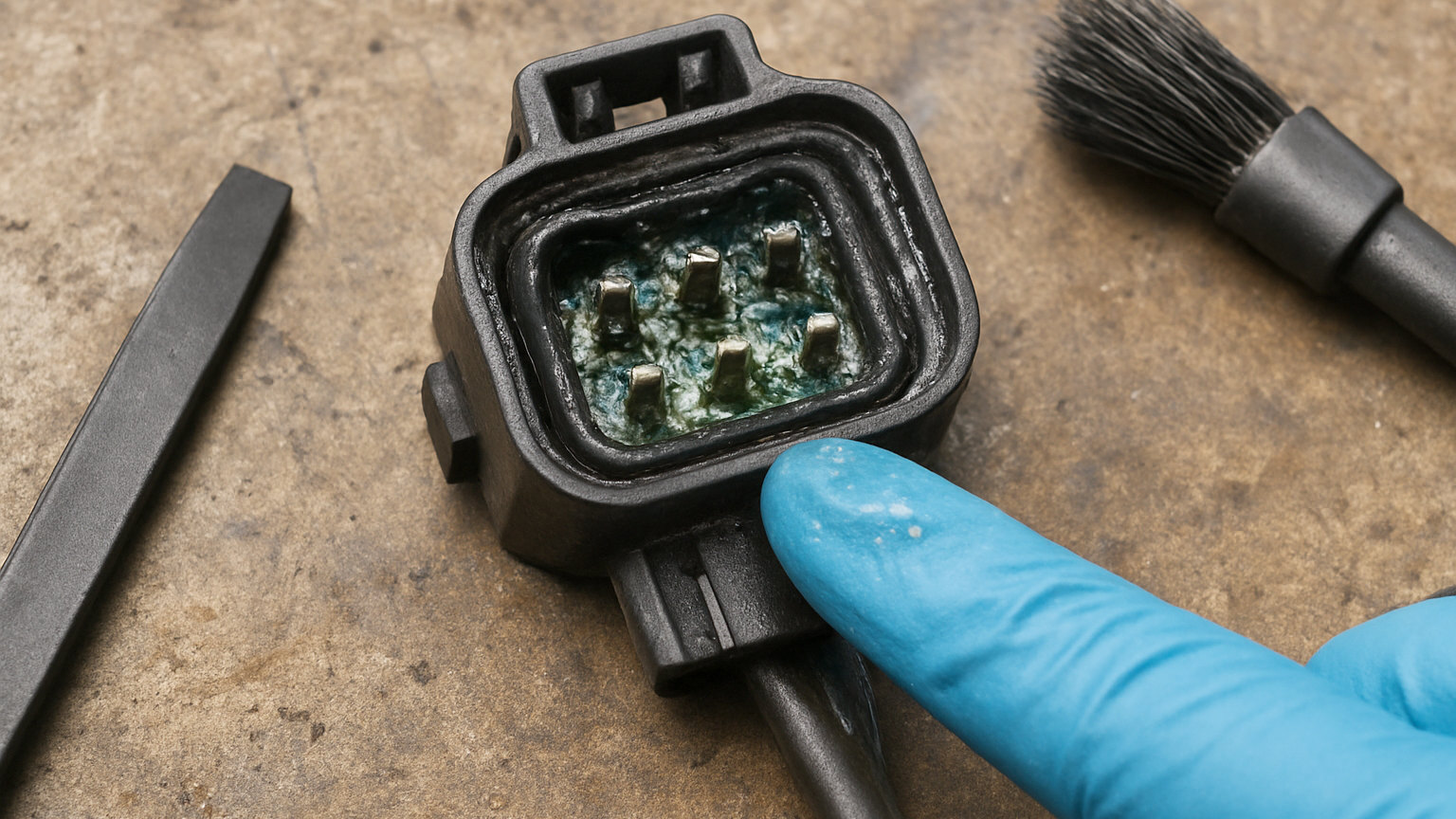
A car that runs perfectly all summer and misbehaves every time it rains is following a rule rather than being awkward. Water conducts electricity, and more importantly it provides an easier path to earth than the one the current was supposed to take. Anywhere insulation has degraded, moisture reveals the weakness immediately and hides it again as soon as things dry out.
What is electrical tracking?
The process where high voltage escapes across a surface rather than through the intended path. Ignition components operate at tens of thousands of volts, and a hairline crack in a coil pack, a distributor cap or an HT lead offers a route to earth once moisture and dirt bridge it. The result is a misfire that appears in damp conditions and disappears on dry days, with no fault visible at all.
How can you see it happening?
On a damp night, open the bonnet in the dark with the engine running and look at the ignition components. Tracking is often visible as faint blue sparks or a glow crawling across a coil body or lead. It is one of the few faults where a visual inspection under the right conditions is genuinely diagnostic. Keep well clear of the belts and moving parts while doing it.
Where else does water cause problems?
Connectors whose seals have hardened, particularly low on the car and in the wheel arches. Earth points bolted to bodywork, where water sits and corrodes the joint. Light clusters that have filled with water. Fuse boxes in the engine bay or scuttle area, where blocked drains allow water to collect. And under carpets, where an unnoticed water leak soaks a loom or an earth point for months.
Why does the scuttle area matter so much?
Because on most cars the area below the windscreen collects water deliberately and drains it away, and it frequently contains the cabin filter, the blower motor and a substantial section of wiring. When those drains block with leaves and debris, water backs up and finds its way into the bulkhead. Clearing the scuttle drains once a year is a genuinely worthwhile preventative job.
How do you find a water related fault?
By reproducing it with a hose, applied deliberately to one area at a time while someone watches for the symptom. Working systematically, starting low and moving up, identifies the entry point far more reliably than soaking the whole car at once. It takes patience, since the fault may take a minute or two to appear, and the temptation to spray everything at once must be resisted.
What symptoms suggest water rather than a component?
Faults that appear after rain, after a car wash or on a heavy dew, and clear after a dry day or a long drive. Multiple unrelated systems misbehaving at once, which points at a shared earth or a common connector. Symptoms that improve as the engine bay warms and dries. Any of those patterns should direct attention to moisture rather than to the components themselves.
What is the correct repair?
Find and fix the water entry first, because everything else is temporary otherwise. Then clean the affected connectors and earth points thoroughly, dry them completely, and protect them with dielectric grease. Replace perished seals and grommets rather than reusing them. Components damaged beyond cleaning, such as a cracked coil pack, need replacing since the crack will simply track again.
Do quick fix sprays work?
Water dispersant sprays genuinely help as a temporary measure, displacing moisture from ignition components and getting a car running. They are not a repair and they wash off. Used to confirm a diagnosis, by seeing whether a misfire clears immediately after application, they are useful. Relied upon every wet morning, they are a sign that something needs replacing.
Why does this get worse with age?
Because every seal, grommet and insulation layer on a car is degrading slowly. Rubber hardens, plastic becomes brittle and drain paths block with accumulated debris. A car that has never had a wet weather fault can develop one in its tenth winter without anything dramatic having happened, simply because the margin that was protecting it has finally been used up.


