
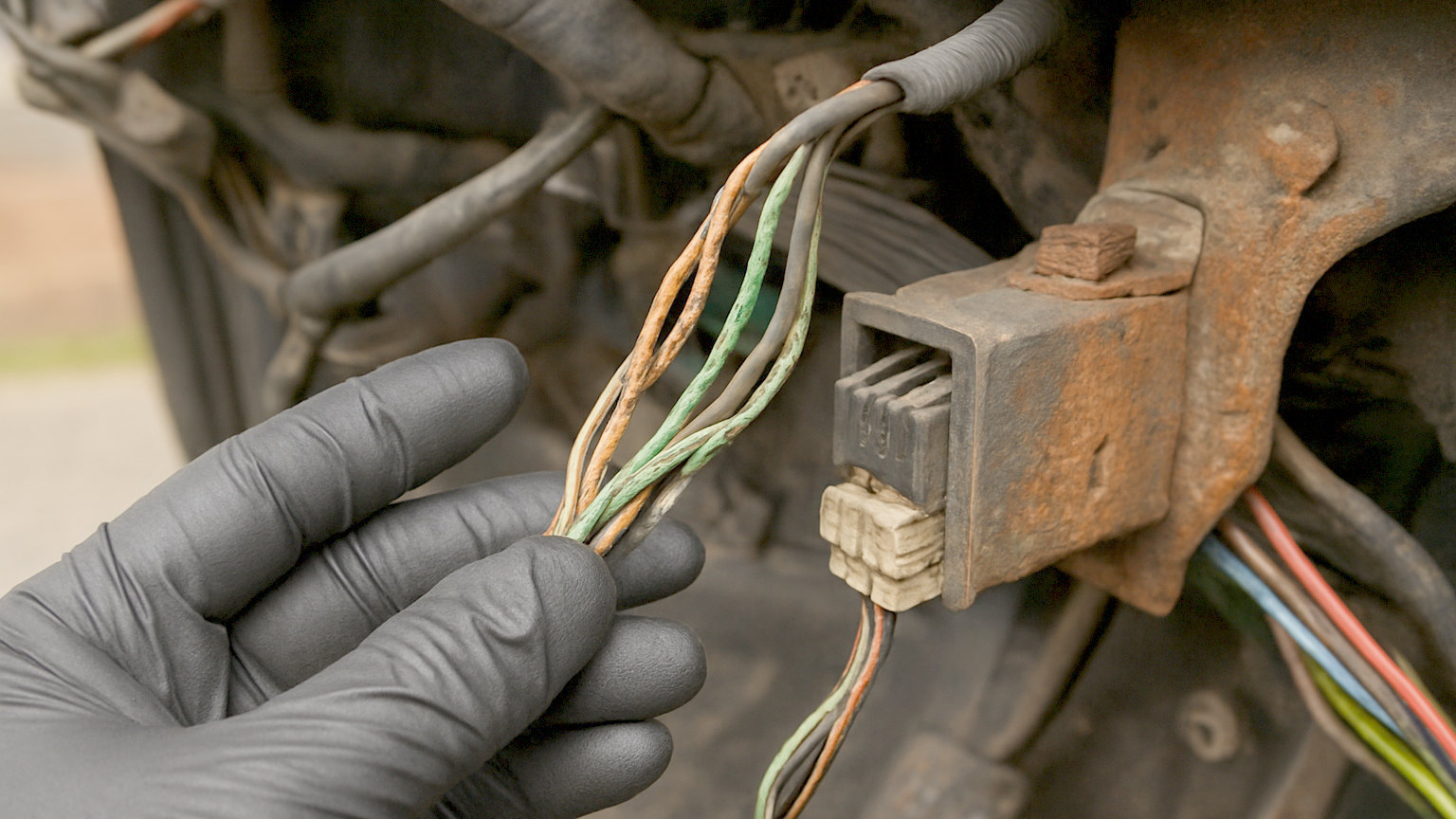
A car built in the 1980s ran a separate wire from every switch to every component, which produced looms of extraordinary weight and complexity. Modern vehicles replaced most of that with a shared network, usually a controller area network or CAN bus, over which every module talks to every other. It is elegant, it saves enormous amounts of wiring, and it introduces a category of fault that did not previously exist.
How does it actually work?
Two wires, twisted together, carry messages between all the modules on the network. Any module can broadcast, and every module hears everything, ignoring what does not concern it. So the engine management can tell the instrument cluster the temperature, the ABS module can tell the engine the wheel speeds, and none of them need dedicated wires to each other. The twisting is deliberate, since it cancels out electrical interference.
What happens when the network is disrupted?
Modules stop hearing each other, and each one reports that the ones it expects to hear from are missing. The result on the dashboard is dramatic: a large number of warning lights across completely unrelated systems, often with the car in limp mode or refusing to start. It looks like everything has failed simultaneously, when in fact the components are fine and only the conversation between them has stopped.
What are U codes?
Fault codes beginning with the letter U relate to network communication rather than to any physical component. A code reporting lost communication with a particular module means the reporting module can no longer hear it. Reading codes from every module and noting which ones report communication faults, and which report nothing at all, is how the affected section of the network is identified.
What causes bus faults?
Damaged wiring, principally: a chafed pair, a corroded connector, water in a junction, or damage from an accident or previous repair. A single failed module can also flood the network with traffic or hold a line low, which stops everything else communicating and produces the same symptom. Low battery voltage causes widespread communication errors that resolve once voltage is restored.
Why does battery voltage matter so much?
Because modules need a stable supply to communicate reliably, and when voltage sags during a difficult start or with a failing battery, they drop off the network and log faults against each other. This is genuinely one of the most common causes of a dashboard full of lights, and it is why any diagnosis of a network fault should begin with a battery and charging test rather than a wiring hunt.
What are terminating resistors?
Resistors fitted at each end of the network to prevent signal reflections, usually built into two of the modules. Their combined value can be measured across the network wires with the ignition off, and a reading substantially different from expected indicates either a missing termination or a break in the wiring. It is a quick and revealing test for anyone with a meter and the correct specification.
Can you diagnose it at home?
Partly. Checking battery voltage, inspecting for obvious wiring damage and reading codes from every module are all achievable with reasonable equipment. Beyond that, network diagnosis often requires an oscilloscope to view the actual signal waveform, and the ability to disconnect modules selectively to see which one is disrupting the network. That is specialist work rather than a driveway job.
Why is this expensive to diagnose?
Because the symptom points everywhere and nowhere. A dashboard full of warnings gives no indication of location, and the fault could be a single chafed wire anywhere in the vehicle or one misbehaving module among twenty. The cost is almost entirely diagnostic time rather than parts, which is why arriving with a clear description of when it started and what happened beforehand genuinely reduces the bill.
What should you tell the garage?
Whether it followed a flat battery or jump start, any recent work or accessory fitting, any accident damage however minor, and whether the car has been standing in water. Those four pieces of information cover the majority of causes and can save an hour of searching, which on this type of fault is a meaningful part of the total.


