
Dashcams, trackers, towbars, alarms, additional lighting and audio equipment are all fitted to cars every day, and the great majority cause no trouble at all. When they do cause problems, the fault is almost never the accessory itself. It is how it was connected, and a small number of installation shortcuts account for most of the resulting faults.
What is wrong with quick splice connectors?
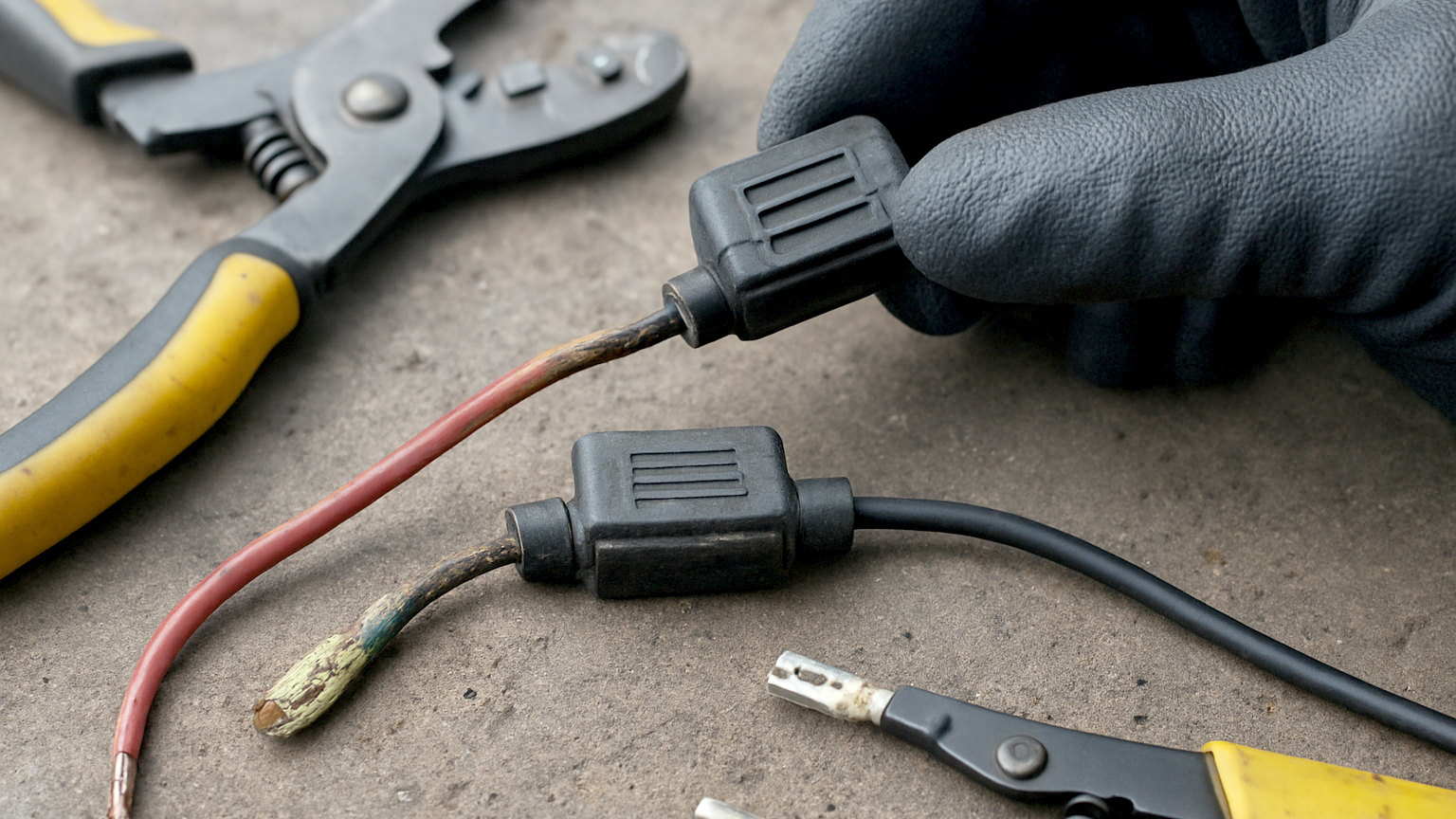
Those small plastic clips that clamp over an existing wire and cut into it are the single biggest cause of accessory related faults. They sever some strands of the original conductor while making a marginal connection to the remainder, they are not sealed against moisture, and they work loose with vibration. A circuit that has three of them fitted has three points that will corrode and cause intermittent faults.
What should be used instead?
A soldered joint protected with adhesive lined heat shrink, or a properly crimped connector using the correct tool rather than pliers. Where a permanent supply is needed, an add-a-fuse adapter that plugs into a spare fuse position provides a fused feed without cutting into anything. Any new circuit should have its own fuse rated for the wire, positioned as close to the supply as practical.
Why do permanent live feeds cause problems?
Because anything connected to one draws current while the car is parked. A dashcam in parking mode, a tracker, an alarm or a phone charger left plugged in all add to the standing drain, and together they can flatten a battery over a few days. If a car has developed a flat battery problem since an accessory was fitted, that is not a coincidence and the two should be considered together.
What is the right way to take a supply?
From an ignition switched circuit where the accessory only needs power while driving, so it cannot drain the battery when parked. From a permanent live only where the function genuinely requires it, ideally through a device that monitors battery voltage and disconnects before the battery is compromised. And always through an appropriately rated fuse, never directly from the battery without one.
Why does the earth matter as much?
Because a poor earth causes exactly the same problems as a poor supply, and accessories are frequently earthed to whatever bolt was nearest. A painted bolt is not an earth, since paint is an insulator. The connection must be to bare metal, ideally at an existing factory earth point, and it should be protected against corrosion afterwards. Many puzzling accessory faults are simply a bad earth.
What problems do towbar electrics cause?
More than most accessories, because they connect into the lighting circuits at the most exposed point on the car. Poorly fitted wiring produces indicator warnings, bulb failure messages and strange interactions between lamps. The socket itself corrodes readily. On modern vehicles a dedicated bypass relay or a coded module is usually required, and splicing directly into lighting circuits will upset the bulb monitoring system.
Can accessories affect the car electronics?
They can. Anything spliced into a circuit carrying data rather than power, or fitted with inadequate suppression, can introduce interference. Poorly made inverters and chargers are known for causing radio interference and occasionally for disturbing sensitive modules. Cheap LED lighting products are another common source. Symptoms that began when a device was fitted should be tested by removing it entirely.
What should you do if you suspect an accessory?
Disconnect it completely, including its supply and earth, rather than simply switching it off, and see whether the fault persists. That single test is quick and definitive. If the fault clears, the installation needs redoing properly rather than the accessory necessarily being abandoned, since most of these devices are perfectly sound when wired correctly.
Does it affect warranty or insurance?
It can. A badly installed accessory that causes damage may not be covered, and some insurers require modifications to be declared. Keeping the installation tidy, fused and reversible protects you on both counts, and it also makes life considerably easier for whoever diagnoses an unrelated fault on the car in three years time.


