
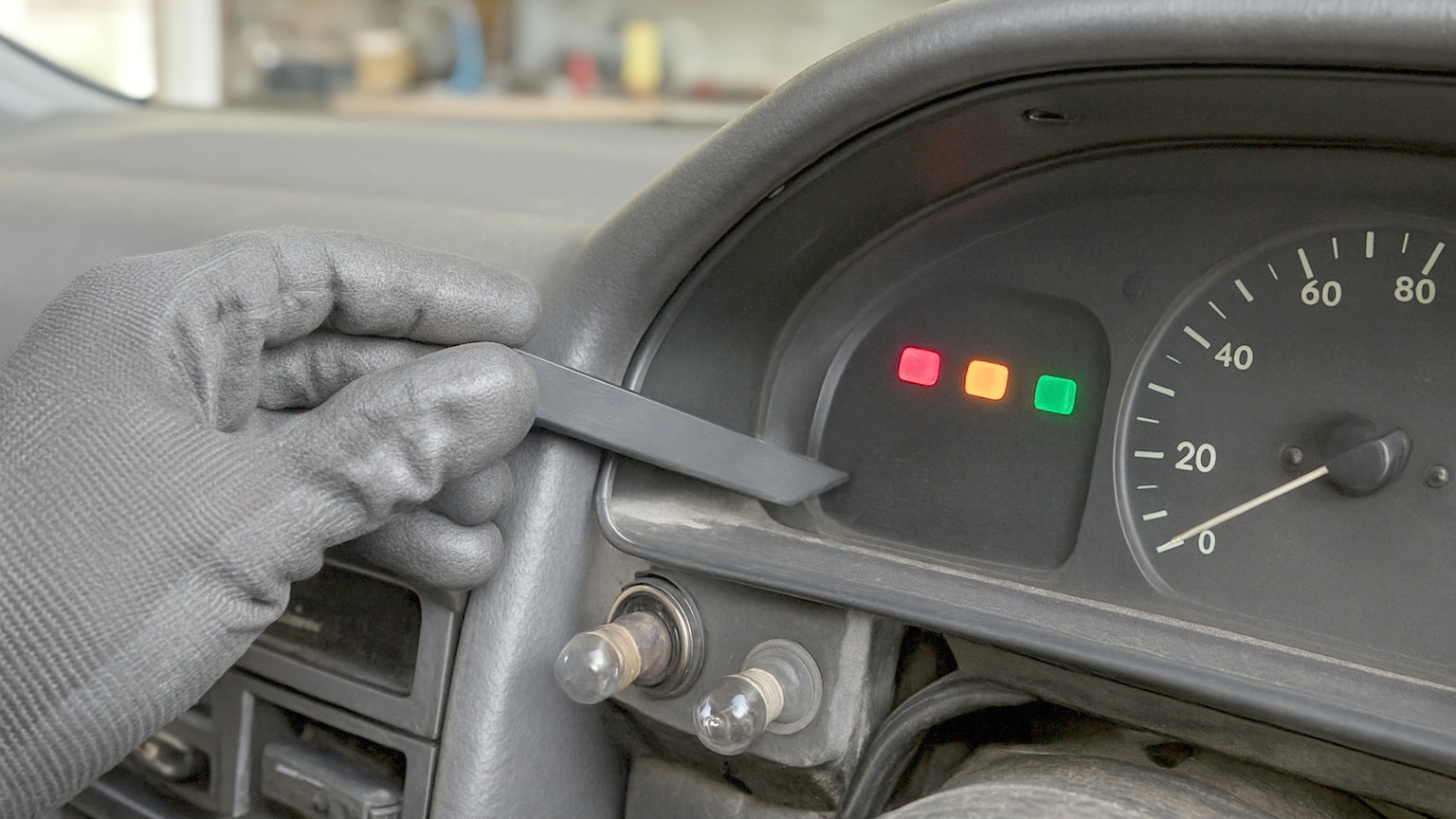
Dashboard symbols look like an arbitrary collection of shapes, but the colour system behind them is deliberate and consistent across almost every manufacturer. It follows traffic light logic, and once you know that, the only question that matters in the moment has already been answered: whether you need to stop now, investigate soon, or do nothing at all.
What does a red light mean?
Stop, or something close to it. Red indicates a fault that either presents a safety risk or will cause serious damage if you continue. The oil pressure light, the coolant temperature light, the brake system light and the charging light all fall into this group. The correct response is to pull over somewhere safe as soon as it is possible to do so, rather than continuing to the next junction or pressing on to reach home.
What does an amber light mean?
Something needs attention, but not this second. Amber and yellow symbols indicate a fault has been detected, a system is degraded, or a service is due, and they generally allow you to complete your journey and book the car in. The engine management light, the ABS light, the tyre pressure warning and the diesel particulate filter light are all amber, and all of them mean investigate rather than abandon the car.
Are green and blue lights faults at all?
No. Green and blue symbols are informational, telling you a system is active rather than broken. Headlights, indicators, cruise control, main beam and fog lights all show in these colours. It causes needless worry when people see an unfamiliar green symbol and assume the worst, so the simple rule is that green and blue are the car telling you what it is doing, not asking for help.
Why do all the lights come on when you turn the key?
That is a deliberate bulb check. When the ignition is switched on, the car illuminates the warning lamps briefly so you can confirm none of the bulbs or displays have failed, then extinguishes them once each system reports itself healthy. A light that never comes on at all during that check is as significant as one that stays on, because it means a warning has been disabled or a bulb has failed.
What if a light stays on after starting?
That is the system reporting an active fault rather than completing its check. Note which light it is and what colour, since that determines everything that follows. On many cars the same symbol can appear steady or flashing, and flashing almost always indicates a more urgent version of the same fault. That distinction matters most with the engine management light, where flashing means damage is occurring right now.
Do all manufacturers use the same symbols?
The common ones are standardised, so oil, coolant, brakes, battery and airbag symbols look broadly similar across brands. Beyond those, manufacturers use their own designs, and modern cars increasingly display text messages alongside or instead of symbols. The handbook contains the definitive list, and it is worth spending ten minutes with it once rather than trying to interpret an unfamiliar shape at the side of a road.
Does a warning light mean an expensive repair?
Not necessarily, and this is worth saying because fear of the cost stops people investigating. A great many amber lights are caused by inexpensive sensors, a loose fuel cap, a low tyre or a service interval reached. What makes warning lights expensive is ignoring them, since a cheap sensor fault left for six months can allow secondary damage to components costing a great deal more. That is the pattern behind most large repair bills that began with a small amber symbol.
What should you do first?
Identify the colour, then the symbol, then check the handbook. If it is red, stop safely and investigate before driving further. If it is amber, check the obvious physical things such as tyres, fluid levels and the fuel cap, then have the fault codes read, which most garages and parts retailers do quickly and inexpensively. That sequence deals with the majority of dashboard warnings sensibly.


