
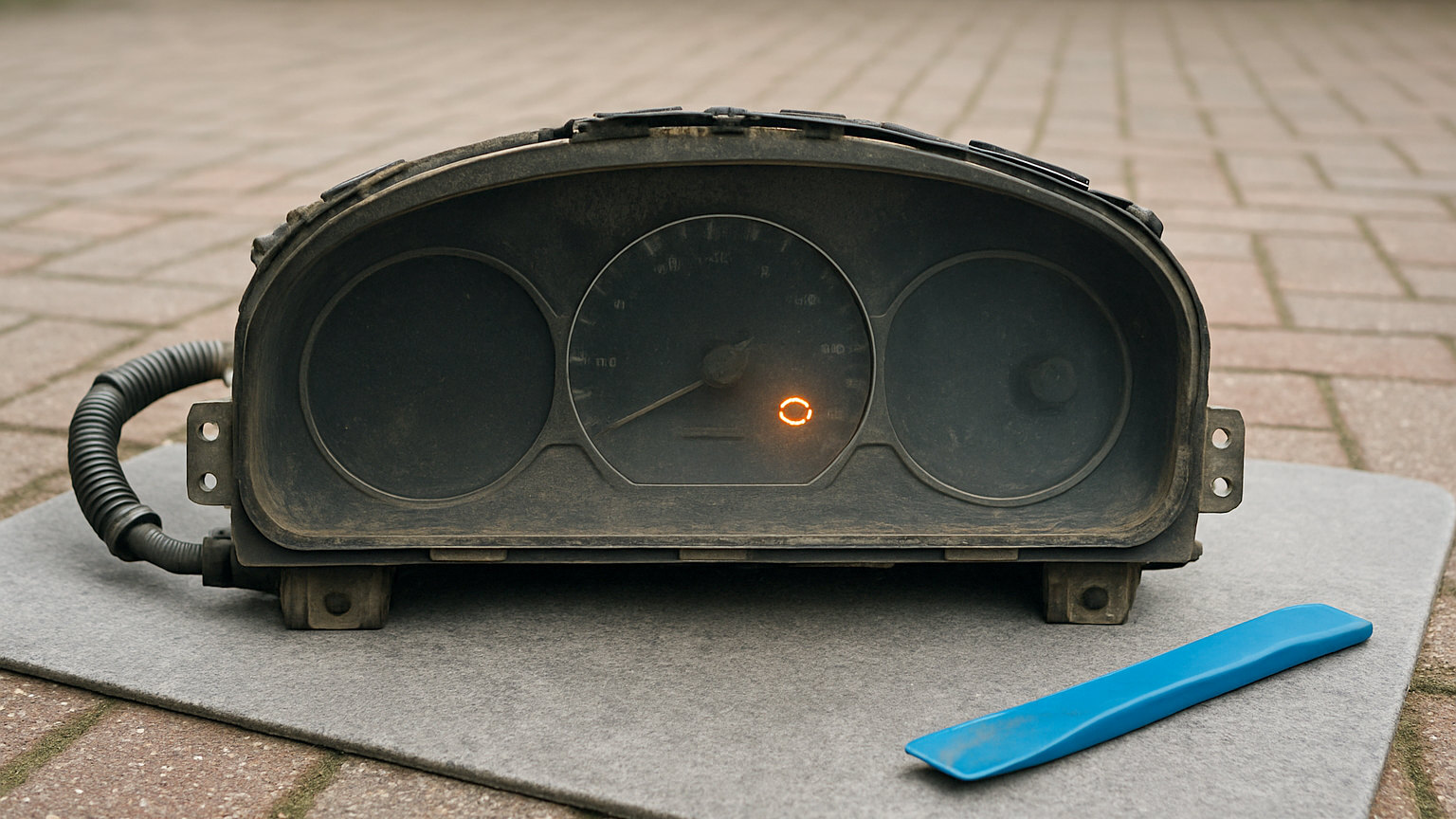
A warning light that appears, worries you for a day, and then quietly goes out again is easy to interpret as a false alarm. It is usually not. Most systems illuminate a light only after a fault has been detected on more than one occasion, and they extinguish it after a number of clean journeys. The fault is still recorded, and it can still be read.
Why do lights go out on their own?
Because the management system is designed to distinguish a genuine ongoing fault from a one-off event. If the condition that triggered the code does not recur over a set number of drive cycles, the light is extinguished automatically to avoid nagging about something that has resolved. The code itself usually remains in memory, often flagged as historic rather than current.
What is the difference between pending and stored codes?
A pending code is one that has been detected once but not yet confirmed, and it typically will not illuminate the light. A stored or confirmed code has met the threshold and will. Many quick code reads only look for current faults and report the car as clear, so asking specifically for pending and historic codes as well as active ones is what finds an intermittent problem.
Does the code stay in memory forever?
No. Most systems erase historic codes automatically after a number of fault free drive cycles, typically several dozen. That means an intermittent fault has a limited window in which the evidence is available, and waiting six weeks to have it read can mean finding nothing at all. Having the codes read promptly, while the memory is fresh, is genuinely worth doing.
What conditions cause intermittent lights?
Temperature is the most common, with connections and components behaving differently hot and cold. Moisture is next, since damp lets current escape through cracked insulation and dries out later. Vibration over particular road surfaces disturbs marginal connections. Low battery voltage during a difficult start makes several modules log faults at once. All produce lights that appear and disappear without an obvious pattern.
Can something innocent have caused it?
Sometimes. A fuel filler cap left loose triggers an evaporative system fault that clears once it is tightened and a few drives have passed. A jump start or a flat battery can set codes across several modules that mean nothing once voltage is normal. Filling with poor quality fuel occasionally does the same. These genuinely resolve, which is why the code and its freeze frame data matter.
Why does freeze frame data help so much?
Because it records the conditions at the moment the fault occurred: engine speed, load, coolant temperature, road speed and fuel trims. For a fault that no longer exists, that snapshot is often the only evidence available. It tells a mechanic whether the problem happened on a cold start, under heavy load or at idle, which narrows the possibilities enormously.
Should you just wait and see?
Have it read first, then wait and see. Reading costs very little and preserves information that will otherwise be deleted. If the code turns out to be something trivial that has genuinely resolved, you have lost nothing. If it points at something that will return, you have a head start and a record of when it began, which matters if it becomes a warranty or a resale question.
What should you write down?
The date, the mileage, what the weather was doing, how long the car had been running and what you were doing when the light appeared. Intermittent faults are almost always solved by the pattern rather than by a single test, and three of those records together frequently reveal a pattern that no individual workshop visit would have found. A note on a phone takes seconds and is worth more than an hour of guessing later, particularly with a fault that refuses to appear on the day the car is booked in.
If the same light returns twice, stop treating it as a false alarm. Two appearances is the point at which a fault has confirmed itself.


