
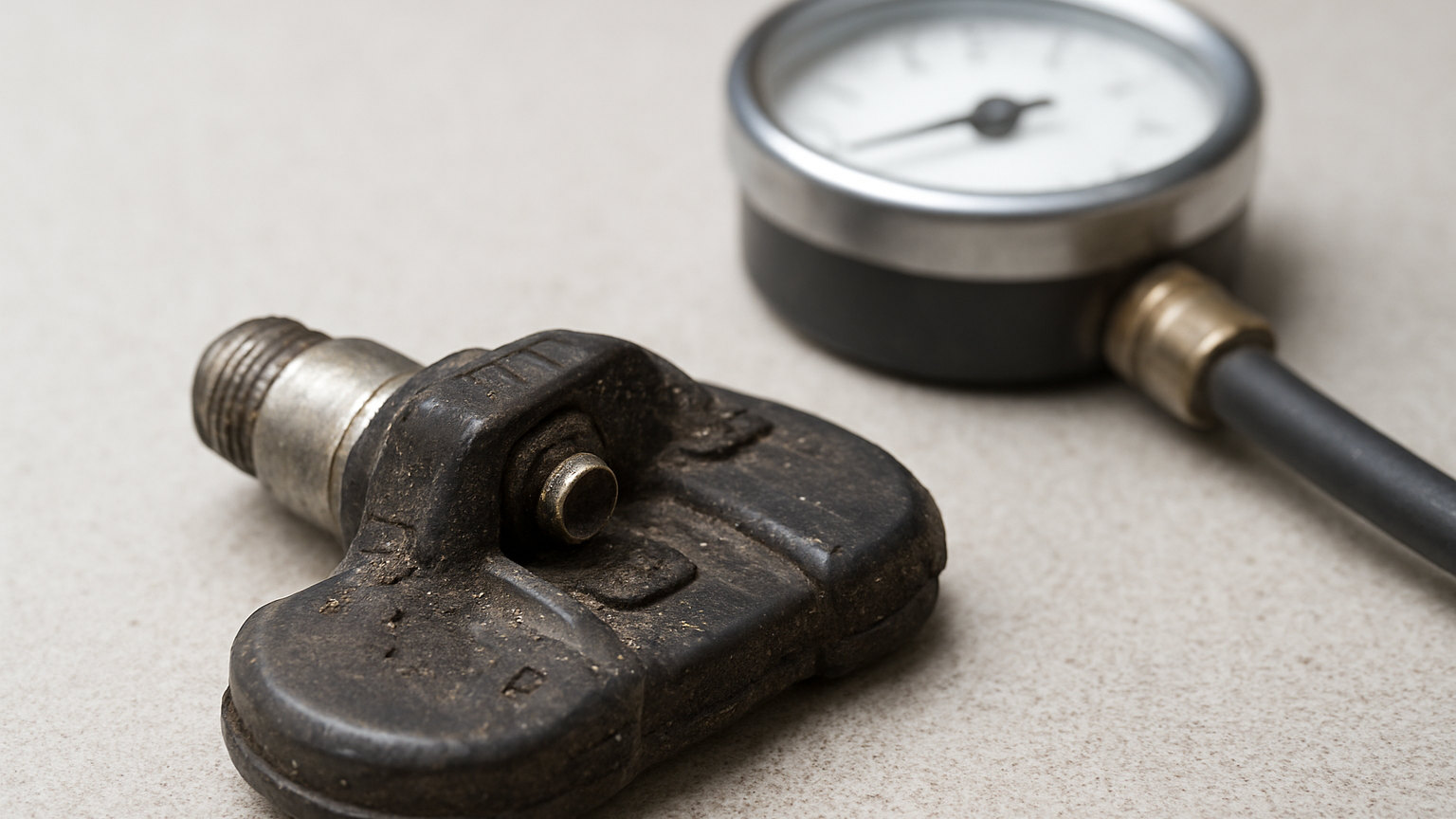
Of all the dashboard warnings, this is the one most likely to be telling the simple truth. A tyre pressure light usually means a tyre is genuinely low, and the correct response is a pressure gauge and an air line rather than a diagnostic session. It is also, unusually, a warning that appears seasonally for entirely innocent reasons.
How do these systems work?
There are two approaches. Direct systems use a pressure sensor inside each wheel, transmitting readings to the car, and can usually display the actual pressure for each tyre. Indirect systems have no sensors at all and instead use the ABS wheel speed sensors, detecting that an underinflated tyre has a smaller rolling radius and therefore turns slightly faster. Which type you have changes how the light behaves and how it is reset.
Why does it come on in cold weather?
Because air contracts as it cools, so pressure genuinely falls with temperature. A drop of several degrees overnight is enough to take a tyre that was borderline below the warning threshold, which is why these lights appear in numbers on the first cold morning of autumn. Nothing has gone wrong; the tyres simply need topping up to the correct pressure for the current conditions.
What should you check first?
All four tyres with a proper gauge, when cold, against the figures on the door pillar sticker or in the handbook rather than the maximum printed on the tyre sidewall. Do not forget the spare on cars where it carries a sensor. Look for anything embedded in the tread while you are there, since a slow puncture from a screw is a common reason for one tyre repeatedly falling low.
Why will the light not go out after inflating?
Many systems require a reset procedure. Indirect systems in particular have to be told the current pressures are correct, usually through a menu option or a button, because they have no way of measuring pressure directly. Direct systems normally clear themselves after a short drive once the sensors report correct values, but some need a relearn. The handbook gives the procedure and it takes a minute.
Why is the light flashing rather than steady?
On most cars a flashing tyre pressure light for a period after starting, followed by a steady light, indicates a fault in the monitoring system rather than a low tyre. That usually means a failed sensor, most often because its internal battery has reached the end of its life after several years, or because a sensor was damaged or not transferred during a tyre change.
Do sensors need replacing periodically?
Direct sensors contain a sealed battery that typically lasts somewhere between five and ten years and cannot be replaced separately, so the whole sensor is renewed. They also have rubber or metal valve stems that corrode and service kits that should be replaced whenever a tyre is changed. It is worth asking a tyre fitter to fit service kits as standard, since it is inexpensive and prevents leaks at the valve.
Does it affect the MOT?
Yes, on cars first used from 2012 onwards where the system was fitted. A tyre pressure monitoring warning that indicates a system fault is a failure. Correct tyre pressures alone will not resolve a light caused by a failed sensor, so if the light is flashing rather than responding to inflation, it needs attention before the test.
Why does it matter beyond the light?
Underinflated tyres wear faster at the edges, increase fuel consumption, lengthen braking distances and run hot, which raises the risk of a blowout at speed. The system exists because most drivers do not check pressures often enough, and a tyre can lose a meaningful amount before it looks visibly flat. Checking monthly is worth doing regardless of whether any light is on.
What if only one tyre keeps losing pressure?
That is a slow puncture until proven otherwise, and it needs a proper inspection rather than weekly topping up. A tyre fitter will remove the tyre and check the inner surface, the valve and the bead seal, since a corroded alloy rim can leak air without any visible damage to the tread at all.


