
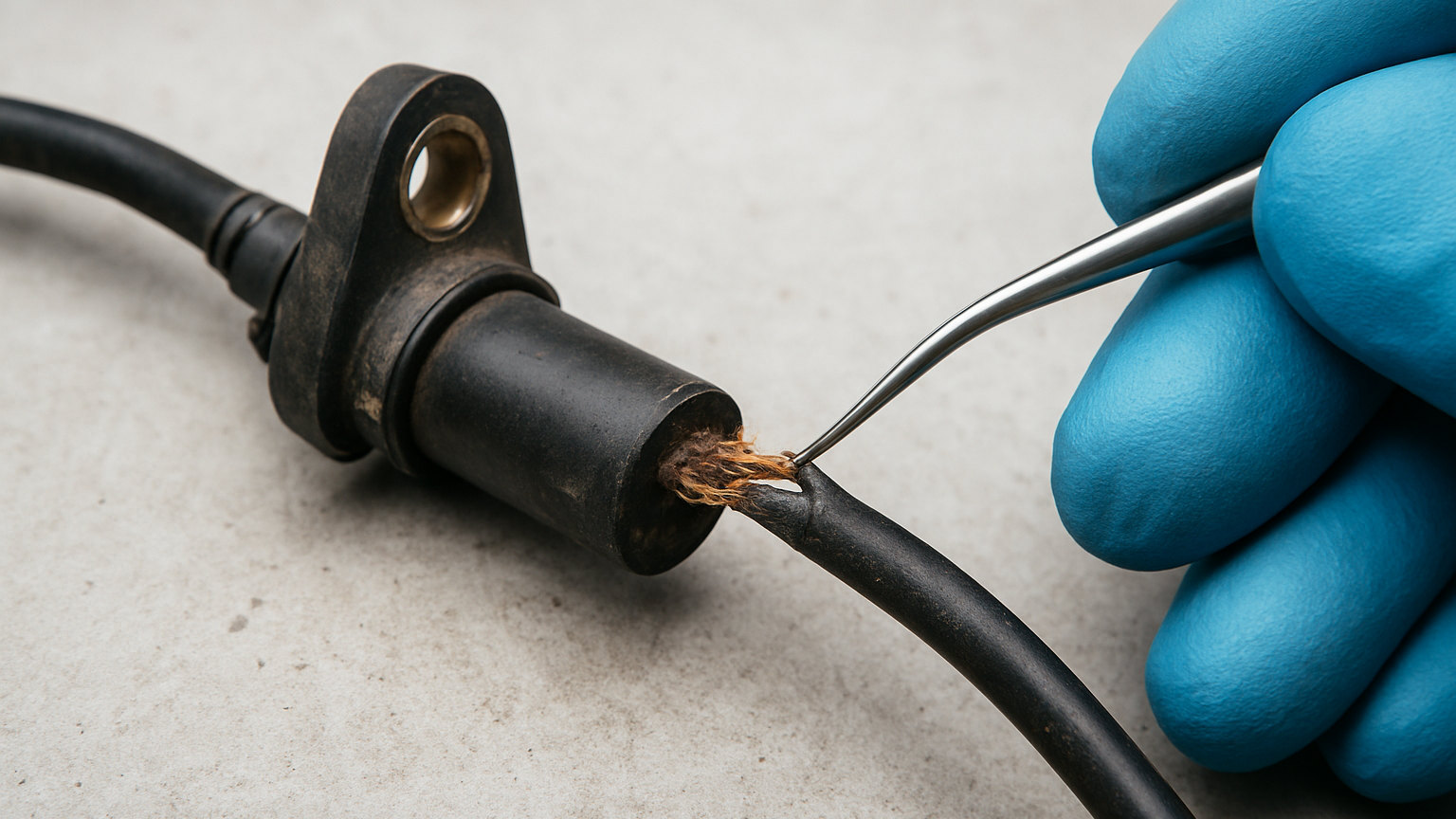
The traction control light causes confusion because it appears in two completely different situations. Flashing briefly while you are driving means the system is actively working, which is reassuring rather than worrying. Staying on continuously means it has detected a fault and disabled itself. Same symbol, opposite meanings, and the difference is simply whether it flickers or sits there.
What does traction control do?
It compares the speed of each wheel and detects when one is spinning faster than the others, which indicates a loss of grip. It then reduces engine power and applies the brake to that individual wheel until traction returns. Stability control, often badged ESP or ESC, uses the same sensors plus a yaw sensor to detect the car sliding and applies individual brakes to correct it.
Why does it flash on wet roundabouts?
Because it is doing exactly what it was fitted to do. Pulling away briskly on a damp surface, accelerating out of a junction or driving on ice will all produce brief wheelspin, and the flash tells you the system intervened. It is worth noticing, because frequent flashing in conditions where you would not expect it can indicate worn tyres or uneven pressures rather than an electronic fault.
Why does it usually appear with the ABS light?
Because both systems depend on the same wheel speed sensors. One failed sensor removes the information both need, so both switch off and both lamps illuminate. Two lights appearing together is therefore normally one fault rather than two, and the diagnosis starts in the same place. Hill start assist and adaptive cruise control frequently drop out at the same time for the same reason.
What causes the fault?
Wheel speed sensors dominate, failing through corrosion, damaged wiring where the loom flexes with the suspension, or contamination of the sensor tip. Beyond that, a damaged reluctor ring on a hub or driveshaft, a failing wheel bearing that allows enough movement to disturb the signal, or a fault in the steering angle or yaw sensor that stability control relies on. Low battery voltage can also trigger it temporarily.
Can tyres cause it?
They can, and it is worth checking first because it costs nothing. Significantly different tyre sizes across an axle, a badly underinflated tyre or a space saver spare change the rolling radius enough that the system sees a permanent speed difference. On four wheel drive cars this matters even more, and mismatched tyres can cause both warning lights and genuine mechanical strain on the transmission.
Is it safe to drive?
The car behaves as one without the system fitted, which is to say normally in ordinary conditions and less forgiving at the limit. The brakes and steering are unaffected. What you lose is intervention when grip is lost, so wet, icy or gravel surfaces demand more caution, and enthusiastic driving is a poor idea until it is repaired. Leave more space and be gentler with the throttle in the wet.
Should you use the off switch?
Most cars have one, and pressing it produces a similar looking light, which occasionally explains a warning nobody can account for. Deliberately switching the system off is useful in deep snow or mud where a little wheelspin helps, and unhelpful almost everywhere else. If your light appeared without explanation, check whether the button has been pressed before assuming a fault.
What should you do about it?
Check tyre pressures and sizes, then have the codes read from the ABS system rather than the engine system. The code usually names the affected wheel, which makes the repair straightforward and generally inexpensive. It is also an MOT consideration on cars where stability control was fitted from new, so it is worth resolving rather than living with.
Does it affect anything else?
On many cars, yes. Adaptive cruise control, hill start assist, automatic emergency braking and trailer stability systems all depend on the same wheel speed data, so they may become unavailable at the same time. If several driver assistance features have stopped working together, that is one fault rather than several.


