
The red brake warning light, usually a circle with an exclamation mark inside it or the letters representing the parking brake, covers three quite separate situations using the same symbol. One is entirely innocent, one indicates wear, and one means the braking system may be compromised. Working out which you have takes about a minute and is worth doing before driving any distance.
What is the first thing to check?
The handbrake. On most cars the same lamp illuminates whenever the parking brake is applied, and a lever left one click up or an electronic parking brake that has not fully released will keep it lit. Release it fully and see whether the light goes out. This accounts for a large proportion of these warnings and costs nothing to eliminate.
What if the handbrake is fully off?
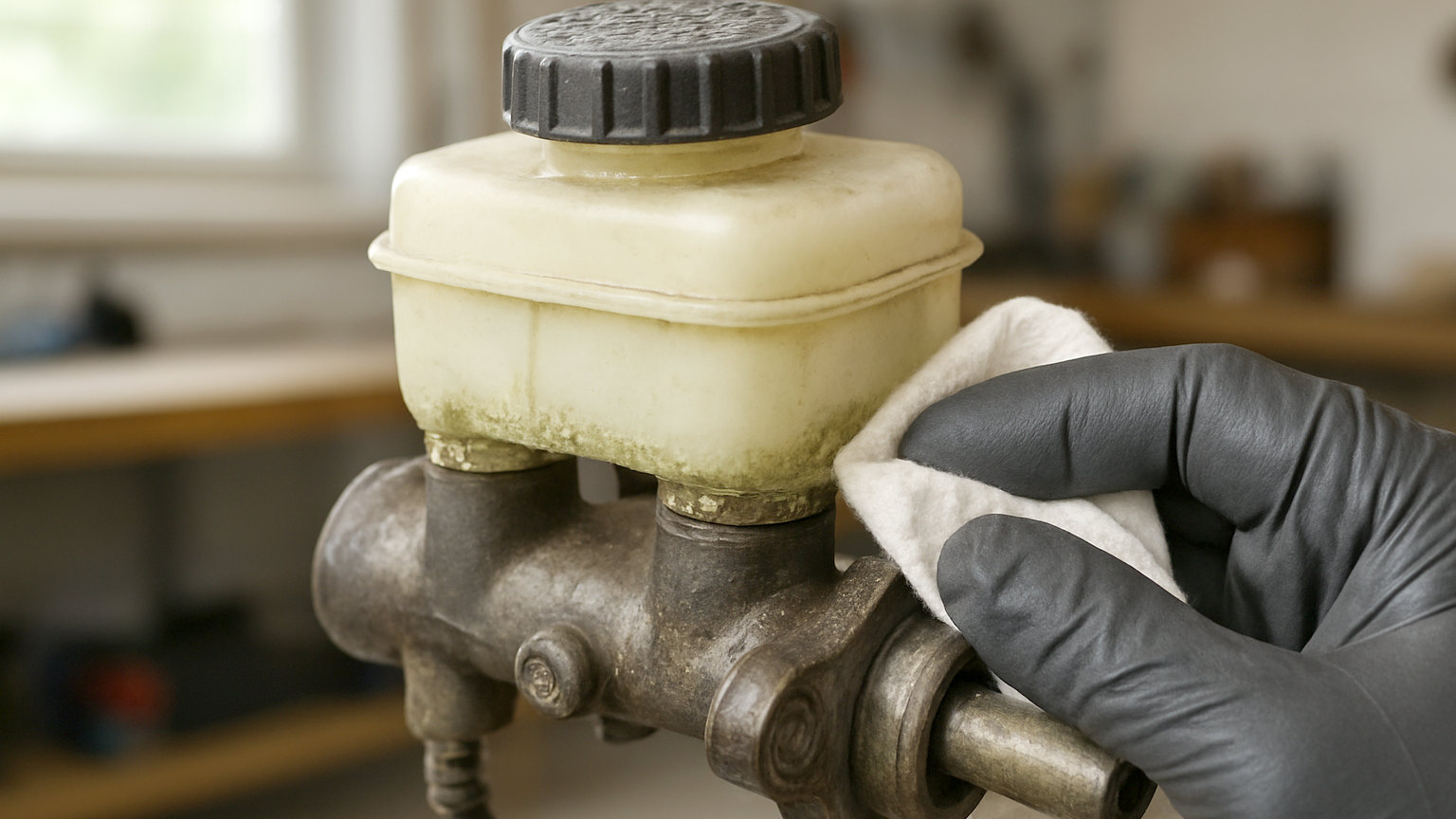
Then the most likely cause is brake fluid below the minimum mark in the reservoir, since a level sensor in the cap triggers the same lamp. Open the bonnet and look at the reservoir, which is translucent with minimum and maximum markings. A level below minimum is a genuine warning and should not be topped up and forgotten, because the fluid went somewhere.
Why does the fluid level fall?
For two reasons, one benign and one not. As brake pads wear, the caliper pistons extend further and the fluid required to fill that space comes from the reservoir, so the level falls gradually as a normal consequence of wear. The other reason is a leak, from a corroded pipe, a failing caliper seal or a master cylinder, and that is a safety critical fault.
How do you tell wear from a leak?
By how quickly it falls and what the pedal feels like. A level that has drifted down slowly over a year alongside pads that are visibly worn is normal. A level that falls noticeably within weeks, or a pedal that feels soft, spongy or travels further than it used to, suggests a leak. Look for damp patches or staining behind the wheels and around the master cylinder.
Is it safe to drive with the light on?
Treat it as no until you have checked. If the handbrake was the cause, carry on. If the fluid is low, the car should not be driven any distance until the reason is known, because a leak can progress to a loss of braking. If the pedal feels different in any way, that removes any doubt and the car should be recovered rather than driven.
What does it mean alongside the ABS light?
The two together generally indicate a more significant system fault than either alone, often involving the brake pressure or the ABS module. On many cars that combination also disables electronic brake force distribution, which affects how braking is shared between front and rear and can make the rear wheels lock more readily. That combination justifies stopping rather than continuing.
Does it fail an MOT?
Yes. A brake system warning lamp indicating a fault is a failure, and so is brake fluid below the minimum level. Testers also check that the lamp works during the initial bulb check. Given that the brakes themselves are examined thoroughly during the test anyway, a warning light here is rarely the only issue that will be raised.
What should you do?
Release the handbrake fully, then check the fluid level with the engine off and the car level. If the level is low, have the pads and the whole hydraulic system inspected rather than simply topping up. Note that brake fluid absorbs moisture over time and has a replacement interval of its own, usually every two years, which is a separate matter from the level but frequently overlooked.
Why does fluid replacement matter?
Because brake fluid is hygroscopic, meaning it absorbs moisture from the air over time. Water lowers the boiling point, so fluid that has been in place for years can boil under hard or repeated braking, producing vapour in the lines and a pedal that goes to the floor. It also corrodes the system internally from the inside.


