
Reading a fault code is straightforward and inexpensive, and it is the single most useful thing you can do when a warning light appears. What is less well understood is what the code actually tells you, because treating it as the name of a broken component is the most common and most expensive misreading in modern car ownership.
Where is the diagnostic socket?
On almost every car built since the early 2000s it is a standardised sixteen pin connector, usually in the driver footwell, under the dashboard, behind a small cover or near the fuse box. The handbook gives the location. Because the connector and the basic code set are standardised, a modest reader will pull engine codes from almost any car regardless of make.
What do the letters and numbers mean?
The first letter identifies the system, with P for powertrain, B for body, C for chassis and U for network communication. The following digits narrow it to a subsystem and then to a specific condition. A code beginning P0 is a generic code defined across all manufacturers, while P1 codes are manufacturer specific and need make specific information to interpret properly.
Why does a code not name the failed part?
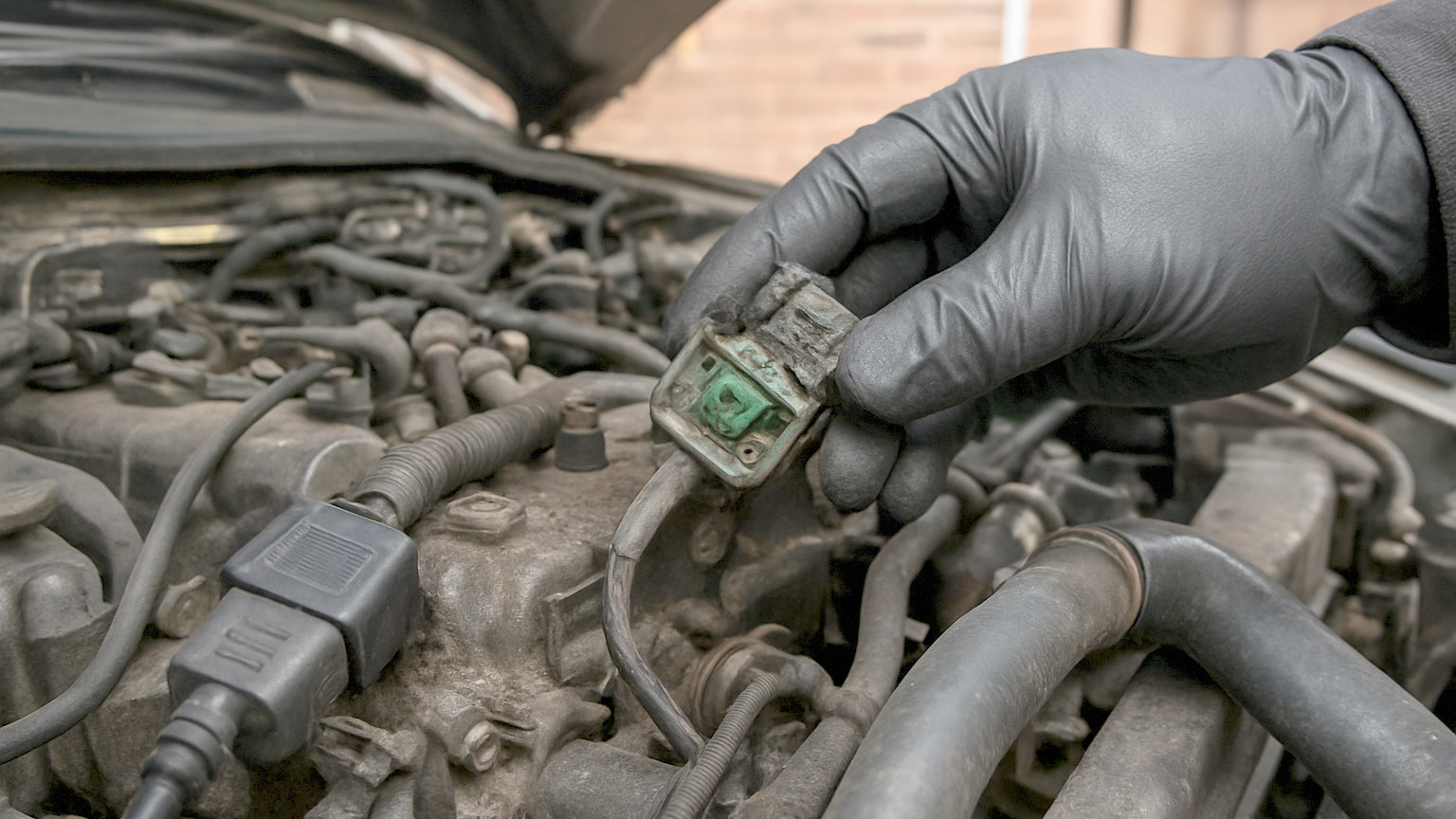
Because it describes what the system observed, not why. A code naming an oxygen sensor circuit means the signal from that circuit was outside the expected range, which could be the sensor, its wiring, its connector, or an engine genuinely running incorrectly with the sensor reporting the truth accurately. Replacing the named component works often enough to be tempting and fails often enough to be expensive.
What is the difference between generic and dealer level tools?
A basic reader accesses engine and emissions codes. It will typically not read ABS, airbag, transmission or body module faults, which sit in separate systems and often require manufacturer specific protocols. That is why a car with an ABS light can be reported as having no faults by a cheap reader, and why a garage with a proper tool is worth the difference when the light is not engine related.
What is live data and why does it matter?
Live data shows what the sensors are reporting in real time, which is frequently more revealing than any code. Fuel trims indicate whether the engine is compensating for unmetered air. Coolant temperature can be compared against reality. Individual injector corrections show which cylinder is weak. Codes tell you a threshold was crossed; live data tells you what the engine is doing right now.
Should you buy your own reader?
For anyone maintaining their own car, yes. A basic unit or a phone adapter costs very little and pays for itself the first time it saves an unnecessary trip. It is particularly useful for reading a code before a light extinguishes itself, and for checking whether a fault has genuinely been resolved after a repair. Buy one that can display freeze frame data as well as codes.
How should you use the result?
As a direction rather than an answer. Search the code alongside your make, model and engine, since many faults have well documented patterns on particular vehicles. Take the code, the freeze frame data and a description of when the light appeared to a garage. A workshop given that information starts from a much better position than one handed a car that has a light on.
What should you avoid doing?
Clearing the code before anyone has read the freeze frame data, since that deletes the evidence. Buying the part named in the code without confirming it by measurement. And clearing a light repeatedly hoping it stays off, which achieves nothing except erasing the history that would have helped identify the fault.
Is a phone based reader good enough?
For engine codes and live data, generally yes. A small adapter plugged into the diagnostic socket, paired with a reputable app, will read and clear codes and display live values perfectly adequately. The limitation is the same as any generic tool: manufacturer specific systems such as airbag and ABS often remain out of reach.


