
The coiled symbol on a diesel dashboard, which looks rather like a spring or a filament, is the glow plug or preheat indicator. It has two entirely different meanings depending on how it behaves. Illuminating briefly at startup and then going out is the system working normally. Staying on afterwards, or flashing, is a fault warning, and drivers routinely miss the distinction.
Why do diesels need glow plugs at all?
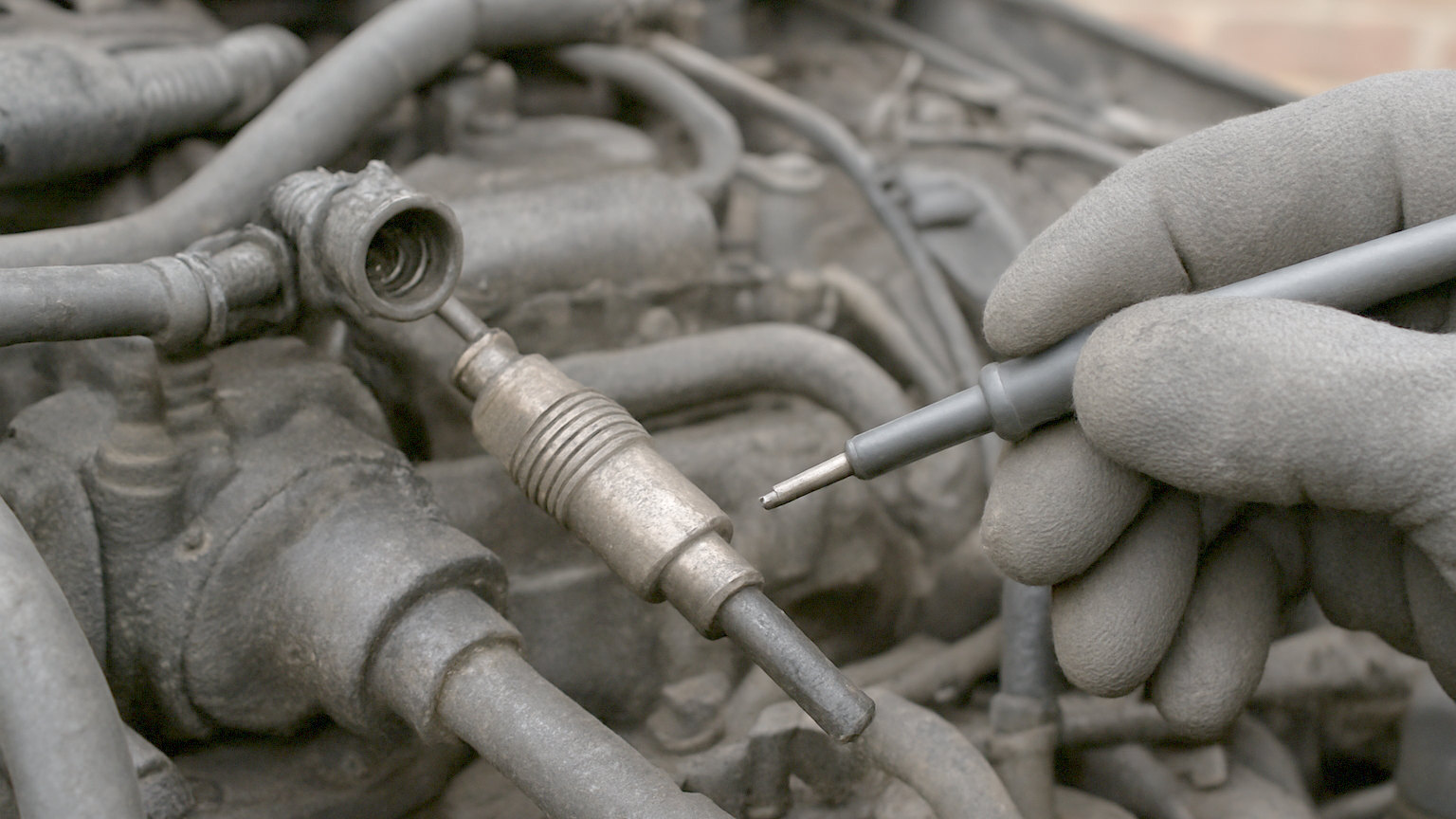
Because a diesel has no spark. Fuel ignites purely because the air has been compressed until it is hot enough, and on a cold morning the surrounding metal absorbs so much of that heat that ignition becomes unreliable. Glow plugs are small electric heating elements projecting into each combustion chamber, preheating it so the first compression stroke is hot enough to fire.
Should you wait for the light to go out?
Yes, and it genuinely matters on a cold morning rather than being a formality. Turning the ignition on and waiting for the symbol to extinguish before cranking gives the plugs time to reach temperature. In warm weather the light may go out almost instantly, because the system judges preheating unnecessary, which is normal rather than a fault.
What does it mean if the light stays on or flashes?
A fault in the preheat system, typically one or more failed glow plugs, a failed relay or control module, or wiring problems. On many cars the same symbol doubles as a general engine management warning for the diesel system, so a flashing coil light can also indicate a broader fuelling or emissions fault. Either way the code needs reading to establish which.
What are the symptoms of failed plugs?
The car starts perfectly in mild weather and struggles or refuses in cold. Extended cranking followed by a rough, stumbling first minute. Large clouds of white smoke on a cold start, which is unburnt fuel rather than steam. Because the engine will usually start on whichever plugs still work, they fail one at a time without anyone noticing until a hard frost.
Why does the fault often appear in autumn?
Because the system is barely used in summer, so a plug that failed in May causes no symptom at all until the first cold morning. By the time the light appears or the car struggles, several may have gone. This is why testing glow plugs before winter, on any diesel past about a hundred thousand miles, is worth doing rather than waiting for the symptom.
Are they expensive to replace?
The plugs themselves are inexpensive. The risk is that one seizes in the cylinder head after years of heat cycling, and removing a seized glow plug can turn a straightforward job into a lengthy and costly one, occasionally requiring the head to come off. That risk is why replacing them proactively, while they still come out, is often the cheaper approach on a high mileage engine.
Can you still drive with the light on?
Generally yes, since the fault affects cold starting rather than running. The practical problem is that the car may not start next time in cold weather, so it is a warning about tomorrow morning rather than about the current journey. If the light is flashing and accompanied by loss of power or a limp mode, that is a broader engine fault and needs prompt attention.
What should you do about it?
Have the codes read, since the system usually identifies which plug or circuit has failed. Ask for the glow plugs to be tested individually rather than replaced as a set on suspicion, and ask about the seizure risk before work begins. Have the battery tested at the same time, because glow plugs draw a substantial current and a weak battery produces very similar cold starting symptoms.
What can you do in the meantime?
Cycling the ignition two or three times before cranking gives the surviving plugs a longer heating period and often makes the difference on a marginal morning. Switch everything electrical off first, park somewhere sheltered where possible, and avoid extended cranking, since that flattens the battery and achieves little.


