
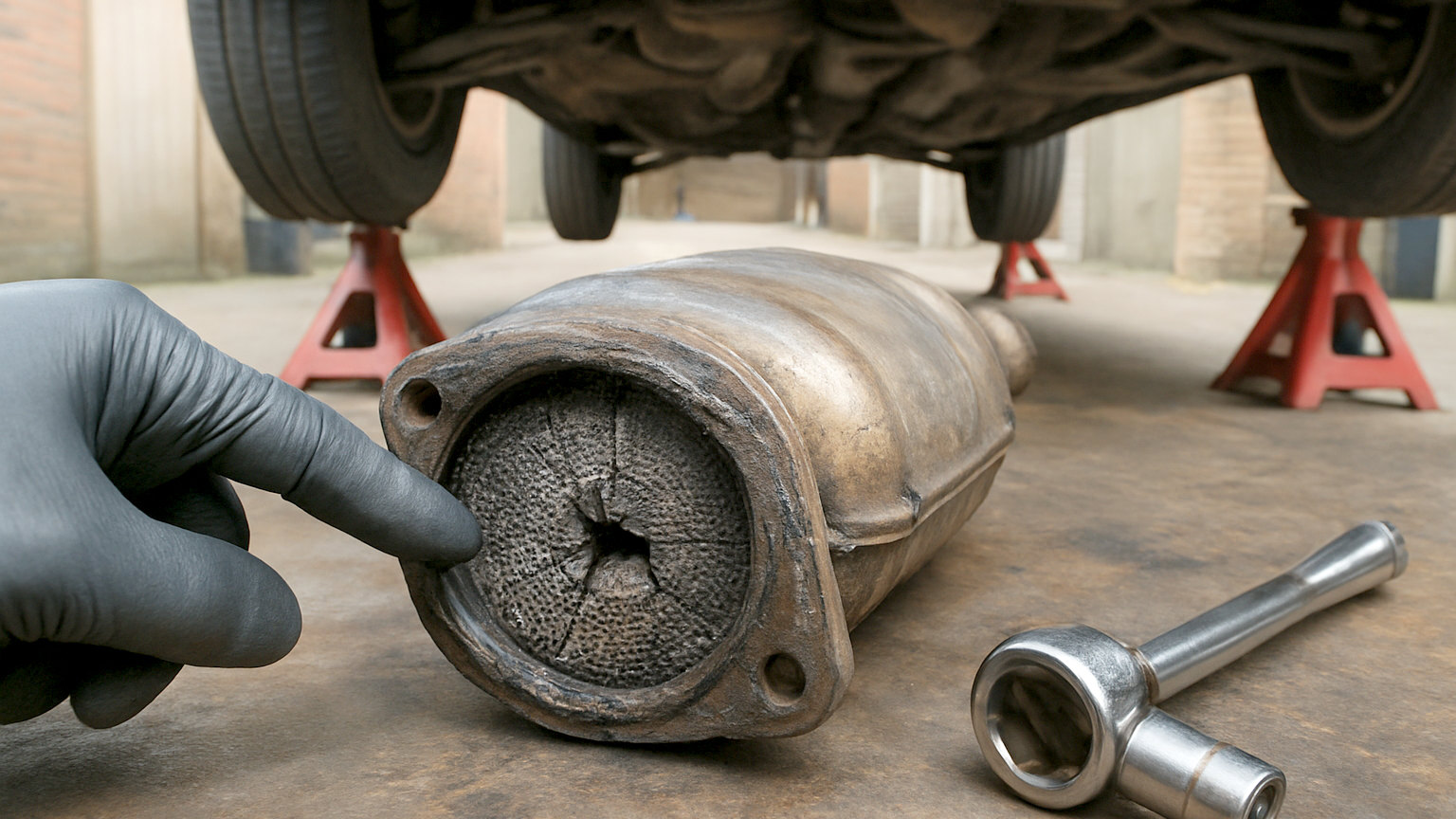
Almost every driver has seen a steady engine management light and treated it, reasonably, as something to deal with next week. A flashing one is a different message entirely, and the difference is not widely understood. Steady means a fault has been recorded. Flashing means a fault is occurring at this moment which is actively damaging an expensive component, and the correct response is immediate.
What does flashing specifically indicate?
On the great majority of cars it indicates a misfire severe enough to threaten the catalytic converter. When a cylinder fails to burn its charge, the unburnt fuel passes into the exhaust and ignites inside the converter, where temperatures rise far beyond what the ceramic substrate can survive. The management system knows this is happening and flashes the light as the most urgent warning available to it.
How quickly does damage occur?
Faster than most people expect. A converter can be destroyed within a few minutes of sustained heavy misfiring under load, particularly at motorway speeds where fuel flow is high. That is why the advice is to reduce power immediately rather than to finish the journey. A converter is an expensive component, and replacing one on top of the original fault turns a modest repair into a substantial bill.
What should you do straight away?
Ease off the accelerator, reduce speed, avoid heavy loads and hills, and pull over somewhere safe as soon as you reasonably can. If the light stops flashing and becomes steady when you drive gently, that confirms the misfire is load related and that light throttle is limiting the damage. Even so, the journey should be as short as possible and preferably should end at a garage.
What usually causes it?
On petrol engines, ignition faults dominate. A failed coil pack is the single most common cause, followed by worn spark plugs and, on older cars, perished HT leads. Fuel side causes include a blocked or leaking injector. Less commonly it is mechanical, such as a burnt valve or a failed head gasket producing low compression on one cylinder, which a compression test would confirm.
Can you tell which cylinder?
The stored fault code normally names it, which is the single most useful piece of information available. A diagnostic tool can also display live misfire counts per cylinder, showing whether the problem is confined to one or spread across several. Where one cylinder is named, swapping its coil pack with a neighbouring one and seeing whether the fault follows the part is a quick and reliable test.
Will it clear itself?
Sometimes the flashing stops and a steady light remains, which simply means the misfire has become less severe rather than that the fault has resolved. Damp weather faults can genuinely come and go, since moisture lets high voltage escape from cracked components. That is not a reason to relax, because the underlying insulation failure is still present and will return.
Is it safe to drive to a garage?
A short distance at gentle throttle, generally yes, and it is usually preferable to leaving the car somewhere awkward. A long motorway run is not, since sustained high load is exactly the condition that destroys converters. If the car is shaking badly, losing significant power or the flashing continues even at light throttle, recovery is the better choice.
What should you ask for?
The fault codes including which cylinder, the misfire counts in live data, and a check of whether the catalytic converter has already been affected. Ignition components are relatively inexpensive, so the fault itself is often a modest repair. What makes these situations costly is the miles covered between the light starting to flash and someone acting on it.
Can it happen again after repair?
It can if only the failed part was replaced without asking why it failed. Oil in the spark plug wells from a leaking rocker cover gasket destroys coil packs repeatedly, and a fuelling fault will foul new plugs within weeks. If a coil or a plug has failed early, it is worth asking what conditions it was working in.


