
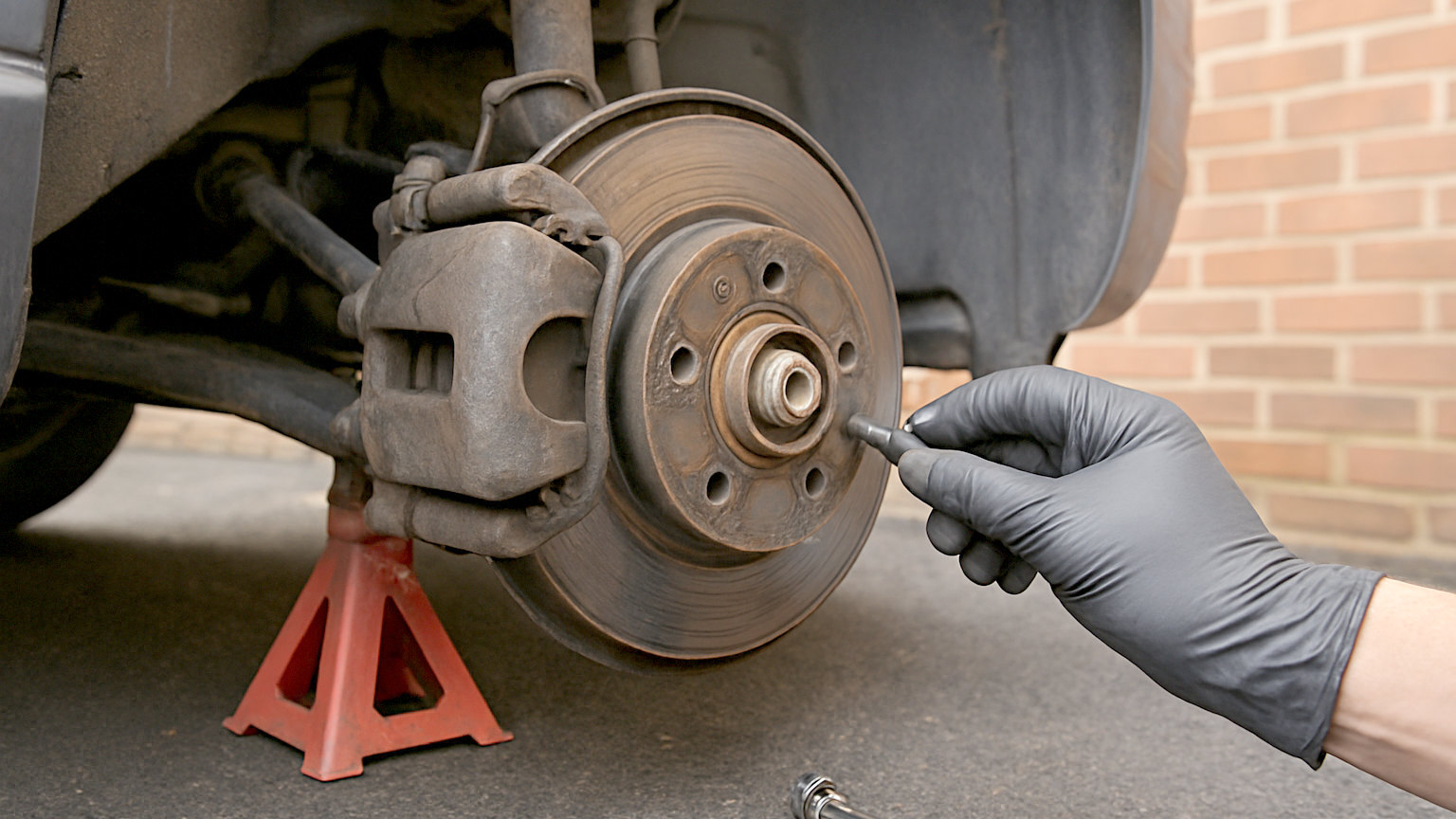
The ABS light is one of the more misunderstood warnings, because it looks alarming and sits within the braking system while meaning something quite specific and limited. It indicates that the anti-lock function has detected a fault and disabled itself. The brakes themselves continue to work normally, but the system that prevents the wheels locking under heavy braking is no longer available.
What does ABS actually do?
Under heavy braking, a locked wheel skids, which increases stopping distance and removes your ability to steer. ABS monitors the speed of each wheel and, when it detects one about to lock, rapidly releases and reapplies pressure to that wheel many times a second. That keeps the wheel rotating and preserves steering control, which is why the correct technique in an emergency is to brake hard and steer rather than to pump the pedal.
Do the brakes still work with the light on?
Yes, and this is the reassurance most people need. The hydraulic system, pads, discs and servo are unaffected, so the car stops normally in ordinary driving. What you lose is the protection during an emergency stop or on a slippery surface, where the wheels can now lock. Drive accordingly, leave more space, and avoid heavy braking on wet or icy roads until it is repaired.
What usually causes it?
A wheel speed sensor, in the great majority of cases. Each wheel has one, reading a toothed ring on the hub or driveshaft, and they live in a filthy exposed position. They fail through corrosion, damaged wiring where the loom flexes with the suspension, and contamination of the sensor tip with brake dust or metal debris. The fault code normally identifies which wheel, which makes the diagnosis straightforward.
Why did it appear after work on the car?
Because wheel bearing, brake or suspension work disturbs exactly the components involved. A sensor wire pinched or stretched during a hub replacement, a sensor not seated fully, or a damaged reluctor ring will all produce an ABS light within a few miles. If the light appeared immediately after a garage visit, mention that, because it points straight at the work rather than at a coincidental failure.
Can it be caused by something simpler?
Occasionally. Low battery voltage causes modules to log faults and can trigger an ABS light that clears once the battery is healthy. Mismatched tyre sizes across an axle, or a significantly underinflated tyre, change wheel speeds enough to confuse the system on some cars. A blown fuse will disable the system entirely. These are all worth eliminating before a module is condemned.
Does it affect other systems?
Frequently, because traction control and stability control both rely on the same wheel speed signals. That is why an ABS fault usually brings a traction control light with it, and sometimes a hill start assist or cruise control failure as well. Several lights appearing together in that pattern is not several faults; it is one sensor taking three systems out at once.
Will it fail an MOT?
Yes. The ABS warning lamp is checked as part of the test, and a light that stays on indicates a fault in a safety system. Testers also verify that the lamp illuminates during the initial bulb check, so removing the bulb is not a solution and is itself a failure. It is worth resolving before the test rather than paying for a retest.
What should you do about it?
Have the codes read, since ABS faults are recorded in a separate system from engine codes and a basic reader may not access them. Check tyre pressures and condition first, since that costs nothing. Expect the answer to be a sensor rather than the module itself in most cases, and be wary of any quote for a replacement ABS pump before the sensors and wiring have been properly eliminated.
Can a sensor be cleaned rather than replaced?
Sometimes. A sensor tip coated in metallic brake dust or a reluctor ring packed with rust can produce a fault while the sensor itself is perfectly sound. Removing and cleaning both, along with the mounting bore, is worth trying before a part is ordered, particularly on an older car where corrosion is the likely cause.


