
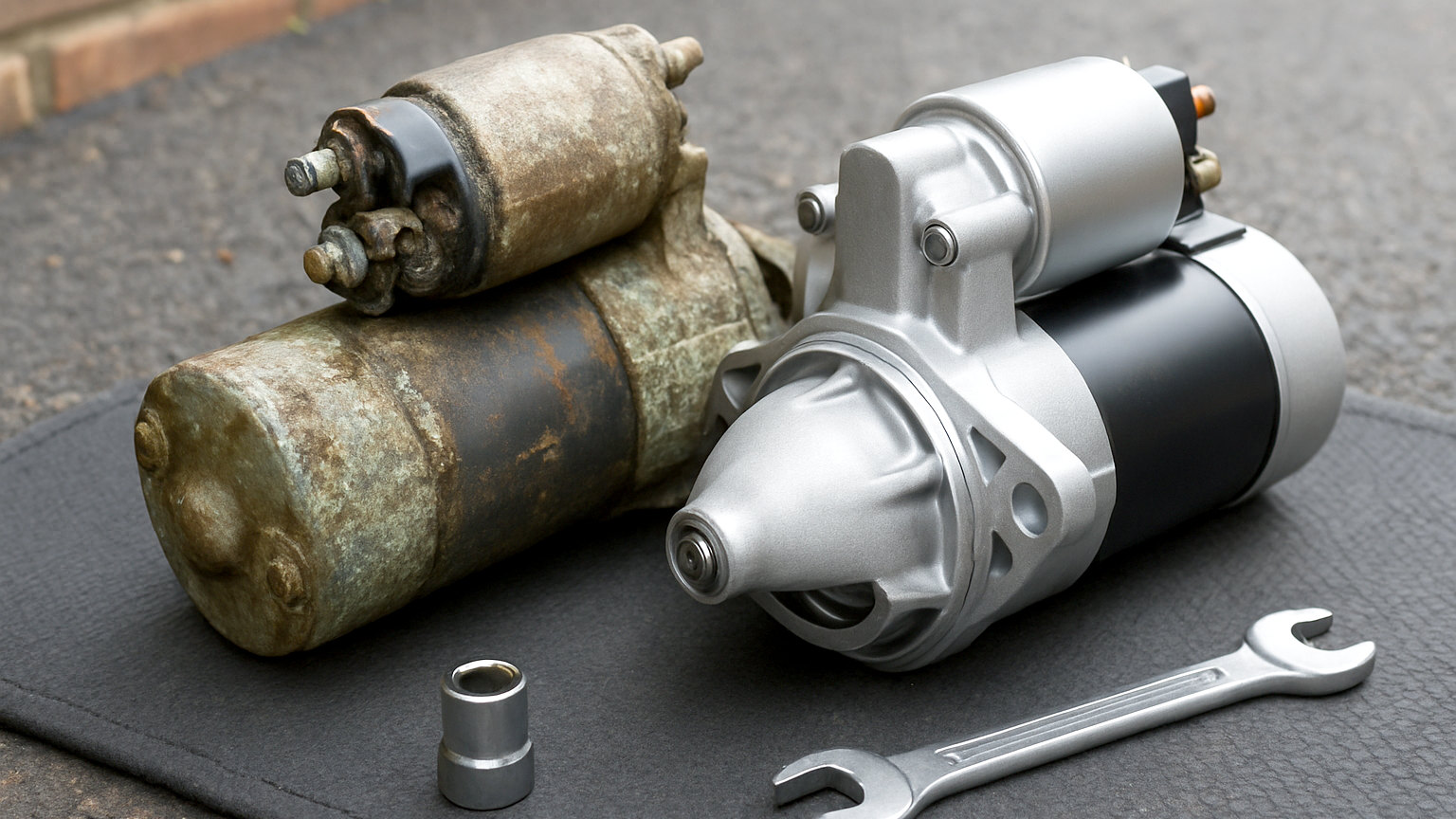
A conventional car might be started five or six times a day. A car with stop-start in urban traffic can restart its engine dozens or even hundreds of times in the same period, which is an entirely different duty cycle. Fitting an ordinary starter to that job would destroy it within months, so manufacturers use substantially different designs, and understanding them explains several otherwise puzzling symptoms.
How are these starters different?
They are built for many times the number of cycles, with more durable brushes and commutators, better bearings, reinforced drive components and solenoids designed for far more make and break operations. Many use a tandem solenoid arrangement that can engage the pinion and spin the motor independently, allowing the starter to re-engage with an engine that is still turning as it comes to a stop, which produces a much faster restart.
What is a belt driven starter generator?
Some systems replace the conventional alternator with a combined unit that both generates electricity and restarts the engine through the auxiliary belt rather than the ring gear. Restarts are noticeably quieter and smoother, since there is no pinion engaging. These systems place heavy demands on the belt and tensioner, which are correspondingly stronger, and a failure affects both charging and starting at once.
Why does the battery matter so much?
Because the battery is being shallow cycled constantly rather than deeply discharged occasionally, which is a completely different demand. Stop-start cars use AGM or enhanced flooded batteries built for that pattern. Fitting a conventional battery causes it to fail within months, and before it does the system will usually stop shutting the engine off, since the management declines to risk a restart it may not be able to complete.
Why has my stop-start stopped working?
Usually the battery, and it is a genuinely useful early warning. The system only operates when state of charge is sufficient, the engine and cabin are at temperature, the electrical load is manageable and the air conditioning is not working hard. A car that has quietly stopped shutting down is frequently reporting a battery approaching the end of its life, months before it fails to start at all.
Does the battery need registering after replacement?
On these cars, almost always. The battery management system tracks the age and condition of the fitted battery and adjusts charging strategy accordingly, and it uses that information to decide whether stop-start can operate. Without registration the car charges a new battery as though it were the old worn one, which usually undercharges it and shortens its life considerably.
Can the system be switched off?
Most cars have a button, though it typically resets to on with each ignition cycle. Some owners dislike the system, but switching it off does not extend starter life meaningfully, since these components are designed for the duty. What it does affect is fuel consumption in traffic, which is the entire point of the system existing.
Are they more expensive to replace?
Yes, typically noticeably more than a conventional starter, and belt driven starter generators more again. That is worth knowing when comparing quotes, since a price that seems high may simply reflect the component rather than the workshop. It is also worth confirming that any replacement is the correct specification, because a conventional starter will physically fit some applications and will not survive the duty.
What should you do to make one last?
Keep the correct battery type fitted and registered, replace it before it becomes marginal rather than after, and give the car regular longer journeys so the battery is properly recharged. Nearly every stop-start starting complaint traces back to the battery rather than the starter, and looking after the battery is the single most effective thing an owner can do.
Is a failed stop-start system an MOT problem?
No. The system switching itself off does not affect roadworthiness and is not tested, so there is no legal urgency. The practical urgency is different, because the most common reason it stops working is a battery nearing the end of its life, and that will eventually stop the car starting at all.


