
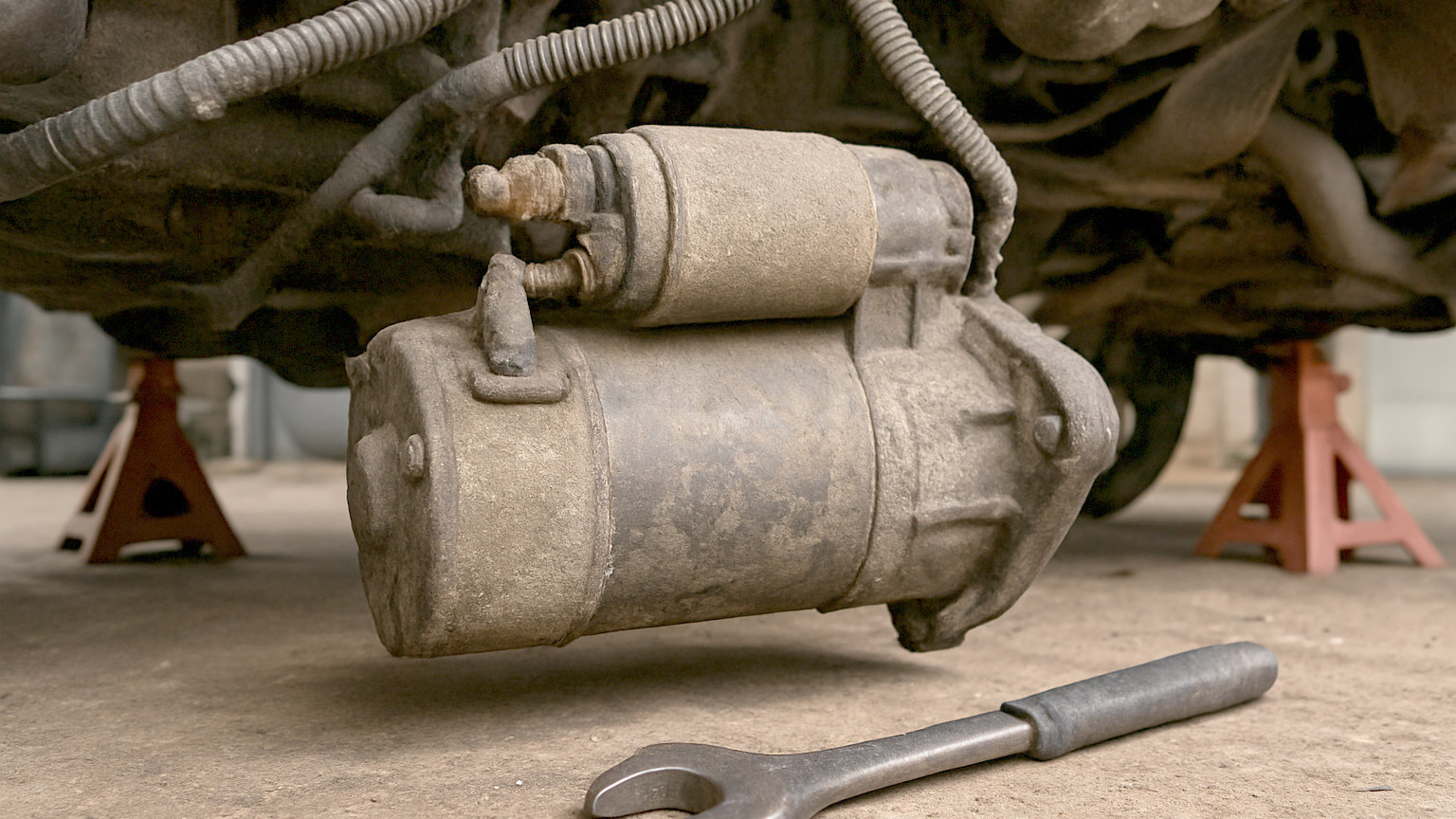
A starter motor should last many years, so a replacement that fails within twelve months has almost always been destroyed by something rather than simply being unlucky. Fitting a third unit into the same conditions produces the same result, and by that point the labour has been paid three times. There are five explanations that account for the great majority of repeat failures.
Was the battery the real problem all along?
This is the most common cause. A battery that cannot deliver full current forces the starter to draw heavily while turning slowly, which generates enormous heat in the windings and burns the solenoid contacts. The starter is destroyed by the conditions rather than by any fault of its own. Any starter replacement should be accompanied by a battery load test, and if that is skipped the new unit is on borrowed time.
Were the earths and cables checked?
A corroded earth strap or a degraded supply cable has exactly the same effect as a weak battery, restricting current and forcing the motor to labour. Because these faults are invisible and rarely inspected, they survive a starter replacement untouched and go on to ruin the new one. Voltage drop tests on the supply and return sides while cranking take minutes and identify this definitively.
Was the ring gear damaged?
If the old starter had been engaging badly for a long time, the ring gear teeth may already be chipped or worn in the positions where the engine usually stops. A new starter meshing with damaged teeth grinds, wears its own pinion quickly and fails early. The ring gear is visible through the starter aperture while the unit is out, and inspecting it takes a couple of minutes with the engine turned over by hand.
Was the unit itself any good?
Quality in the aftermarket varies considerably, and the components that fail are the ones that matter: brushes, bearings, solenoid contacts and the one way clutch in the drive. Since the labour to fit a starter is identical whichever unit goes on, and can be substantial on some engines, saving a modest amount on the part and paying labour twice is a poor trade. A remanufactured unit from a specialist is often the better choice.
Was it fitted correctly?
A starter that is not seated flat against its mounting face, or is missing a bolt or a locating dowel, sits slightly out of alignment and engages the ring gear badly. Corrosion or old gasket material on the mounting face has the same effect. Loose or reversed cable connections cause resistance and heat. Any of these will shorten the life of a perfectly good unit, and all of them are avoidable.
Could the engine itself be tight?
Occasionally, and it is worth considering when several starters have failed. An engine with a partially seized component, unusually heavy oil, or a dragging accessory demands more current from the starter than normal, which overheats it. A current draw test with a clamp meter shows this immediately, and a reading well above the specification points at the engine rather than the starter.
Does driving pattern make a difference?
It does. The number of starts matters far more than mileage, so a car doing many short journeys works its starter far harder than a car covering the same distance in fewer trips. Combine that with a battery that never gets fully recharged on short runs and the starter is being asked to work hard with an inadequate supply on every single start.
What should you insist on this time?
A battery load test, voltage drop tests on the supply and earth, an inspection of the ring gear while the starter is out, and a good quality or remanufactured unit with a warranty that covers labour. That combination costs very little more than a straight replacement and it is the difference between a repair that lasts and a third visit.


