
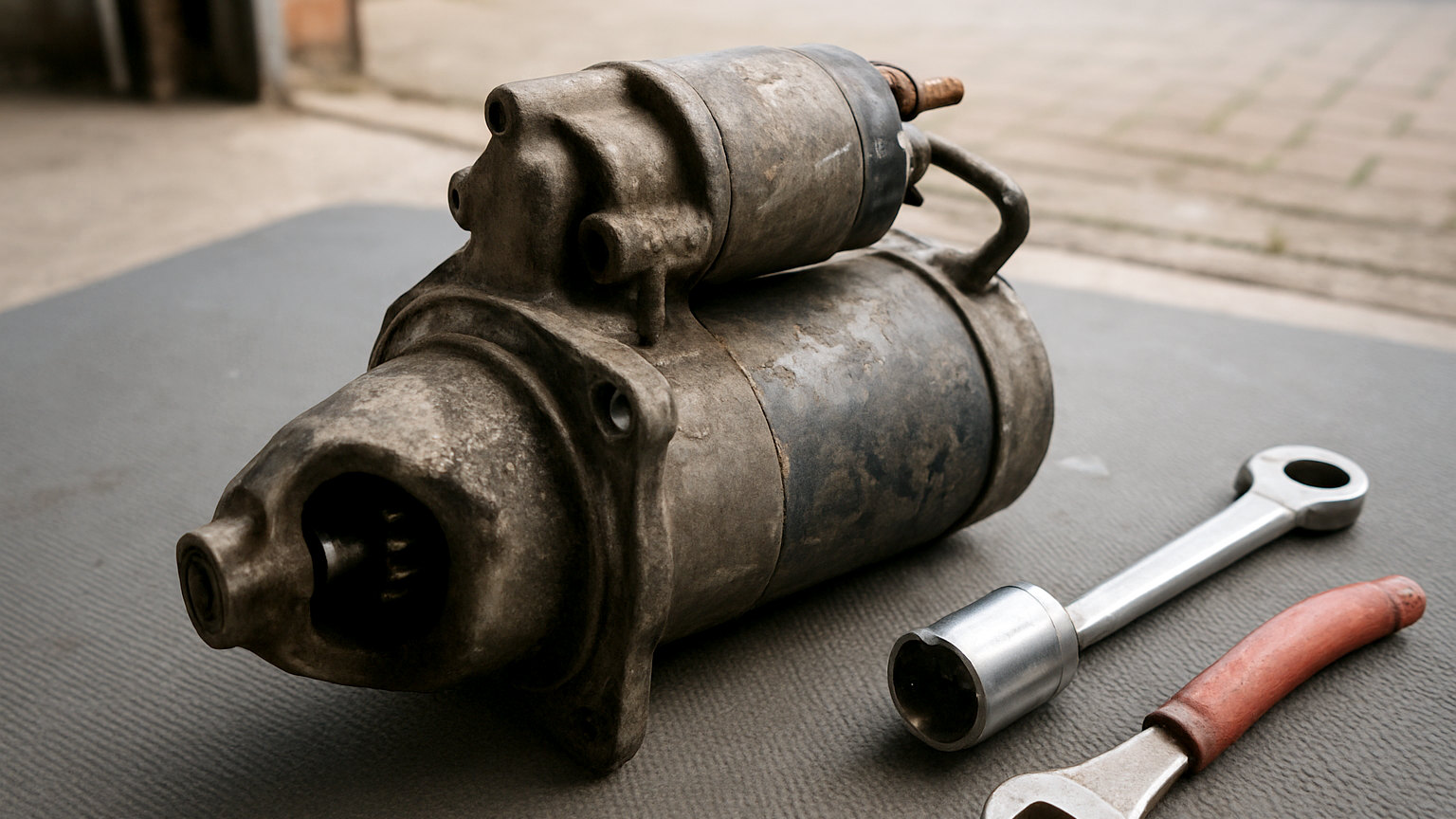
Bump starting turns the engine using the momentum of the car rather than the starter motor, which makes it the obvious workaround when a starter has failed. It also works as a diagnostic, because a car that bump starts and then runs perfectly has confirmed that the engine, fuel and ignition are all healthy and that the fault lies purely in the starting circuit.
How does it actually work?
With the car moving and the clutch depressed, selecting a gear and releasing the clutch connects the engine to the wheels. The car momentum then turns the engine over, exactly as a starter would, and if there is fuel and ignition it fires. Second gear is generally best, since first can be abrupt enough to lock the wheels and higher gears may not turn the engine fast enough at low road speeds.
What is the correct procedure?
Switch the ignition on so the fuel pump primes and the immobiliser recognises the key. Depress the clutch, select second gear, and get the car moving to a fast walking pace or better, either by pushing on the level or by rolling down a slope. Release the clutch firmly, and as soon as the engine fires press the clutch back in and blip the throttle to keep it running.
What are the safety considerations?
Anyone pushing must be clear of the car once it starts and must never be behind it on a slope. Brakes and steering will feel normal only once the engine is running, so before that the pedal is hard and the wheel heavy. Choose a straight, clear stretch of road with good visibility, avoid junctions and pedestrians, and make sure the person in the driving seat knows what to expect the moment the engine catches.
Which cars cannot be bump started?
Automatics, in almost every case, because the torque converter or clutch pack will not transmit drive backwards from the wheels to the engine at low speeds. Attempting it achieves nothing and can damage the transmission. Cars with automated manual or dual clutch gearboxes are similarly unsuitable. If your car has no clutch pedal, bump starting is not available and recovery is the answer.
Does it work if the battery is completely flat?
Not reliably. Modern cars need enough electrical power to run the fuel pump, the injectors, the ignition and the engine management, and a genuinely dead battery cannot supply that even though the engine is being turned. Bump starting works well when the starter has failed and the battery is healthy, and much less well when the battery itself is the problem.
Is it bad for the car?
Done properly and occasionally, it does little harm. Done repeatedly it is harder on the clutch and transmission than normal use, and there is a risk of unburnt fuel reaching the catalytic converter if the engine turns without firing, which is not good for it. It is a way of getting home rather than a way of living with a failed starter for months.
Can you do it alone?
Only on a slope, and with considerable care. Pushing a car and jumping into a moving driver seat is how people are injured. If there is a suitable incline, sitting in the car and releasing the handbrake is the safe version. Otherwise ask for help rather than improvising, and if neither is available, recovery is the sensible option.
What does a successful bump start tell you?
That the engine, fuel system and ignition are all working, which narrows the fault to the battery, the starter, the solenoid, the trigger circuit or the earths. That is genuinely useful information to pass on, because it eliminates a large part of the possible diagnosis before anyone lifts a bonnet. Mention it when you book the car in.
What is the alternative if it cannot be bump started?
Recovery, in most cases. On an automatic there is no safe workaround, and on a manual without a slope or willing helpers there may be no practical one either. A recovery call is inexpensive set against the risk of pushing a car on a public road, and it delivers the vehicle to somewhere the fault can actually be repaired.


