
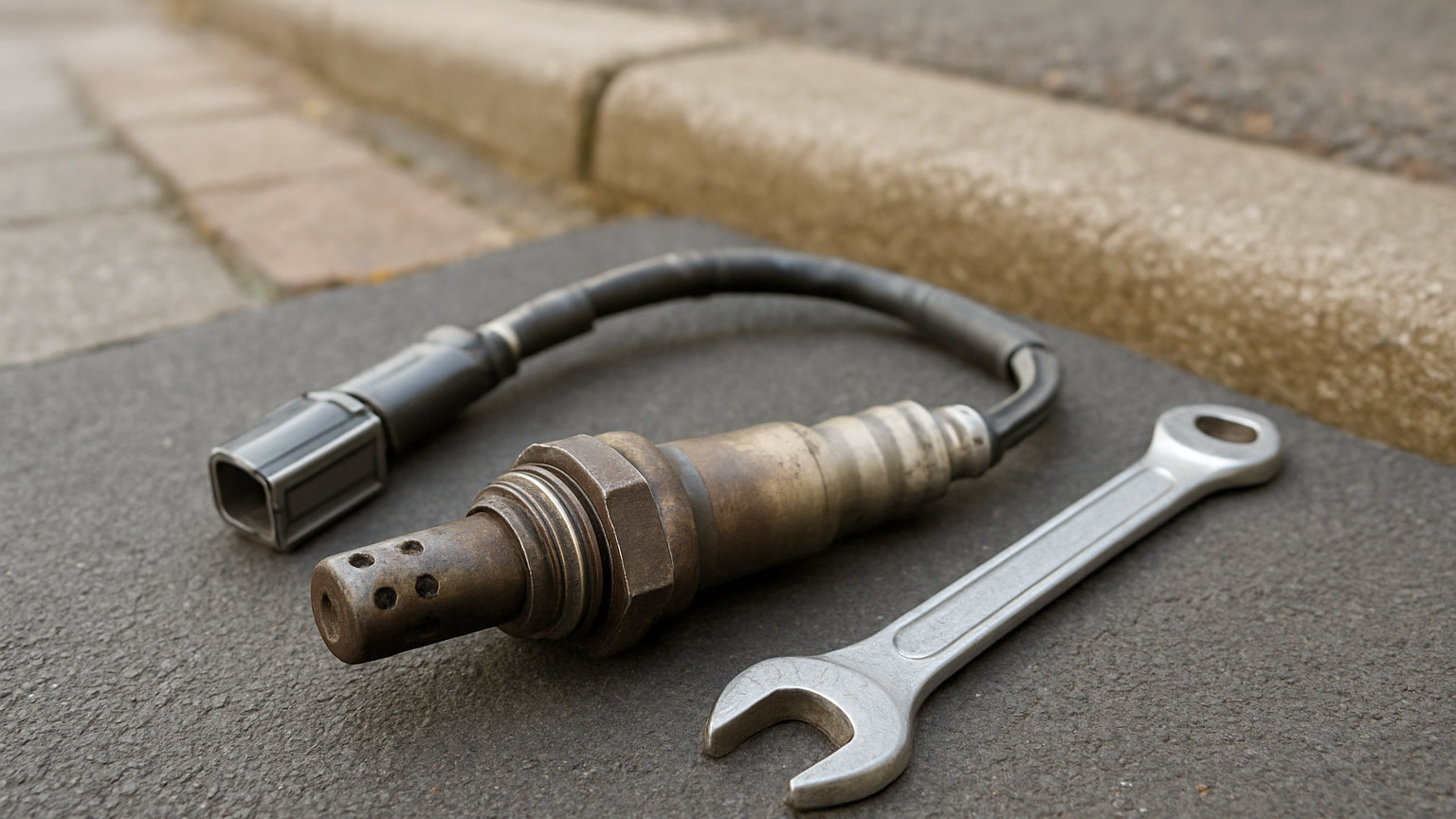
The oxygen sensor, often called a lambda sensor, is how an engine checks whether its own calculations were correct. Everything upstream is an estimate: the airflow is measured, the fuel quantity is calculated, and the mixture that results is assumed. The oxygen sensor sits in the exhaust and measures what actually happened, allowing the system to correct itself continuously.
How does it produce a signal?
The traditional type generates a small voltage that varies with the difference in oxygen concentration between the exhaust gas and the outside air, switching rapidly between roughly two tenths of a volt when lean and around eight tenths when rich. Wideband sensors, used on most modern engines, work differently and report the actual air fuel ratio across a much broader range rather than simply switching either side of ideal.
What is the difference between upstream and downstream?
The upstream sensor sits before the catalytic converter and is the one used to control fuelling. The downstream sensor sits after it, and its job is to monitor whether the converter is working by comparing what goes in against what comes out. A downstream sensor fault is therefore a monitoring problem, while an upstream fault directly affects how the engine runs.
Why do they need heaters?
Because they only work above a few hundred degrees, and the system needs accurate feedback long before the exhaust reaches that temperature naturally. A built in heater brings the sensor up to working temperature within seconds of starting. Heater circuit fault codes are extremely common, and they mean the sensor takes far longer to become useful, which costs fuel and emissions on every cold start.
What makes them fail?
Age and contamination. The sensing element becomes coated over time, which slows its response, and it can be poisoned by silicone from the wrong sealants, by oil from an engine burning it, by coolant from a head gasket leak, or by fuel additives. A car that has been running rich for a long period fouls its sensors, so a failed sensor sometimes indicates a separate problem rather than simple wear.
What is a lazy sensor?
One that still works but responds too slowly. Because fuelling correction depends on rapid switching, a sensor that has become sluggish leaves the mixture drifting further from ideal before it corrects. The result is worse fuel economy and higher emissions with no obvious symptom, and often no fault code, since the sensor is still producing a valid signal. This is why economy can decline gradually with no apparent cause.
Does a catalyst efficiency code mean the converter has failed?
Not necessarily, and this catches people out. That code comes from comparing the upstream and downstream sensors, so a degraded downstream sensor produces it just as readily as a failing converter. Given the cost difference between the two parts, confirming which by examining live data from both sensors is well worth the diagnostic time.
Should they be replaced as a service item?
Some manufacturers suggest a replacement interval, often somewhere around a hundred thousand miles, and there is a reasonable argument for it on an older car with declining economy. Sensors are not cheap, so replacing all of them speculatively is expensive. Replacing an upstream sensor on a high mileage engine with poor economy and sluggish live data readings usually pays for itself.
What should be checked before replacing one?
Exhaust leaks before the sensor, which admit outside air and produce false lean readings. The wiring and connector, which sit in a hot exposed position and corrode. Fuel trims, which reveal whether the engine genuinely is running lean or rich. And any underlying condition such as an air leak or a burning oil problem, since fitting a new sensor into those conditions simply contaminates it too.
Do they need coding after fitting?
On most vehicles no, and clearing the stored codes is sufficient. What does matter is using the correct sensor for the position, since upstream and downstream units are frequently different and are not interchangeable despite looking similar in the packet.


