
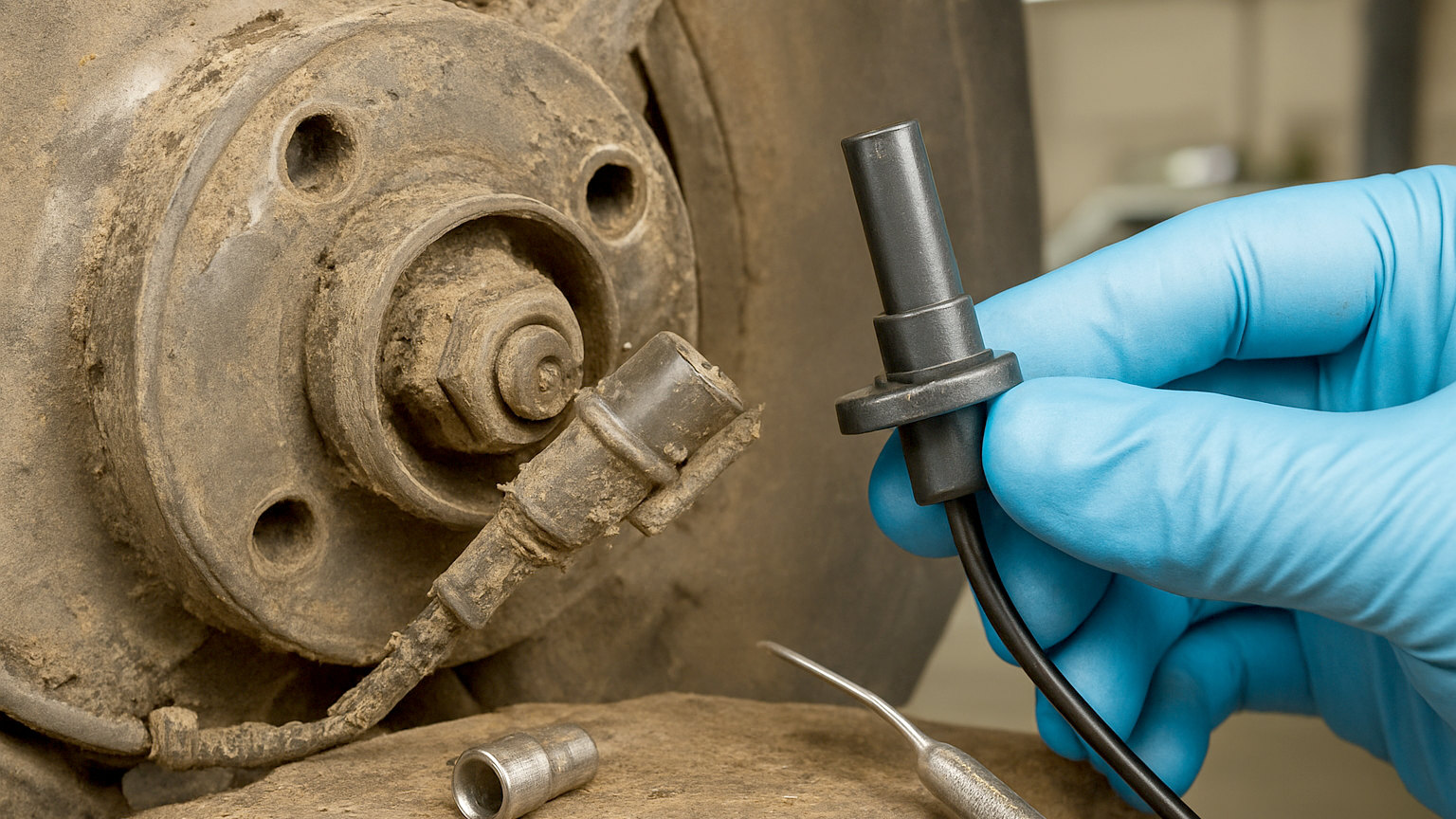
Sensors are one of the few areas of car parts where buying the cheapest option regularly produces a part that does not work properly at all, rather than one that simply wears out sooner. The reason is calibration. A sensor is not a mechanical component that either fits or does not; it is a measuring instrument, and its accuracy is the entire point of it.
Why does accuracy matter so much?
Because the module trusts the reading completely and calculates everything else from it. An airflow sensor reading five percent low causes the engine to run lean across the whole range. A temperature sensor a few degrees out shifts the fuelling map. The module has no way of knowing the reading is wrong, so it faithfully produces the wrong result and stores fault codes about components that are perfectly healthy.
What is original equipment quality?
Manufacturers rarely make their own sensors. They buy them from specialist suppliers, and those same companies sell the identical part through the aftermarket in their own packaging, usually at a considerably lower price than the same item in a manufacturer box. Buying that brand is not a compromise; it is frequently the same part without the badge, and it is the sensible middle ground.
How do you identify the right brand?
Look at the old sensor, which usually carries the maker name alongside the vehicle manufacturer part number. Buying the same brand for the replacement is a reliable guide. Reputable factors and online suppliers list the original equipment manufacturer for each application, and a part described as original equipment supplier rather than merely equivalent is the one to look for.
Which sensors are most sensitive to quality?
Mass airflow sensors have a particularly poor reputation for cheap copies, frequently producing the exact symptoms they were fitted to cure. Oxygen sensors vary considerably, especially wideband types where accuracy is critical. Crankshaft and camshaft sensors are more forgiving mechanically but still need a clean signal. Pressure sensors sit somewhere in between.
Where can you reasonably save money?
On simple resistive devices such as coolant temperature sensors, where the physics is straightforward and a decent quality budget part usually performs correctly. Switches and simple position sensors are similar. The rule of thumb is that the more processing a sensor does internally, the more the manufacturing quality matters, and the less it does, the safer a budget part becomes.
What about universal fit sensors?
Universal oxygen sensors requiring the old connector to be spliced onto a new sensor are common and legitimate when done properly with soldered and sealed joints. Done badly with quick splice connectors, they introduce resistance into a low voltage signal circuit and cause the very faults they were meant to fix. If a universal part is used, the joint quality determines the outcome.
Does it matter for warranty?
Sometimes. Vehicles under manufacturer warranty may need genuine parts for certain work, and it is worth checking before fitting anything. More practically, a reputable brand will honour a warranty on a failed part, whereas the cheapest online listings frequently do not, and the labour to fit it twice usually exceeds any saving on the part.
What is the real cost comparison?
Consider the labour rather than the part alone. Where a sensor takes ten minutes to fit, a cheap one is a modest gamble. Where it sits under the inlet manifold and takes three hours, fitting a part that may not be accurate is a poor decision regardless of price. Match the quality of the part to the difficulty of fitting it.
How do you know if a new sensor is faulty?
Compare its live data reading against reality and against what the old one reported. A new airflow sensor reading noticeably differently from the theoretical value for that engine, or a new temperature sensor disagreeing with ambient on a cold start, is telling you something. It happens more often than people expect, and it is worth checking rather than assuming a new part must be correct.


