
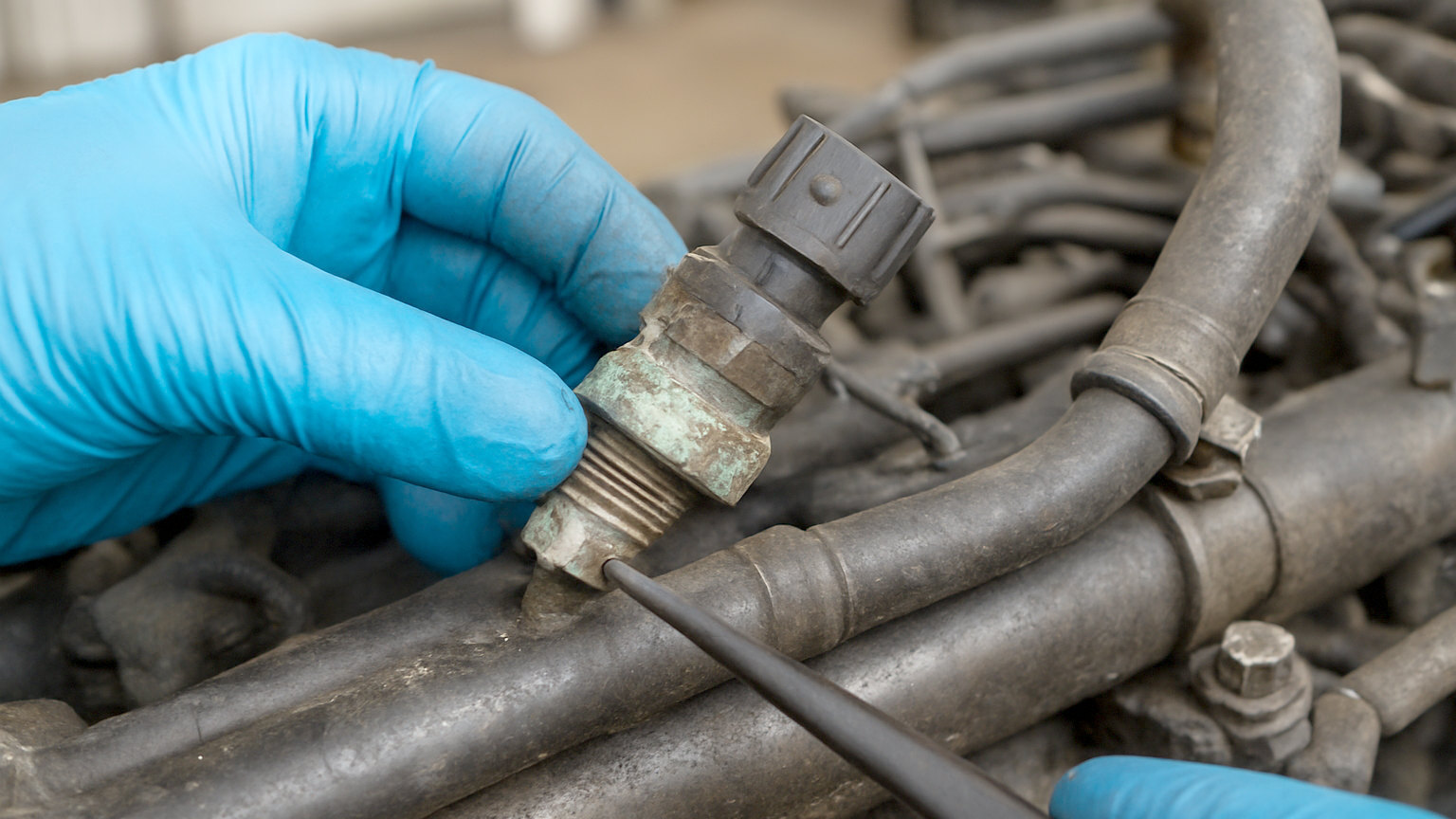
On a modern common rail engine, fuel is held in a shared rail at extremely high pressure and injected in precisely timed bursts. That pressure is controlled by feedback, with a sensor reporting the actual figure and a regulator adjusting to hold the target. When the sensor reports incorrectly, the system chases a value that does not exist, and the results range from poor running to a car that will not start.
What does the sensor actually do?
It sits on the rail and converts the pressure inside into an electrical signal, typically returning a voltage that rises with pressure. The module compares that against the target for current conditions and adjusts either the pressure regulator or the metering valve on the high pressure pump. Everything about injection timing and quantity depends on knowing the true rail pressure.
What are the symptoms of a fault?
Hard starting or a complete no start. Rough running and misfiring. Loss of power and limp mode. Excessive smoke. Poor economy. On some vehicles the engine cuts out under load or when the throttle is closed. Almost all of these come with fault codes relating to rail pressure being too high, too low, or not achieving the requested value.
Why is the sensor often not the fault?
Because a code reporting that rail pressure did not reach target usually means the pressure genuinely did not reach target. The sensor may be reporting accurately that the system is failing to deliver, and the cause is elsewhere: a worn high pressure pump, a leaking injector returning too much fuel, a blocked filter, air in the system or a faulty regulator. Replacing the sensor changes nothing in those cases.
How is the difference established?
By comparing the sensor reading against a known reference and by examining the whole system in live data. The specified rail pressure with the ignition on and the engine off should be effectively zero, so a sensor reporting significant pressure on a stationary engine has failed. Beyond that, comparing actual against requested pressure while the engine runs shows whether the system is achieving its target.
What is an injector return test?
A measurement of how much fuel each injector returns to the tank rather than injecting. Worn injectors leak internally and return excessive fuel, which prevents the rail reaching pressure and produces exactly the same codes as a sensor fault. The test involves collecting the return from each injector while cranking, and it identifies a leaking injector quickly and cheaply.
Why is diagnosis particularly important here?
Because the components involved are expensive. High pressure pumps and diesel injectors are among the costliest parts on the vehicle, and fitting either on the strength of a code alone is a substantial gamble. A methodical diagnosis costing an hour of labour is trivial against the cost of replacing the wrong item, and any reputable diesel specialist will insist on it.
Is there a safety consideration?
Yes, and a serious one. Common rail systems operate at pressures high enough that a leak can inject fuel through skin, which is a medical emergency. The system must be depressurised and left to stand before any union is opened, and lines should never be loosened while the engine is running. This is a genuine reason to leave the work to somebody equipped for it.
Can fuel quality cause these faults?
It can. Diesel lubricates the injection system, and contaminated or poor quality fuel accelerates wear on the pump and injectors. Water in the fuel is particularly damaging, which is why many diesels have a water separator that needs draining periodically. A car that developed pressure faults shortly after an unfamiliar fill is worth considering in that light.
What should you ask before agreeing to work?
Whether actual and requested rail pressure have been compared in live data, whether an injector return test has been carried out, and whether the fuel filter has been changed recently. Those three answers narrow the cause enormously, and any quote for a pump or injectors that does not reference them deserves a second opinion.


