
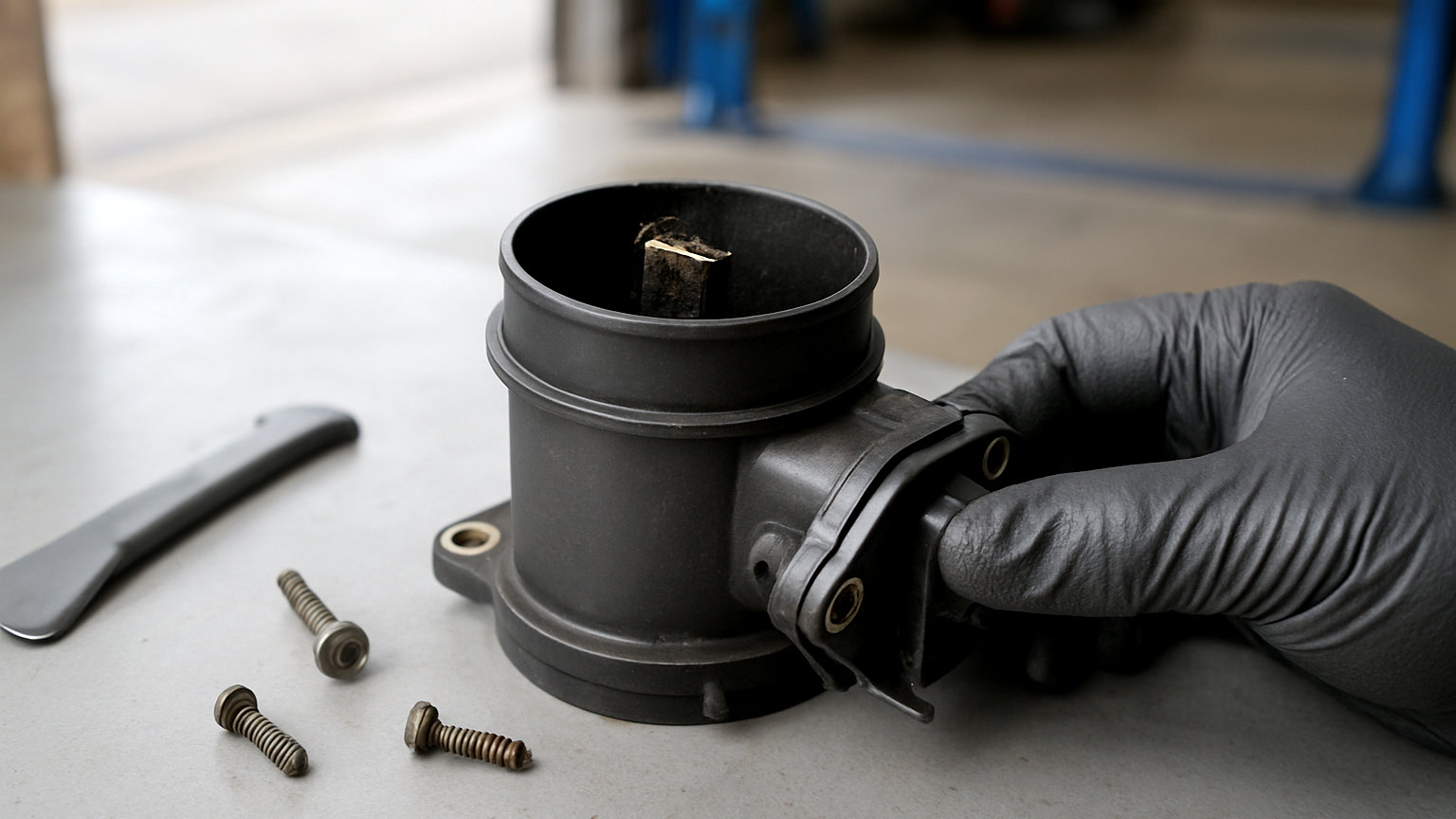
Cleaning a sensor is one of the cheapest repairs available and one of the most inconsistent, sometimes transforming a car and sometimes achieving nothing at all. The difference is entirely down to whether the fault is contamination or degradation. Understanding which sensors respond to cleaning, and which cleaners will destroy them, makes it a worthwhile first step rather than a gamble.
Why does contamination cause faults?
Because most sensors work by interacting directly with what they measure. An airflow sensor relies on air passing over a heated element, and a coating of oil and dust insulates it so it responds slowly and reads low. A throttle plate coated in carbon changes the airflow at small openings. In each case the device is undamaged and simply cannot sense properly through the deposit.
Which sensors respond well to cleaning?
Mass airflow sensors, which are the standout case and where a fifteen minute clean frequently restores normal running. Throttle bodies, where carbon around the plate causes idle and response problems. Manifold pressure sensors, whose port can block with carbon. Crankshaft and camshaft sensors, where metal debris collects on the tip and disrupts the signal. All are worth cleaning before replacement.
Which do not?
Oxygen sensors, despite what is often suggested. Their contamination is chemical poisoning of the sensing element rather than surface dirt, and no cleaner reverses it. Attempting to clean one with solvent or by heating it usually finishes it off. Temperature sensors are simple resistive devices, so a dirty one is rarely the problem and cleaning achieves nothing.
What cleaner should be used?
A product specifically sold for that sensor. Mass airflow sensor cleaner is formulated to evaporate completely and leave no residue, and it costs very little. Throttle body cleaner is a different formulation again. What matters most is what not to use: brake cleaner, carburettor cleaner and general solvents attack the delicate elements and the protective coatings on throttle plates, and they cause permanent damage.
What is the correct technique?
Disconnect the battery, remove the sensor carefully, and spray the element generously without ever touching it with anything. The sensing wire or film is extremely fragile and a cotton bud will destroy it. Allow the sensor to dry completely, which takes longer than people expect, before refitting. Rushing the drying and refitting a wet sensor produces a worse result than not cleaning it at all.
Why does the fault sometimes return quickly?
Because the contamination came from somewhere. An over oiled performance air filter recontaminates an airflow sensor within weeks. A blocked crankcase breather forces oil vapour into the intake, coating the throttle body and sensor repeatedly. If cleaning works and the fault returns within a few thousand miles, the source is upstream and needs finding rather than the sensor needing cleaning again.
Does cleaning tell you anything diagnostically?
Yes, and this is worth appreciating. If cleaning produces a clear improvement, contamination was the fault and the sensor is fundamentally sound. If it makes no difference at all, you have eliminated contamination for the price of an aerosol and can proceed to proper testing with more confidence. Either outcome is useful, which is why it is a reasonable first step.
When should you not attempt it?
When the sensor is difficult to access and the risk of damaging something during removal outweighs the modest chance of success. When live data already shows the sensor responding correctly, meaning contamination is not the issue. And on any sensor where the manufacturer specifically advises against cleaning, which some do for good reason.
What should you do afterwards?
Clear any stored codes and drive the car normally for a few cycles, then check whether the fault returns and whether the live data readings have improved. On a throttle body clean, check whether the car requires an adaptation reset, since many do and skipping it produces a high or erratic idle that looks like a new fault.


