
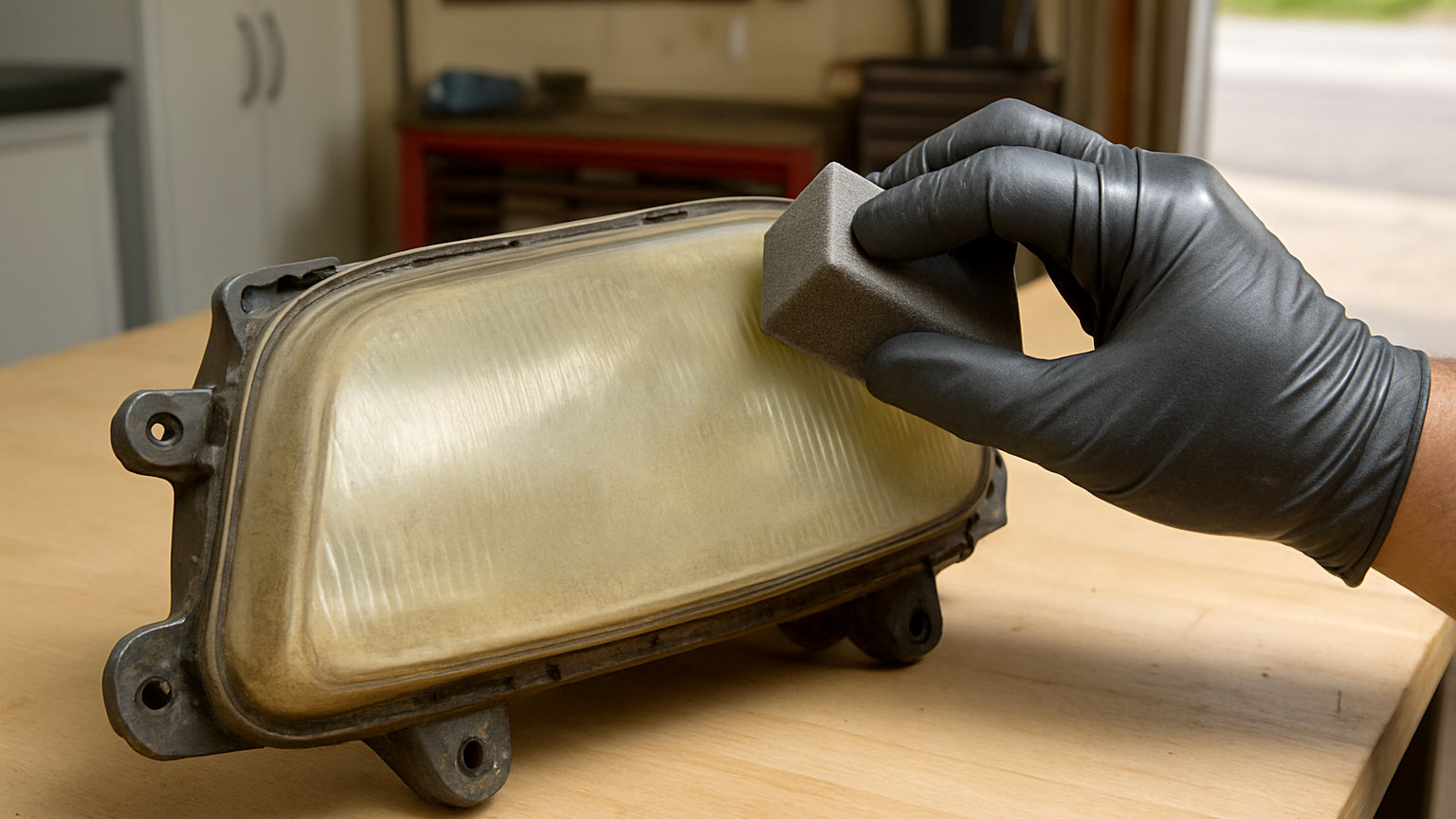
Yellowed, hazy headlight lenses are close to universal on cars more than about eight years old, and they are probably the single largest cause of poor night time visibility that owners never think to address. The good news is that the damage is confined to a thin surface layer, and restoring it is inexpensive, effective and entirely achievable at home.
Why do lenses go cloudy?
Modern headlight lenses are polycarbonate rather than glass, chosen because it is light and resists impact. Polycarbonate degrades under ultraviolet light, so manufacturers apply a protective hard coat at the factory. That coating wears and breaks down over years of sun, stone chips, washing and road grit, and once it fails the plastic beneath oxidises rapidly, turning yellow and developing a fine crazed surface.
How much light does it cost you?
Considerably more than most people expect. A badly oxidised lens scatters light rather than transmitting it cleanly, cutting usable output substantially and blurring the beam cut off, which reduces distance vision and increases glare for others. Drivers routinely replace bulbs, and even fit conversion kits, chasing a problem that is entirely in the lens surface.
How does restoration work?
By removing the damaged layer and polishing what remains. In practice that means wet sanding with progressively finer abrasive papers, typically starting somewhere around eight hundred grit and working up through several stages to around three thousand, keeping everything wet throughout. The lens looks alarmingly matt during the process, which is normal. A polishing compound then restores clarity.
Why does the sealing step matter most?
Because sanding removes whatever remained of the factory hard coat along with the oxidation, leaving bare polycarbonate directly exposed to ultraviolet light. Without a new protective layer the lens will yellow again within months, often faster than before. A dedicated UV resistant clear coat or lacquer is what makes the job last years rather than a season, and skipping it is the most common mistake.
Are the cheap polish kits any good?
They vary. Kits containing only a polish and no sealant will improve appearance briefly and the result will not last. Kits that include abrasive stages and a proper UV coating give genuinely good results. Toothpaste and similar household remedies produce a visible improvement for a week or two and leave the plastic unprotected, so they are best regarded as demonstrations rather than repairs.
What preparation is needed?
Mask the surrounding paintwork thoroughly, because abrasive paper will damage it instantly and the masking is what separates a tidy job from an expensive one. Wash the lens first so grit is not dragged across it. Work in the shade rather than direct sun, keep the surface wet, and change paper regularly. Allow proper drying time before applying the coating.
When is replacement the better answer?
When the crazing is deep enough to remain visible after sanding, when the lens is cracked, or when the reflector inside has clouded or peeled, since no amount of work on the outside will fix an internal problem. Shine a torch into the unit and look at the reflector surface before starting. On some cars replacement lenses are available separately, which is worth checking before buying a whole unit.
Is it worth doing?
It is one of the best value jobs available on an older car. A couple of hours and the cost of a kit transforms night driving, improves how the car looks considerably, and removes a likely MOT advisory. Compared with buying brighter bulbs or fitting conversion kits, it addresses the actual cause rather than attempting to overcome it.
How long will the result last?
With a proper UV coating applied, typically two to four years before the process needs repeating, and longer on a car kept under cover. Without one, a matter of months. Washing the lenses when you wash the car, and avoiding abrasive cleaners on them, extends it further. Professional restoration services generally use a more durable coating than home kits and are worth considering on an expensive unit.


