
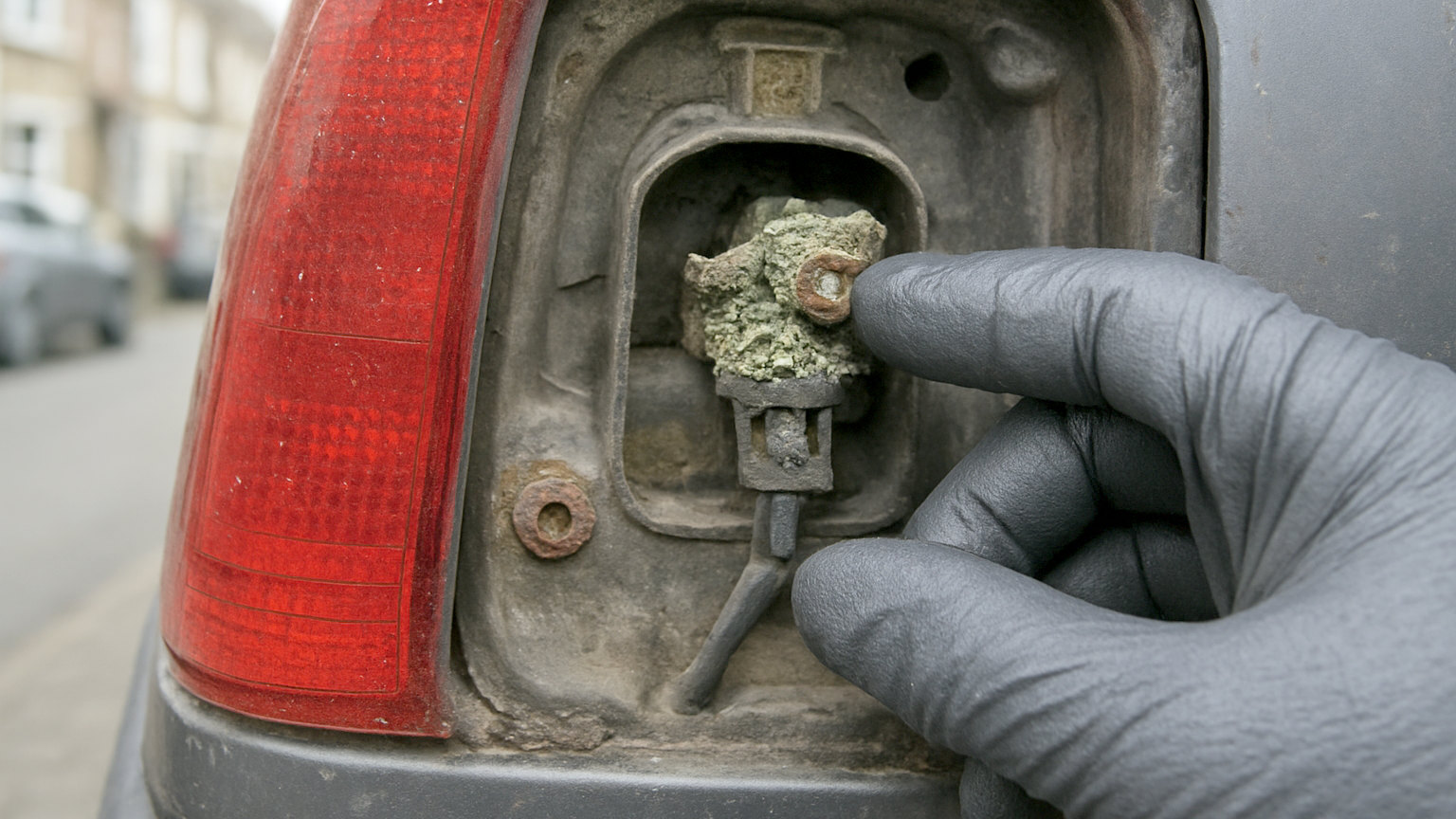
Rear light faults have a distinctive character. Rather than one bulb simply failing, several lamps begin misbehaving together in ways that appear to make no sense: the brake light dims when the indicator flashes, the tail light glows faintly when the brakes are pressed, or two functions fail at once. That pattern almost always points at one shared connection rather than several separate faults.
Why does one earth cause such strange symptoms?
Because every lamp in a rear cluster typically shares a single earth connection back to the body. When that earth corrodes, current cannot return properly, so it looks for an alternative route through the filaments of other bulbs in the same cluster. That is why pressing the brake pedal can make the tail light glow, or why an indicator can cause the brake light to pulse. Nothing is shorted; the current is simply travelling a path it was never meant to take.
Where is the earth connection?
Usually a single wire from the cluster to a stud or bolt on the body inside the boot or behind the rear panel, often black or brown. It is in a position that collects moisture, and the joint corrodes between the terminal and the painted metal beneath. Removing it, cleaning both the terminal and the body contact back to bright metal, and refitting with a smear of grease resolves a great many of these faults.
Why do rear clusters fill with water?
Their gaskets harden and shrink with age, and they sit where spray from the rear wheels reaches them constantly. Many designs also rely on drain holes that block with dirt, so water that enters cannot escape. On hatchbacks and estates the tailgate flexes every time it is closed, which works the seal loose over years. The result is a cluster with standing water inside it.
What does that water do?
It corrodes bulb contacts and holders, producing high resistance that causes dim lamps, flickering and repeated bulb failures. It corrodes the earth connection, which produces the strange shared symptoms above. On clusters with printed circuit boards behind the bulbs, water destroys the tracks, and once those have corroded through the holder assembly usually has to be replaced rather than repaired.
How do you dry and clean one out?
Remove the cluster, which is usually held by a few nuts accessible from inside the boot, and pour out any standing water. Dry it thoroughly, clean the contacts with a small wire brush or fine abrasive, and check the circuit board for green corrosion or burnt tracks. Clear the drain holes. Then fit a new gasket, or if none is available, seal the mating face carefully before refitting.
Why do the bulbs keep failing afterwards?
Because corrosion left in the holder continues to cause resistance and heat even after the water has gone, and because any remaining moisture thermally shocks a hot bulb. If bulbs continue to fail in one position after cleaning, the holder itself has been damaged and should be replaced. A holder showing melted or discoloured plastic must be replaced regardless, since it is a fire risk.
Could it be the wiring rather than the cluster?
On hatchbacks, estates and vans, frequently. The wiring loom running through the flexible rubber gaiter between the body and the tailgate is bent every time the door is opened, and individual wires fatigue and break inside their insulation. The symptom is lights that work intermittently or only when the tailgate is held at a particular angle. Flexing the gaiter while someone watches the lights usually confirms it.
What should you check first?
The earth connection, because it is free to inspect and it explains the odd interconnected symptoms better than anything else. Then look for water inside the cluster and check the drain holes. Only once those are eliminated is it worth suspecting bulbs, holders or the wiring, and that order will save both time and unnecessary parts.


