
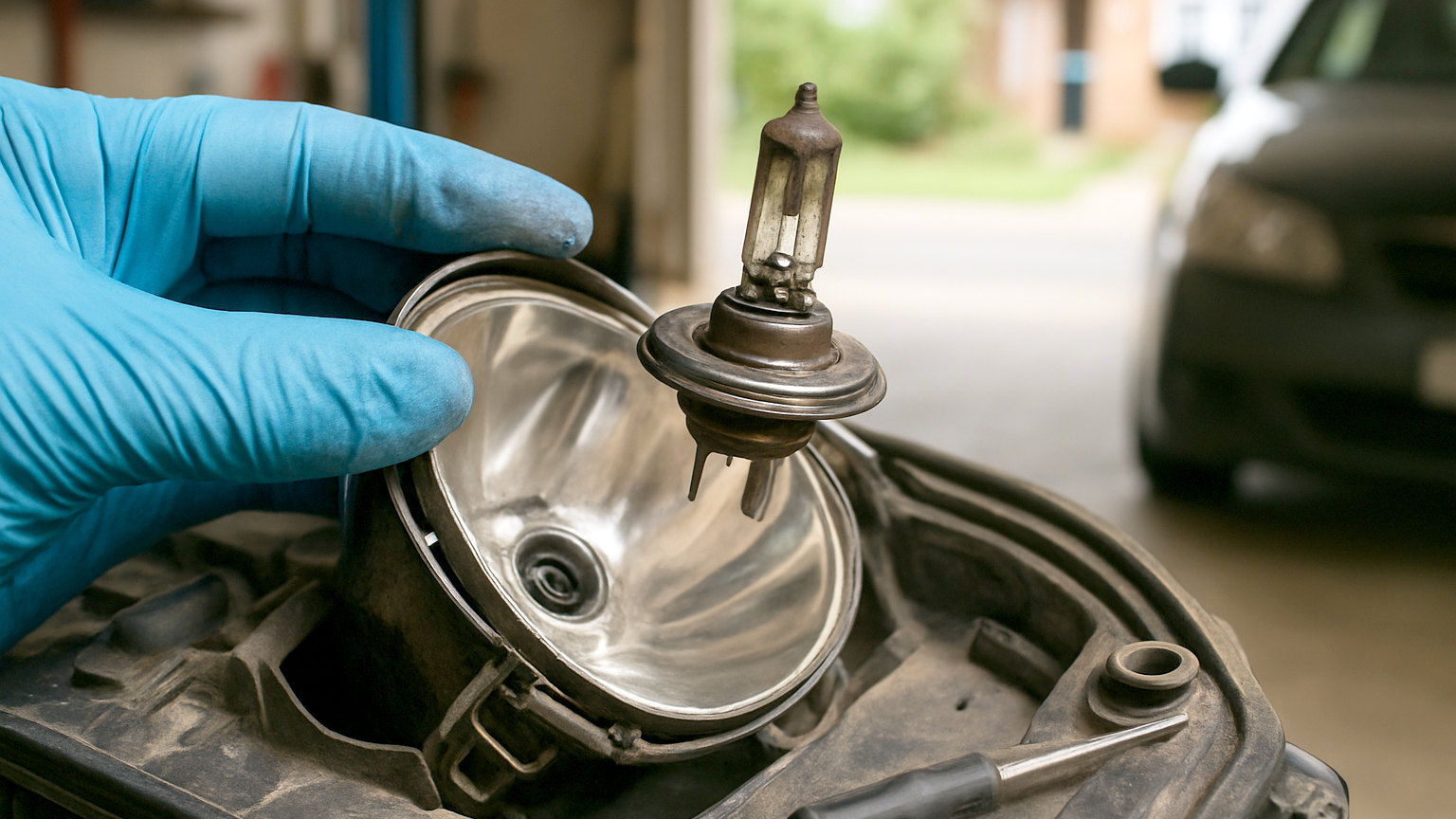
Lighting is consistently among the most common reasons cars fail the MOT, and it is also among the cheapest to prevent. Most failures are a blown bulb, a cloudy lens or an aim that has drifted, all of which can be found in a five minute check the week before the test. Understanding what testers actually look at makes that check far more effective.
Which lights are tested?
Everything the car was fitted with: headlights on dipped and main beam, sidelights, rear lights, brake lights including the high level lamp, indicators and hazard lights, the rear fog light, the number plate light, and reversing lights where fitted. Daytime running lights are checked on cars that have them. Front fog lights are tested where fitted, and must work correctly if present.
What fails on the bulbs themselves?
Any required lamp not working. Bulbs that are dim or flickering. Lamps that are the wrong colour, which catches out cheap replacement bulbs and coloured aftermarket units. A lamp obscured by dirt, a bracket or an accessory. Bulbs of differing brightness across a pair, since headlights must be reasonably matched. And any lamp whose lens is missing, cracked or damaged enough to let water in.
What are the colour rules?
Front facing lights must be white or, for indicators, amber. Rear lights must be red, indicators amber, reversing lights white and the rear fog red. There is no allowance for blue or coloured bulbs facing forwards, and a blue tinted bulb that produces a visibly blue light will fail. Tinted lens covers that alter the colour or reduce output are equally a problem.
How is headlight aim assessed?
With a beam setting machine that checks both the vertical and horizontal position of the beam and the sharpness of the cut off line. Headlights aimed too high dazzle oncoming drivers and fail. Aimed too low they fail as well, since they do not illuminate the road adequately. A beam pattern that is scattered or has no clear cut off, which is what LED retrofits often produce, will also fail.
Do cloudy lenses fail?
They can. The test covers whether the light output and beam pattern are adversely affected, so light hazing may pass with an advisory while heavy yellowing and crazing fails. Since restoring a cloudy lens is inexpensive and dramatically improves night driving anyway, it is worth doing regardless of whether it would technically have passed.
What about fog lights?
At least one rear fog light is required on cars first used from 1980, it must work and it must show a warning to the driver when on. Front fog lights are not required, but if fitted they must work correctly, be the right colour and be properly aimed. Additional aftermarket lamps must be correctly positioned and wired, and extra forward facing lights that cannot be switched off appropriately will cause problems.
What is the easiest way to check beforehand?
Ask someone to stand outside the car while you work through every switch, or reverse up to a window or garage door and use the reflection. Check the number plate light, which is invisible from the driving seat and a frequent failure, and the high level brake light for the same reason. Look at the lenses in daylight for cracks and yellowing.
Why is it worth doing yourself?
Because a bulb costs very little and a failure costs a retest plus the inconvenience of a car that cannot legally be driven except to a booked repair. Lighting failures are almost entirely avoidable, and they are the category where a few minutes of preparation has the best return of anything you can do before the test.
What about lights fitted after the car was built?
Anything added must comply in colour, position and switching. Additional forward facing lamps, light bars, underbody lighting and coloured interior lighting visible from outside can all cause problems. If an accessory has been fitted since the last test, it is worth checking the rules before presenting the car rather than discovering the position at the testing station.


