
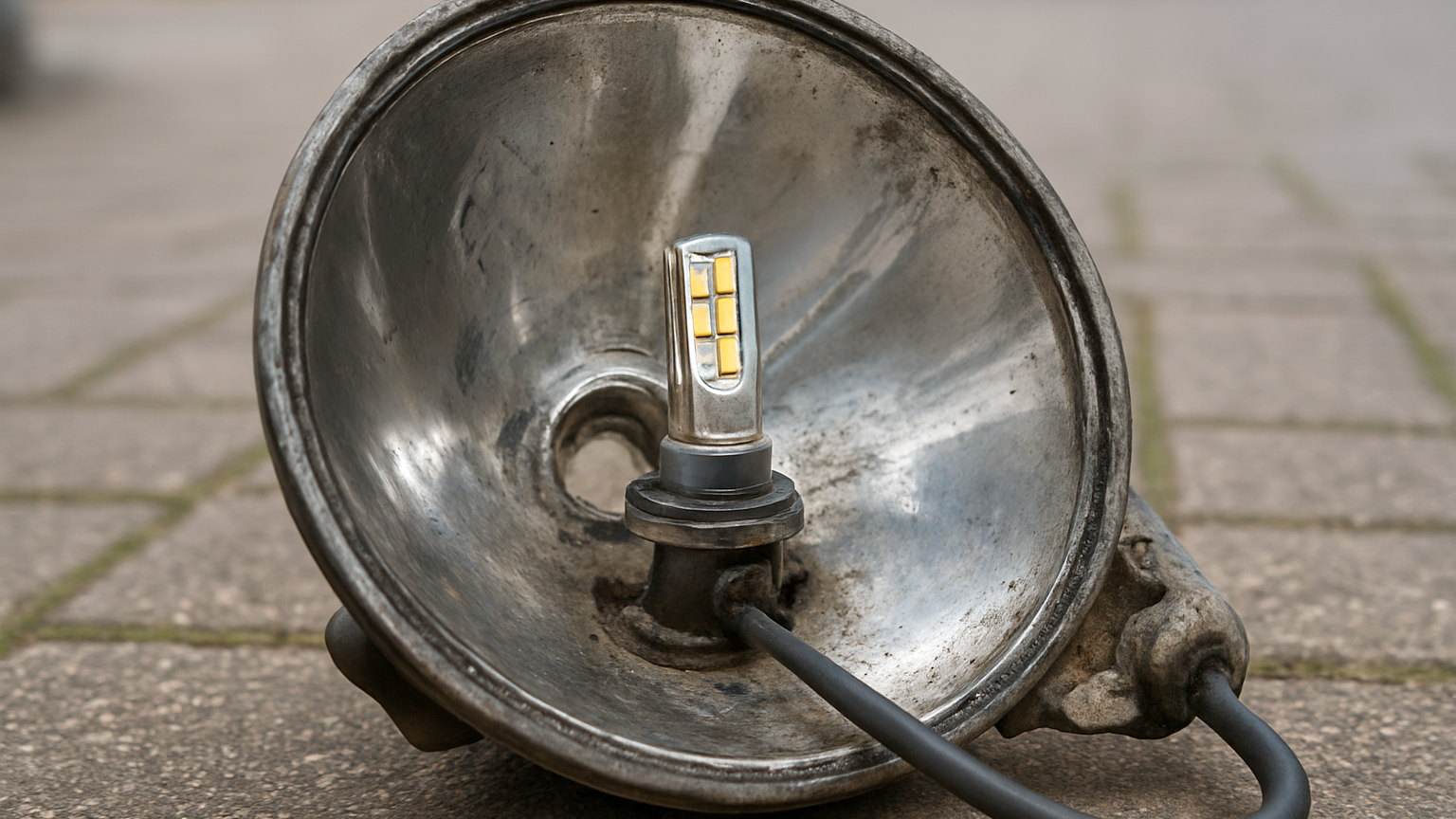
LED retrofit bulbs are sold everywhere and they physically fit the socket, which makes the idea look straightforward. The complication is that a headlight is an optical system designed around a specific light source, and changing the source without changing the optics rarely produces a better headlight. There are also legal considerations that catch people out at MOT time.
Why does the beam pattern go wrong?
A halogen bulb produces light from a small filament in a precise position, and the reflector or projector lens is shaped to collect that light and throw it into a controlled pattern with a sharp cut off at the top. LED retrofits produce light from flat chips arranged differently, so the reflector collects it from the wrong places. The result is usually light scattered above the cut off, dazzling oncoming drivers while leaving dark patches on the road.
Do they actually produce more usable light?
Frequently less, despite higher headline output figures. Light thrown above the beam cut off or off to the sides is wasted and worse than wasted, since it reduces contrast and blinds other drivers. A quality halogen bulb in a reflector designed for it commonly puts more light where it is needed than an LED retrofit in the same housing. The perception of improvement often comes from the whiter colour rather than genuine performance.
What is the legal position?
Headlight bulbs are type approved as part of the lighting system, and a retrofit LED in a housing approved for halogen is not covered by that approval. In practice this means an MOT tester can fail the car, and many now do, particularly where the beam pattern is visibly wrong. Products sold as off road use only are an indication in themselves. This is an area where the legal position and what is available to buy are not aligned.
Are there other practical problems?
Several. LEDs need a heatsink or fan at the base, which frequently will not fit behind the rear cover of the headlight, and forcing the cover on breaks the weather seal. Many cars monitor bulb current and report a bulb failure because an LED draws far less, requiring resistors or adapters that generate their own heat. And automatic headlight levelling systems calibrated for halogen output may behave incorrectly.
Where do LEDs work well?
In positions where beam pattern is irrelevant. Number plate lights, interior lights, boot and glovebox lamps are all sensible LED upgrades, offering longer life and less current draw with no optical downside. Sidelights are usually acceptable provided the colour remains white and the intensity is reasonable. It is specifically the beam forming lights, dipped and main, where retrofitting causes problems.
What about indicators and brake lights?
LEDs draw much less current, which on many cars causes the indicator to flash rapidly because the system interprets low current as a failed bulb. Resistors can be added to restore normal flashing, though they dissipate the saved energy as heat and must be mounted carefully. Colour matters too: an LED behind an amber lens must still produce a compliant amber output, and some cheap units do not.
What is the alternative if the lights are poor?
Start with the basics, because they account for most complaints. Cloudy oxidised lens covers cut output dramatically and can be restored. Headlight aim drifts over time and is often set too low. Old bulbs lose output long before they fail, so a fresh pair of good quality bulbs makes a real difference. Corroded earths reduce voltage at the lamp. Those four cost little and frequently solve the problem entirely.
Is there a legitimate route to LED headlights?
Fitting complete LED headlight units designed and approved for the vehicle, which some manufacturers offered as an option and which are sometimes available as genuine parts. That replaces the whole optical system rather than the light source alone, so the beam pattern is correct and the approval is intact. It costs considerably more than a pair of retrofit bulbs, which is precisely why the retrofits sell.


