
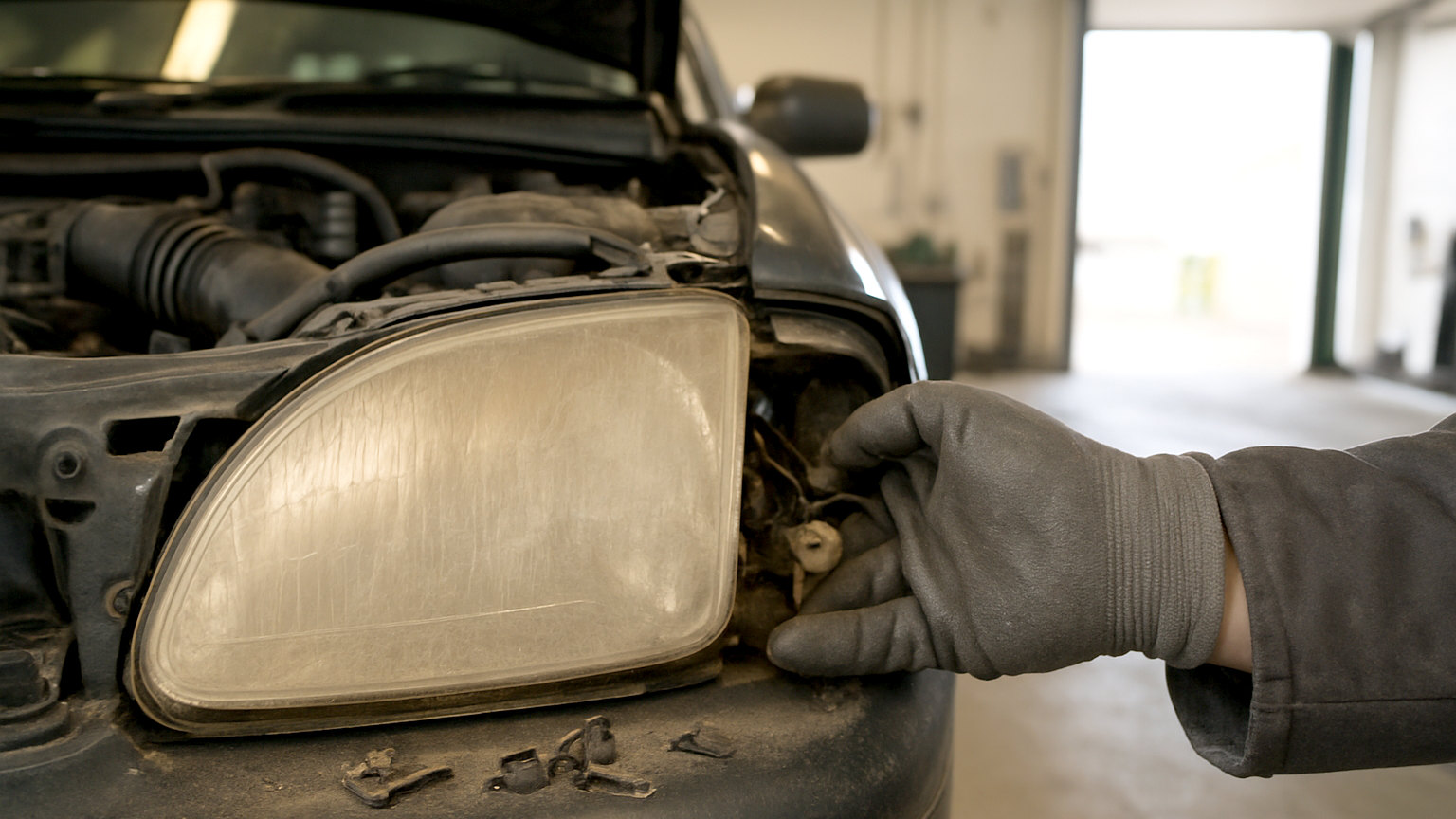
Headlight output declines so gradually that drivers adapt without noticing, and the usual moment of realisation comes when following a newer car or driving an unfamiliar one. The good news is that most of the loss comes from a small number of causes, and several of them cost almost nothing to put right. The bulb itself is only one of them and rarely the largest.
Do bulbs get dimmer before they fail?
Considerably. A halogen bulb loses a meaningful proportion of its output over its life as the filament thins and tungsten deposits darken the inside of the glass. A bulb three or four years old can be producing noticeably less light than a new one while appearing to work perfectly. Replacing both together is the single cheapest improvement available and takes minutes on many cars.
How much do cloudy lenses cost you?
A great deal. Polycarbonate headlight covers oxidise under sunlight, turning yellow, hazy and finely crazed. That layer scatters light rather than letting it through, and a badly oxidised lens can reduce usable output dramatically while also spoiling the beam pattern. This is very often the single biggest cause of poor headlights on any car more than about eight years old, and it is restorable.
Can a bad earth make lights dim?
Yes, and it is frequently overlooked. Current returns from each lamp to the battery through an earth point on the bodywork, and corrosion there adds resistance which drops voltage at the bulb. Because light output falls sharply with voltage, a small drop produces a visible loss. The clue is one side being noticeably dimmer than the other, since a shared fault would affect both equally.
How do you check for voltage loss?
Measure at the bulb connector with the headlights on and compare against battery voltage. A healthy circuit loses very little. A significant difference means resistance somewhere in the supply or earth path, typically a corroded connector, a tired switch or relay, or an earth point that has rusted. On older cars this is common enough that adding a relay driven circuit is a recognised improvement.
Why do some bulbs look white and some yellow?
Colour temperature. Standard halogen bulbs produce a warm, slightly yellow light, while bulbs sold as whiter use a blue tinted glass coating to filter out some of the warm output. That makes them look modern and reduces the total light reaching the road, since filtering removes rather than adds. If your priority is seeing rather than appearance, an untinted quality bulb usually performs better.
Could the aim simply be wrong?
Frequently, and it feels like dimness rather than misalignment. Headlights aimed too low illuminate a short patch of road immediately ahead and leave everything beyond it dark, which the driver experiences as poor lights. Aim drifts as suspension settles and after any front end work, and manual levelling controls inside the car are often left on a high setting for a load that was carried once.
What about the reflector inside?
This is the one that cannot be fixed cheaply. The reflector behind the bulb carries a fine metallic coating, and heat over many years, particularly with an overrated bulb fitted, can cause it to cloud, discolour or peel. Once that has happened the unit cannot throw light properly regardless of what bulb is fitted, and replacement is the only remedy. Shine a torch into the unit and look at the reflector surface.
What should you do in order?
Clean or restore the lens, fit a pair of good quality bulbs, check the aim, then measure voltage at the connector. Those four steps address the great majority of dim headlight complaints and cost far less than any retrofit conversion. Only if all four come back good is the reflector or the wiring itself worth deeper investigation.
Does driving style affect what you need?
Somewhat. Regular unlit country roads demand far more from headlights than town driving under streetlights, so a level of output that has been adequate for years can suddenly feel inadequate after a house move or a change of route. That is worth bearing in mind before assuming something has failed.


