
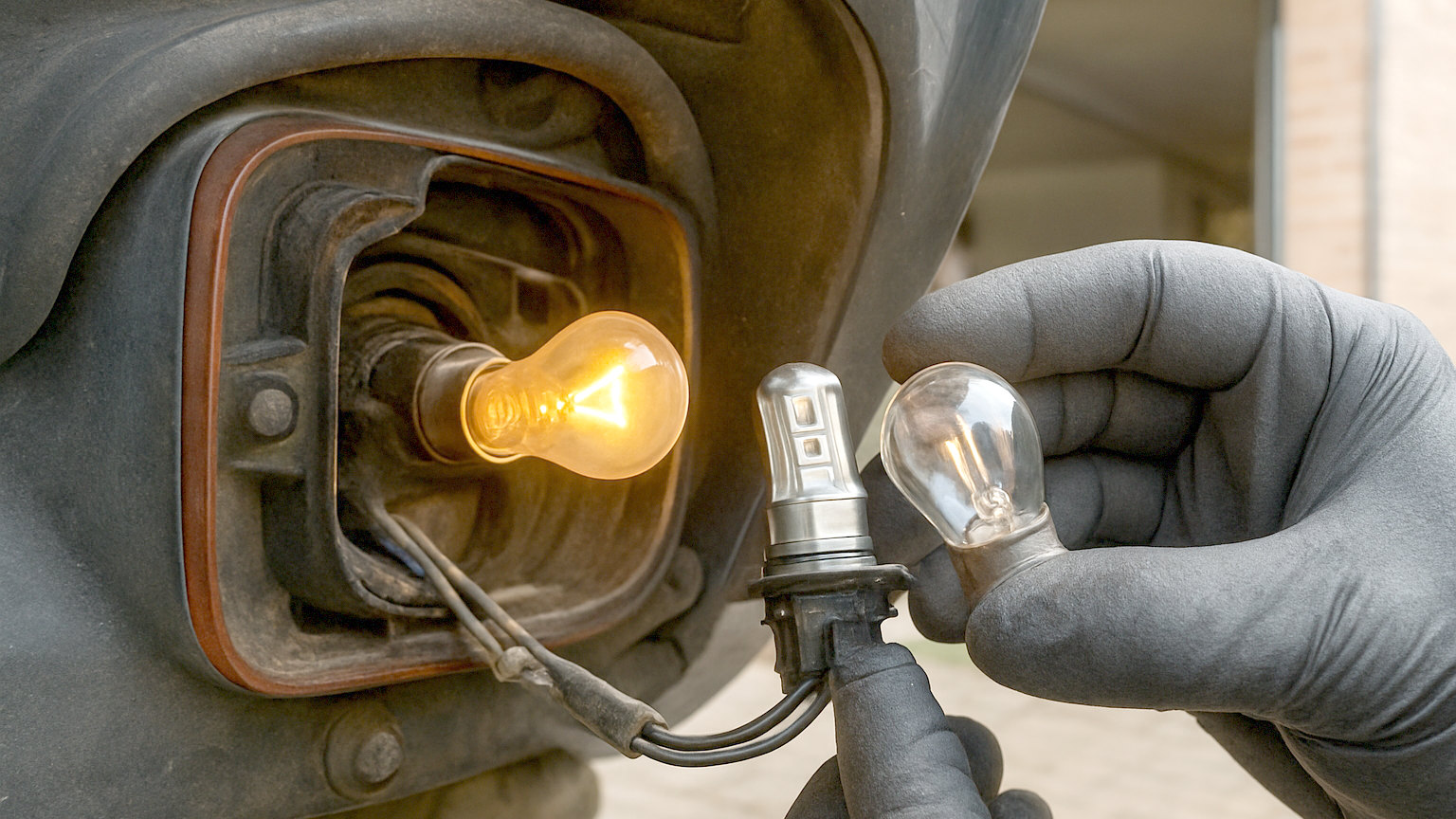
A dashboard message reporting a failed bulb, on a car where you can plainly see the lamp working, is a genuinely common complaint. The system is not broken and it is not lying. It simply is not measuring what people assume it is measuring, and once you understand that, the causes become obvious and the fixes straightforward.
How does bulb monitoring work?
By measuring current rather than light. The car knows roughly how much current a working bulb of a given wattage should draw, and it compares that against what is actually flowing in each circuit. A reading substantially below expectation means, in the system logic, that the filament has broken. No sensor anywhere is looking at whether light is being produced.
Why do LED bulbs trigger it?
Because an LED producing similar light draws a small fraction of the current of the filament bulb it replaced. The monitoring system sees that reduced draw and reports a failure, exactly as designed. This is the single most common cause of false bulb warnings and it catches out almost everyone fitting LED replacements for the first time.
How is that resolved?
Either by fitting load resistors in parallel with each LED, restoring the current the system expects, or by buying canbus compatible LEDs with the resistance built in. Resistors convert the saved energy to heat and must be mounted on metal away from wiring and trim. On some vehicles a diagnostic tool can adjust or disable the monitoring threshold for that circuit, which is the tidiest option where available.
Can a filament bulb trigger it too?
Yes, and this is the version worth taking seriously. Corrosion in the holder or connector adds resistance, which reduces current below the expected value while still allowing the bulb to light, often more dimly than normal. The car is correctly reporting a problem in that circuit, just not the one you assumed. Comparing the brightness of the two sides usually reveals it.
What if the wrong wattage bulb has been fitted?
The system will notice. A bulb of lower wattage than specified draws less current and is reported as failed. This happens when a similar looking bulb is substituted, or when a dual filament bulb is replaced with a single filament type that fits the holder. Checking the code on the old bulb against the new one resolves it immediately.
Does the message name the right lamp?
Usually, though not always precisely. Some systems monitor a circuit rather than an individual lamp, so a message about a rear light may refer to any lamp on that circuit. Where a message names a lamp that is definitely working, check the others on the same side and the same function before concluding the system is wrong.
Does it matter for the MOT?
The warning message itself is generally not a listed failure, but the underlying situation may be. Lamps of the wrong colour or type fail, and LED retrofits in headlight positions fail on beam pattern. If the message is caused by corrosion producing a dim lamp, that is a failure in its own right. It is better resolved than explained away.
What should you do about it?
Establish first whether anything has been changed. If LEDs have been fitted, the cause is known and the fix is resistors or compatible bulbs. If nothing has changed, treat it as a genuine warning: inspect the named lamp and its neighbours, look at the holder contacts for corrosion, and compare brightness against the opposite side. A false alarm is the less likely of the two explanations.
Can the warning be ignored?
Not sensibly. Even where the cause is known and harmless, such as an LED conversion, a permanent bulb failure message means the system can no longer alert you to a genuine failure later. That is a real loss on lamps you cannot see from the driving seat, which is precisely the reason the monitoring exists.


