
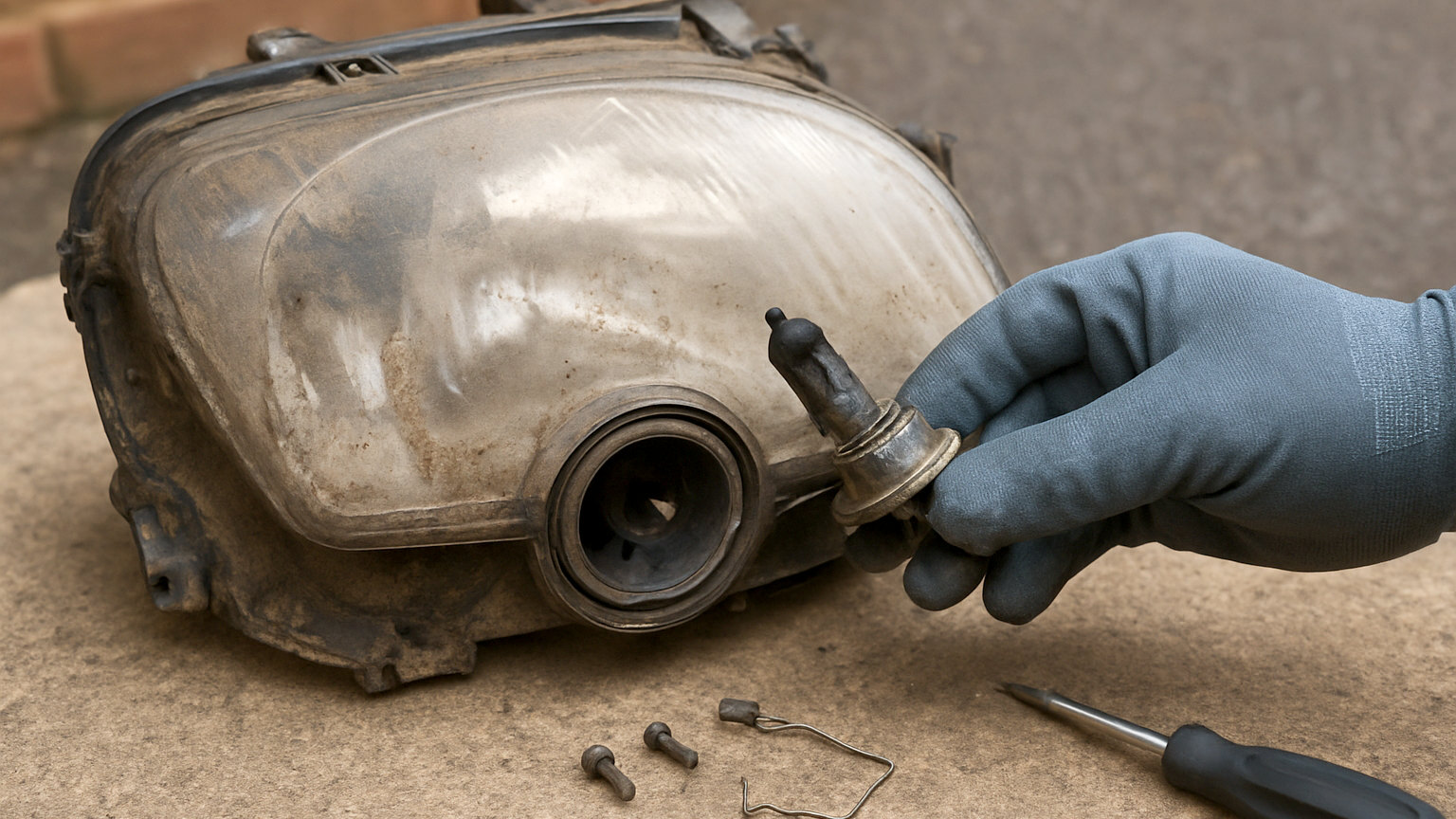
Replacing the same bulb three times in a year is not bad luck. Filament bulbs have a reasonably predictable life, and one that fails repeatedly in the same position is being killed by something rather than simply wearing out. There are five common causes, and four of them are cheap to resolve once identified.
Could the charging voltage be too high?
This is the cause worth checking first, because it also damages other things. Filament bulbs are extremely sensitive to voltage, and a small increase shortens their life dramatically. A voltage regulator that has failed high can push the system to sixteen volts or more, which will destroy bulbs in weeks. Measure across the battery terminals with the engine running: anything sustained above roughly fifteen volts needs attention urgently.
Does touching the glass really matter?
With halogen bulbs, yes, and it is the most common self inflicted cause. The quartz envelope runs extremely hot, and grease from fingers creates a hot spot where the glass expands unevenly, which eventually cracks or weakens it. Handle new bulbs by the metal base or through a clean cloth, and if you do touch the glass, clean it with methylated spirit before fitting rather than hoping.
How does vibration cause failures?
A filament is a fine coil of wire glowing at very high temperature, which makes it fragile while lit. Constant vibration fatigues it, and anything that increases vibration shortens bulb life: a bulb holder that is loose in the reflector, a headlight unit whose mountings have cracked, a failed engine mount transmitting more movement into the body, or simply rough roads. A holder that can be wobbled by hand is worth attention.
What about the holder and connector?
Corrosion and heat damage in the holder cause high resistance, which produces heat and unstable current. The signs are green or white deposits on the contacts, a connector that has discoloured or melted slightly, and a socket that feels loose. Cleaning the contacts helps, but a holder showing heat damage should be replaced, since it will destroy every bulb fitted to it and is a genuine fire risk in a headlight unit.
Does bulb quality make a difference?
Considerably. Reputable brands hold their tolerances better and last longer, and very cheap bulbs frequently fail within months. There is also a trade off worth understanding with the high performance bulbs marketed as producing substantially more light: they achieve it by running the filament hotter, and the published life is usually much shorter as a result. Brighter and longer lasting are largely opposing goals.
Can moisture be responsible?
Yes, particularly in rear light clusters and fog lights. Water entering a unit through a failed seal or a missing bung causes corrosion at the contacts and can thermally shock a hot bulb. If a bulb keeps failing in one unit and there is any sign of condensation or standing water inside, the seal is the fault rather than the bulb, and replacing bulbs will simply continue indefinitely.
Does it always mean a fault?
Not always. Bulbs are consumables, and a car doing high mileage with lights on for most of it will get through them. What matters is the pattern: one bulb failing occasionally is normal, the same position failing repeatedly is a fault, and several failing across the car at once points at charging voltage. Note which bulb and how long it lasted, since that record identifies the pattern.
What should you check first?
Charging voltage, then the holder and connector for corrosion or heat damage, then how securely the unit and holder are mounted. Fit a good quality bulb and avoid touching the glass. If the same position fails again after all that, the wiring or the earth to that lamp is worth measuring, since a poor connection produces exactly this pattern.
Is it worth keeping spares?
Yes, and some countries require it. A small box containing a spare set of the common bulbs your car uses costs very little and turns a failure on a dark evening into a five minute job rather than an unplanned trip. Store them in the original packaging so the glass stays clean and the codes stay legible.


