
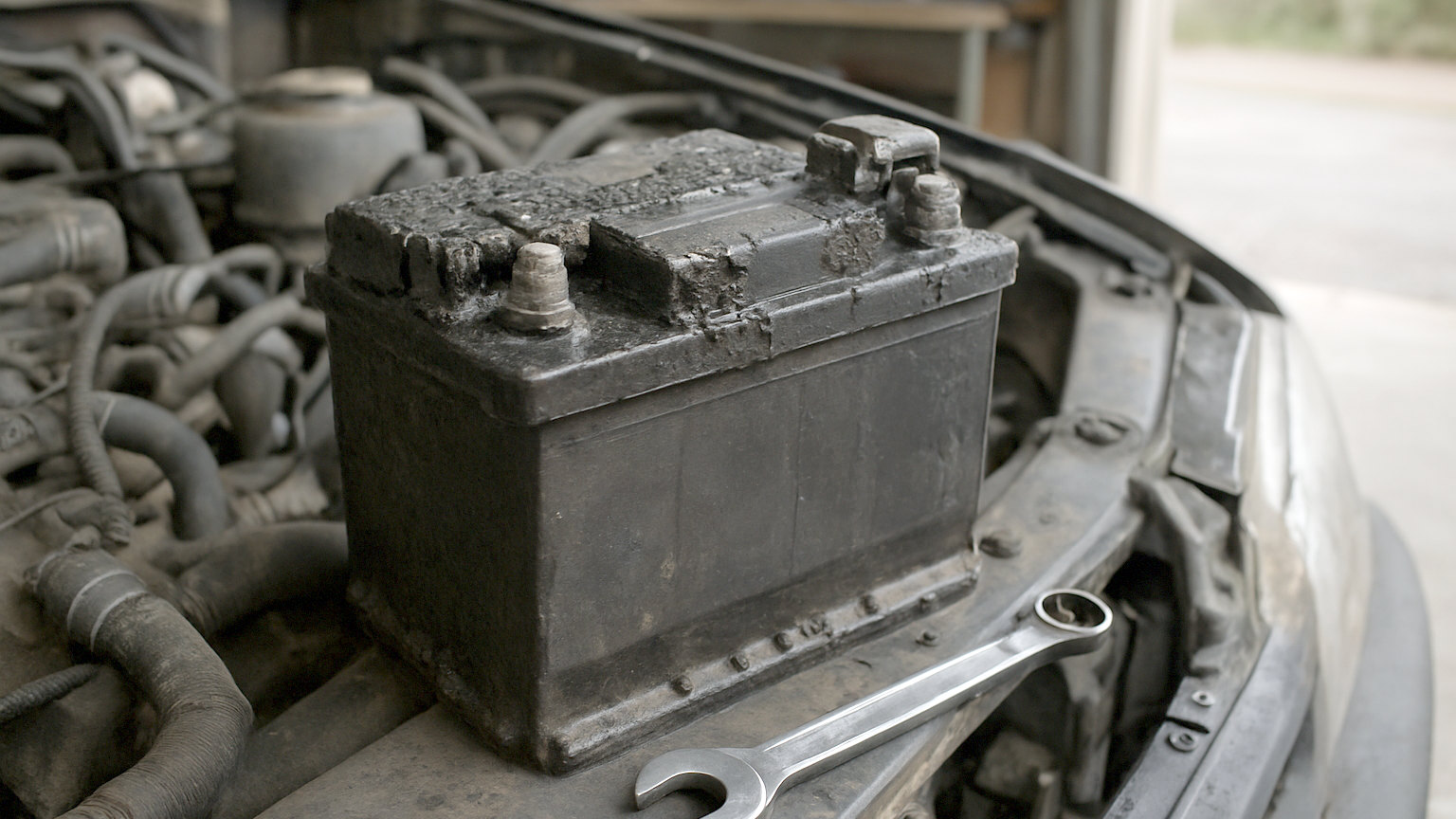
Batteries rarely fail from manufacturing defects. They fail because of how the car is used, and the main causes are well understood and largely avoidable. Knowing what shortens battery life turns a component that fails every three years into one that lasts six, which over the lifetime of a car represents real money and several avoided breakdowns.
Why are deep discharges so harmful?
A starter battery is designed to deliver a large current for a couple of seconds and then be immediately recharged. It is not a leisure battery and it is not built to be run down flat. Every deep discharge causes sulphate crystals to form on the plates, and if the battery is left in that state those crystals harden and permanently reduce the available capacity. A single overnight discharge with the lights left on can remove a noticeable proportion of the battery life.
How much harm do short journeys do?
More than any other everyday factor. Starting the engine takes a substantial amount of charge, and a short trip with the heater, lights and heated screen running returns less than it consumed. The battery therefore spends its life at a partial state of charge, which is exactly the condition in which sulphation forms. A car doing two short journeys a day is quietly destroying its battery, and no amount of quality in the battery itself will prevent it.
Can charging do damage as well?
Overcharging certainly does. A faulty voltage regulator in the alternator that allows charging voltage to rise too high will boil off the electrolyte, buckle the plates and can swell the case. The signs are a battery that becomes hot after driving, a smell of rotten eggs from the engine bay, and a case that is visibly distorted. This can destroy a new battery in a matter of weeks, which is why measuring charging voltage matters when a battery fails early.
Does vibration matter?
Genuinely, and it is the reason the hold down clamp exists. A battery that can move breaks down the active material on its plates, and in bad cases the internal connections fail or the case cracks. Leaving the clamp off after a battery change is common and it measurably shortens the life of the new one. It also allows the terminals and leads to be strained, which creates poor connections and their own set of symptoms.
What about heat and where the battery sits?
Heat accelerates every degradation process inside a battery, which is why some manufacturers mount them in the boot or a wheel arch rather than under the bonnet. A battery in a hot engine bay ages faster, loses water faster and generally has a shorter life. There is little to be done about the location, but it explains why battery life varies so much between models and why a hot summer often produces failures the following winter.
Do dirty terminals really matter?
They do. Corrosion increases resistance, which means the battery is not fully recharged while driving and has to work harder when starting. A battery kept in a permanently undercharged state by a bad connection will sulphate and fail early, so the fault ends up destroying the component people then blame. Cleaning and greasing terminals once a year takes ten minutes and is among the best value maintenance available.
What is the single best habit?
A regular longer journey, at least half an hour at reasonable speed, once a week. That one habit addresses undercharging, sulphation and the winter decline all at once. Where the car genuinely cannot be used that way, a smart trickle charger connected while it is parked achieves the same result and costs less than a single premature replacement.
Everything else on this list is worth attending to, but none of it matters as much as making sure the battery is regularly returned to a full state of charge and never left sitting flat.


