
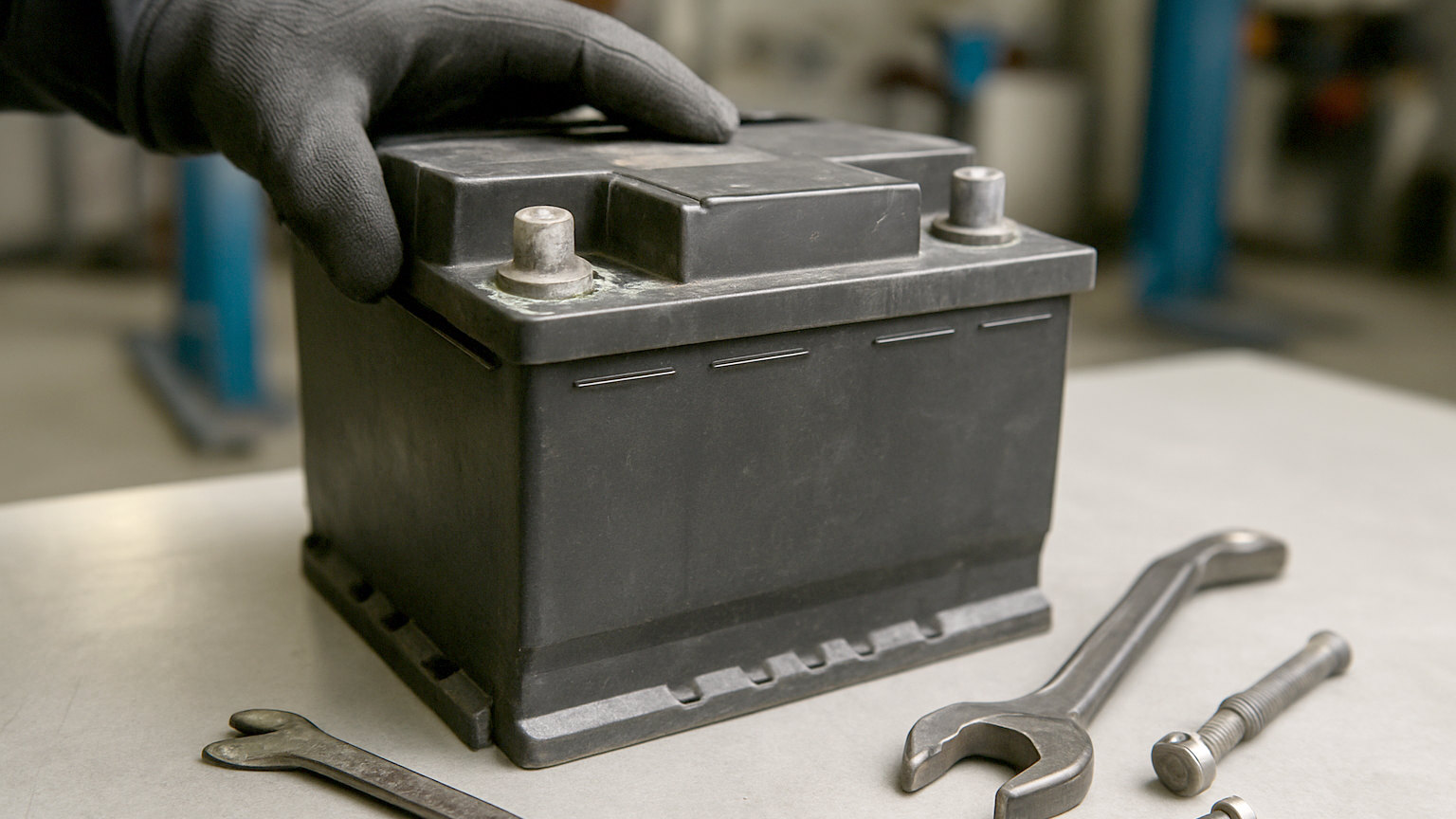
Stop-start systems shut the engine off at every set of traffic lights and restart it again moments later, which means a battery that might have started a conventional car five times a day is now being asked to do it fifty times. Conventional batteries are not built for that pattern, and manufacturers fit different chemistry as a result. Replacing like for like matters more here than on almost any other car component.
What is an AGM battery?
AGM stands for absorbent glass mat, where the electrolyte is held in glass fibre matting between the plates rather than sitting as free liquid. That construction tolerates far more shallow discharge cycles, delivers higher current, recharges faster and is more resistant to vibration. AGM batteries are used on cars with more demanding stop-start systems, particularly those with regenerative braking or significant standing electrical loads. They cost noticeably more than conventional batteries.
What is an EFB battery?
An enhanced flooded battery is a conventional design strengthened for cycling duty, with additional material on the plates and a separator that resists the wear caused by repeated partial discharge. It sits between a standard battery and an AGM in both capability and price, and it is fitted to many entry level stop-start systems. An EFB can generally be replaced by an AGM, but an AGM should not be replaced by an EFB, since the car was specified for the higher standard.
What happens if a conventional battery is fitted?
It fails early, usually within a year and sometimes within months. The repeated shallow cycling of a stop-start system rapidly degrades plates that were designed for occasional deep use and continuous float charging. Before it fails outright, the stop-start function will usually stop working as the battery management detects insufficient capacity, which is why a car that has stopped shutting down at junctions is often carrying either a worn or an incorrect battery.
Why does stop-start stop working anyway?
The system only operates when conditions allow, and it declines to shut the engine off if the battery state of charge is low, if the engine or cabin is not at temperature, if the air conditioning is working hard, or if the electrical load is high. That means a car that has stopped doing it is often reporting a battery that can no longer support a restart, which is a genuinely useful early warning that a battery is nearing the end of its life.
Does the car need to be told about the new battery?
On most stop-start cars, yes. The battery management system tracks the age and condition of the battery to decide how to charge it and when to allow stop-start. If a new battery is not registered, the car continues charging it as though it were the old worn one, which usually means undercharging and a shortened life. Registration requires a diagnostic tool, and it is a step some garages skip.
Is an AGM worth fitting to a car that did not have one?
Occasionally, on a car with heavy standing loads or one that spends long periods parked, since AGM tolerates deep discharge better. The charging voltage requirements differ slightly, so it is worth checking whether the car charging strategy suits it. For most conventional cars it is money that would be better spent on a good quality standard battery of the correct rating.
How do you check what yours needs?
The existing battery label states the type, and AGM units are almost always marked clearly. The handbook lists the specification. If in doubt, a retailer lookup by registration will identify it. Photograph the old label before removal, and if the car has stop-start, ask specifically whether the fitting price includes registering the new battery, because that question is worth asking before the work rather than after, and not every mobile or fast fit service carries it out as standard on every vehicle they attend.


