
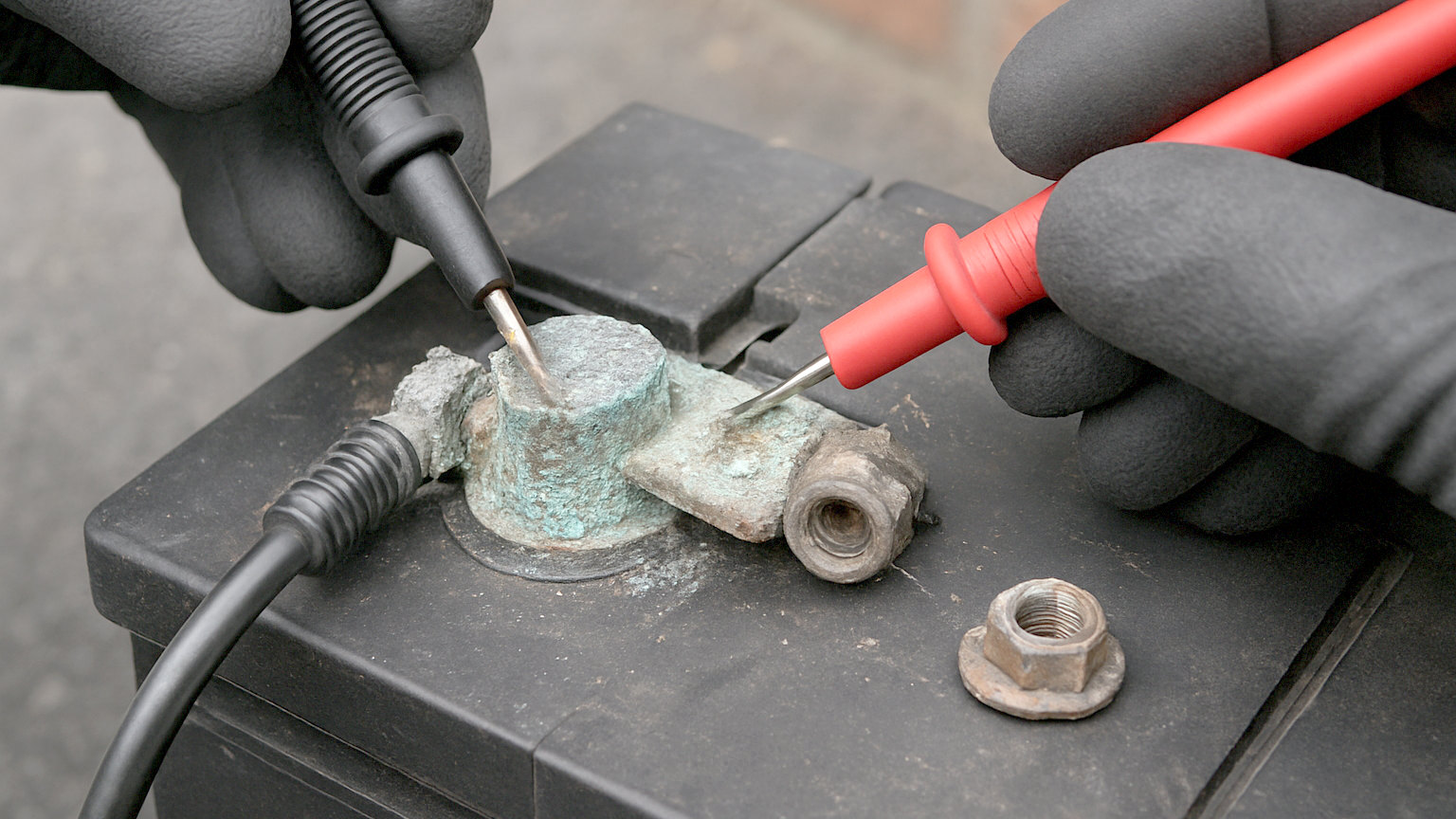
A parasitic drain is current being consumed while the car is switched off and locked. Some of it is entirely normal, because a modern vehicle never fully powers down, and the useful question is not whether your car draws current when parked but whether it draws more than it should. That distinction is measurable, and once measured the fault can be traced methodically rather than guessed at.
How much current is normal?
Most modern cars settle somewhere between twenty and fifty milliamps once everything has gone to sleep, with some higher end vehicles carrying more modules and drawing a little more. Older cars with fewer electronics draw less. The manufacturer usually publishes a figure. Anything substantially above that range will flatten a healthy battery over days rather than weeks, and a drain of a few hundred milliamps or more will do it overnight.
Why does the car have to be asleep first?
Because modules stay awake for a period after the doors are locked, communicating with each other before shutting down in stages. That process can take anywhere from a few minutes to over an hour depending on the vehicle. Measuring during that period gives a reading several times higher than the true standing draw, and it is the single most common reason people conclude they have a drain when they do not. Patience is part of the test.
How is the measurement taken?
A meter set to measure current is connected in series with the battery, usually by disconnecting the negative lead and bridging the gap with the meter. The car is then locked and left to sleep, and the reading is taken once it has stabilised. Some vehicles lose their settings or wake up when the battery is disconnected, so a clamp meter that measures current without breaking the circuit is often preferable on modern cars.
How is the circuit identified?
By pulling fuses one at a time with the meter still connected, watching for the moment the current drops to normal. That identifies which circuit is responsible, and the wiring diagram then narrows it to the components on that circuit. It is methodical work and it takes time, which is why garages charge for it, but it is far cheaper than the alternative of replacing batteries repeatedly. On cars that wake up when a fuse is pulled, the process needs care and a settling period between each one.
What are the usual culprits?
Boot, bonnet and glovebox lamps whose switches have failed, so the bulb burns permanently in a place nobody looks. Aftermarket alarms, trackers, dashcams and phone chargers wired to a permanent live feed. Door latch switches that never register as closed, which also keeps the interior lighting and body module awake. Failing modules that refuse to go to sleep. Corroded wiring allowing a small leak to earth, which is more common in older cars and in damp conditions.
Can you check anything yourself?
Some of it. Open the boot and bonnet and see whether the lamps go out when the catches are pressed. Look in the glovebox with the door nearly closed. Check whether any accessory has been fitted recently, since a drain that started around the time a dashcam was installed usually has an obvious cause. Confirm the doors are registering as closed by checking whether the interior light behaves normally. None of that needs tools.
What if the drain cannot be found?
Intermittent drains exist, where a module wakes up occasionally rather than drawing constantly, and those are genuinely difficult. A logging meter left connected overnight will capture them. In the meantime, a smart trickle charger left connected when the car is parked for long periods prevents the battery being damaged by repeated deep discharge, which buys time without solving the underlying problem.
What is not worth doing is fitting another battery and hoping. A drain that emptied one will empty the next at exactly the same rate.


