
Fitting a new battery and finding the car dead again a week later is an expensive kind of disappointment, and it is also informative. It means the battery was never the underlying fault, and the thing that killed the first one is still present and now working on the second. There are five plausible explanations and all of them can be checked before spending anything further.
Is the charging system actually working?
This is the most common answer and it should be tested first. An alternator that is not charging properly leaves the car running on the battery until it is empty, which looks exactly like a failing battery from the driving seat. Measure voltage at the terminals with the engine running, which should sit comfortably above resting voltage. Watch for a battery warning light that flickers while driving and headlights that brighten as you rev, both classic indicators.
Could something be draining it while parked?
If the battery is flat after standing overnight or over a few days, almost certainly. A parasitic drain will empty a brand new battery just as effectively as an old one, and the usual culprits are boot and glovebox lamps burning permanently, aftermarket alarms and trackers, hardwired dashcams, and door switches that never register as closed. A drain test measures current with the car asleep and identifies the circuit by pulling fuses.
Was the battery fitted properly?
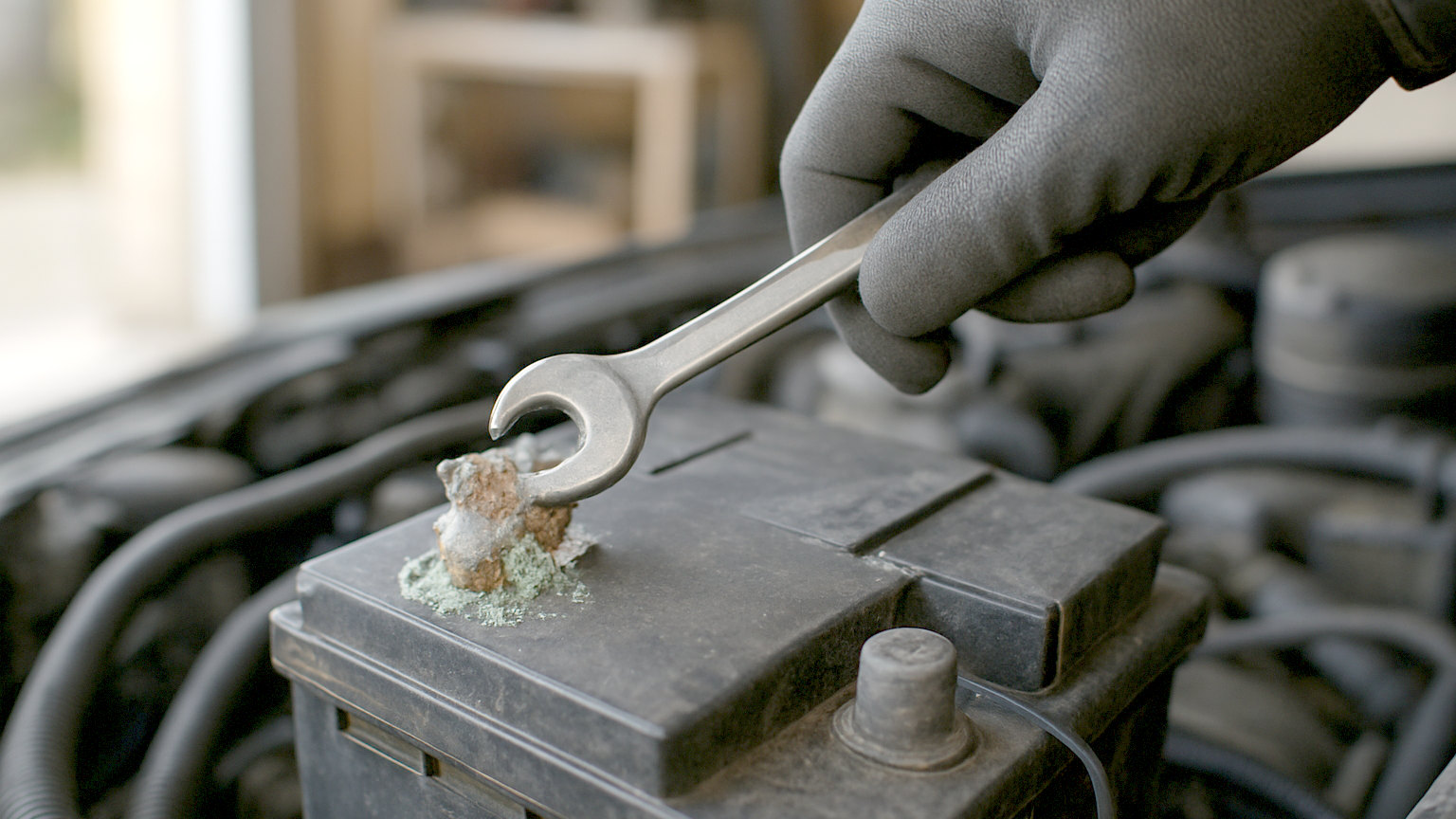
Terminals tightened by hand rather than with a spanner are extremely common, and a clamp that can be twisted is not making a reliable connection under load. Old corrosion left on the lead clamps has the same effect, since the new battery is bolted to a bad joint. Check both connections are properly tight and that the metal is clean, because this costs nothing and resolves a surprising number of these cases.
Was the new battery registered?
On many modern cars, particularly those with stop-start, the battery management system tracks the age and condition of the fitted battery and adjusts charging accordingly. If the replacement was never registered with a diagnostic tool, the car continues charging as though the old worn battery were still fitted, which usually means undercharging. The result is a new battery that never reaches full charge and fails early.
Is it the right battery?
A conventional battery fitted to a stop-start car will fail quickly, because it is being cycled far beyond what it was designed for. A battery with a lower cold cranking rating than specified will struggle in winter on a car that needs more. Check the label against the handbook specification, and if the previous one was an AGM, the replacement should be too. This is a common false economy when a battery is bought on price alone.
Could the new battery be faulty?
It happens, though it is the least likely explanation and worth checking last rather than first. Batteries that have sat on a shelf for a long time before sale can arrive already degraded, particularly if they were stored discharged. Keep the receipt, since most carry a warranty of three years or more, and a supplier will normally test a suspect unit on the spot rather than argue about it.
What should you ask for?
A charging system test and a parasitic drain test specifically, rather than another battery. Between them those two cover the great majority of repeat failures. Mention that this is the second battery, because that single detail tells a competent workshop immediately to look at the car rather than the part, and it should change how the appointment is approached.
In the meantime, a smart conditioner connected overnight will keep the car usable while the fault is being traced, though it is a way of coping rather than a repair, and the underlying cause still needs finding before the second battery goes the way of the first.


