
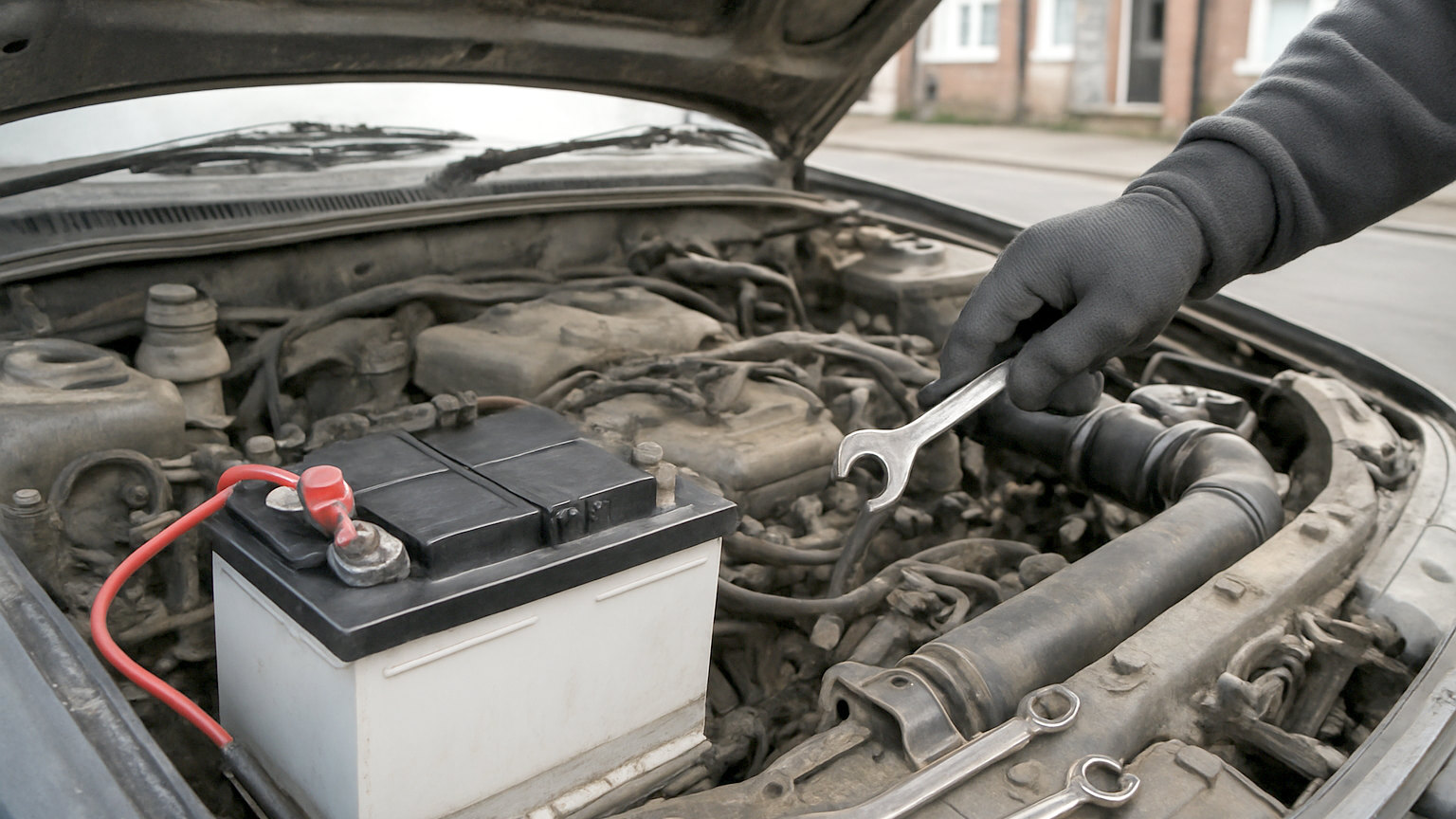
Changing a battery is one of the more approachable jobs on a car, and it is also one where a small procedural mistake produces a large spark. The sequence exists because the negative terminal is connected to the entire body of the car, so a spanner touching bodywork while the positive is still connected creates a direct short across a battery capable of several hundred amps. Following the order removes that risk entirely.
What should you do before starting?
Park on level ground, switch everything off, remove the key and wait a few minutes so the modules settle. Find the radio code if the car needs one, and note any settings likely to be lost. Wear eye protection, since batteries contain acid and can vent gas. Remove any rings or metal watch straps, because those can bridge a terminal to bodywork just as effectively as a spanner. Have the new battery ready and check it matches the old one for size, rating, type and terminal positions.
What is the correct order?
Disconnect the negative terminal first and remove the lead clear of the battery. Then disconnect the positive. Remove the hold down clamp or bar, and lift the battery out keeping it upright, remembering it is considerably heavier than it looks. Fit the new one, secure the clamp, then connect the positive first and the negative last. The principle is that the negative comes off first and goes on last, so that the circuit is broken for the whole time the positive is exposed.
Why does the hold down clamp matter?
Because a battery that can move will eventually break its own terminals, chafe the leads or crack its case, and vibration damages the plates internally which shortens its life considerably. It is a small bracket that people leave off because it is fiddly, and it does a real job. If the original is corroded beyond use, replace it rather than leaving the battery loose.
Will the car lose its settings?
Usually some of them. Clock, radio presets, trip data and seat memories are commonly lost, and some cars need a window or sunroof relearn afterwards where the one touch function stops working until it is reset. A memory saver, which supplies power through the diagnostic socket or a cigarette lighter while the battery is out, prevents most of this. If using one, be aware the car is live throughout, so the terminal discipline still applies.
Does the new battery need registering?
On many modern cars, yes, and it is skipped constantly. The battery management system records the age and condition of the fitted battery and adjusts its charging strategy accordingly. Without registration it keeps treating a new battery as an old worn one, typically undercharging it, which shortens its life. This applies particularly to stop-start vehicles, and it requires a diagnostic tool. Ask whether it is included before agreeing to a fitting price.
What should you check while the battery is out?
Clean the terminal clamps back to bright metal, since old corrosion transfers straight onto the new battery. Look at the battery tray for corrosion damage, which indicates the old battery was leaking or overcharging. Check the earth strap where it bolts to the body and the engine. Apply a thin smear of petroleum jelly or terminal grease over the finished connections to slow future corrosion.
What do you do with the old one?
Take it to a recycling centre or return it to the retailer, most of whom accept old batteries and some of whom pay a small surcharge that is refunded when you bring it back. Lead acid batteries are hazardous waste and must not go in household bins. Keep it upright in the boot on a tray or in a strong bag, because a battery on its side in a car boot can leak acid onto the carpet, and that damage is neither repairable nor covered by anything.


