
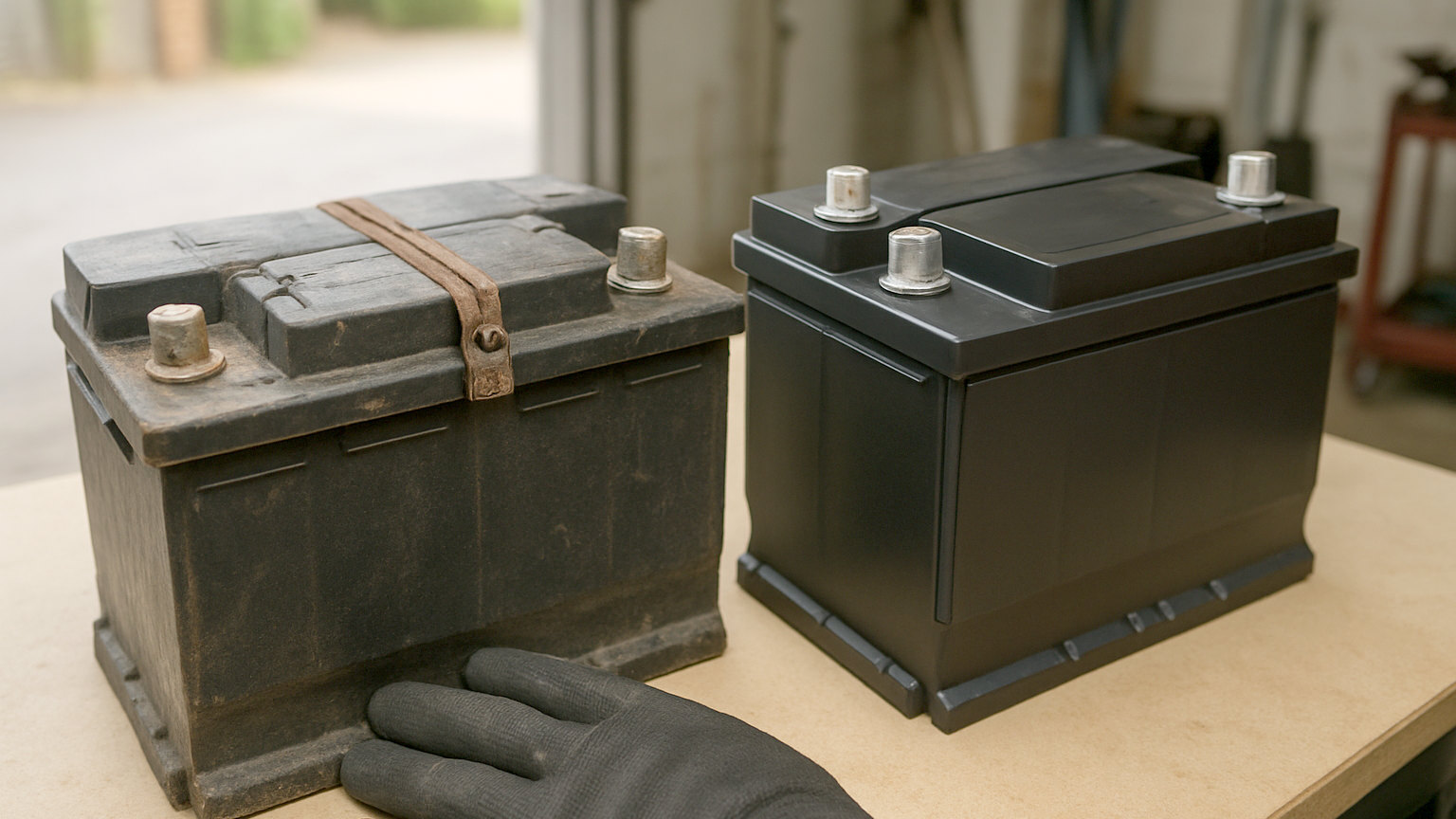
Most car batteries last between three and five years, and that range is wide because the number is driven far more by how a car is used than by how good the battery was when it was fitted. A battery in a car doing regular longer journeys can comfortably exceed six years. The same battery in a car doing two miles twice a day may not see three, and the difference has almost nothing to do with mileage.
What actually wears a battery out?
Lead acid batteries store energy chemically, and each discharge and recharge cycle causes a small amount of irreversible change to the plates. Sulphation, where crystals form on the plates during periods spent partially discharged, is the main mechanism, and it becomes permanent if a battery is left in that state. Heat accelerates every chemical process involved, which is why battery life is often shorter in hot climates than cold ones despite failures happening in winter.
Why are short journeys so damaging?
Starting an engine uses a substantial burst of charge, and the alternator needs sustained running to replace it, particularly with the heated screen, blower, headlights and wipers all drawing power at the same time. A five minute trip returns less than was taken. Repeat that twice a day through a winter and the battery spends months at a partial state of charge, which is exactly the condition in which sulphation forms and capacity is permanently lost.
How much does a deep discharge cost you?
A great deal. A conventional starter battery is designed to deliver a large current briefly and then be recharged immediately, not to be run down flat. A single full discharge, leaving lights on overnight for instance, can permanently remove a meaningful proportion of the capacity, and repeated deep discharges will finish a battery within months. This is why a car jump started twice in a fortnight usually needs a new battery even if the first one was recently fitted.
Do stop-start systems shorten battery life?
They demand far more of it, which is why those cars use AGM or enhanced flooded batteries designed for many more shallow cycles. Those batteries cost more and generally last a similar length of time to a conventional one in a conventional car. Fitting a standard battery to a stop-start vehicle to save money is a false economy, since it will be cycled beyond what it was built for and fail early, often within a year.
How do you find out how old yours is?
Most batteries carry a manufacture date, either printed as a code on a label or stamped into the casing, commonly as a month and year or a letter and digit combination. Many garages also write the fitting date on the case with a marker. Knowing the age changes the diagnosis entirely, because a battery in its fifth winter behaving badly is simply old, while a two year old battery doing the same is a symptom of something else.
What makes one last longer?
Regular longer journeys above anything else. Clean, tight terminals so charging is not restricted. Avoiding deep discharges, which means dealing with interior lights left on rather than shrugging. A smart trickle charger during long periods of inactivity. And replacing it proactively at around four or five years on a car used mainly for short trips, rather than waiting for the morning it refuses.
Should you replace before it fails?
On a car you depend on, yes. A battery gives a few weeks of warning at most, usually as slower cranking on cold mornings, and it fails at the least convenient moment. A free load test each autumn tells you where you stand, and replacing a marginal battery in October is considerably cheaper and less disruptive than a recovery call in January, particularly if the car is needed for work or the school run and there is no second vehicle to fall back on.


