
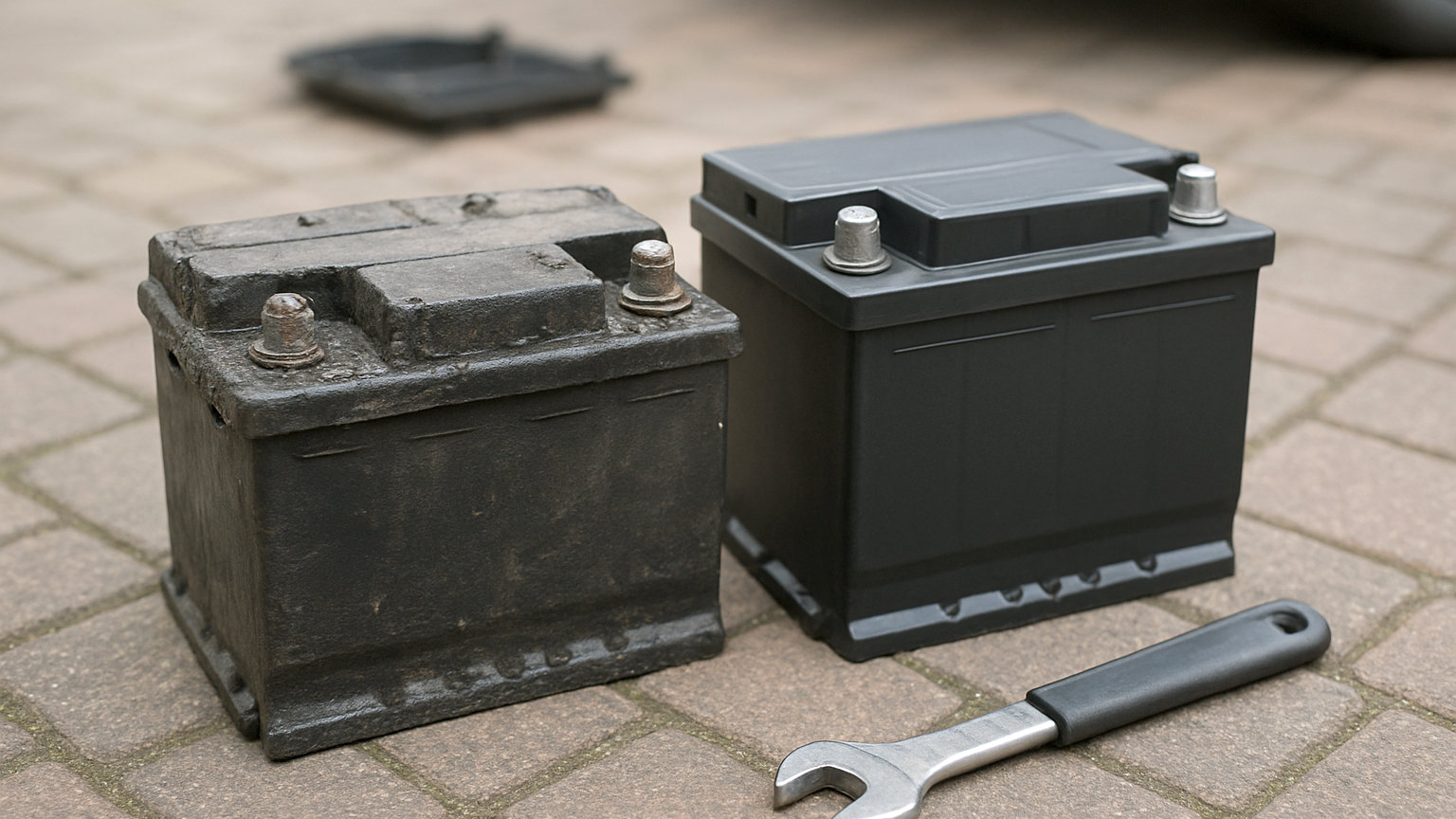
Breakdown services have their busiest mornings the day after temperatures drop sharply, and the obvious conclusion is that cold weather destroys batteries. The reality is more interesting. Cold rarely damages a battery at all. What it does is reduce the current a battery can deliver at exactly the moment the engine needs more, which exposes every battery that was already marginal. The actual damage was usually done in July.
Why does cold reduce battery performance?
A battery produces electricity through a chemical reaction, and chemical reactions slow as temperature falls. At freezing point a healthy battery delivers noticeably less current than it would in summer, and the effect is more pronounced the older the battery is. Nothing has broken; the same battery will perform normally again when it warms up. That is why a car that refused at seven in the morning often starts perfectly by lunchtime.
Why does the engine need more at the same time?
Because cold oil is thicker and the starter has to turn the engine against considerably more resistance. So the demand rises while the supply falls, and the two effects meet in the middle. On a diesel there is a third factor, since glow plugs draw substantial current before cranking even begins. A battery with no margin left will fail at that intersection, and it will fail on the coldest morning of the year rather than gradually.
What actually damages a battery then?
Heat, mostly. High temperatures accelerate the chemical processes that degrade the plates, increase water loss through evaporation, and speed up internal corrosion. A summer of sustained heat under a bonnet does real and permanent harm to capacity. The battery survives that summer because the engine starts easily in warm weather, and the loss only becomes apparent when winter demands more than remains. Cold gets the blame for damage that heat caused.
Does the driving pattern matter more in winter?
Considerably. Winter journeys tend to be short, and they run the heated screen, blower, headlights, wipers and heated seats simultaneously, so the alternator is replacing charge and supplying those loads at once. A five minute trip returns less than starting consumed. Repeat that twice daily and a battery falls progressively further behind through December, arriving at January with very little in hand.
Can a battery freeze?
A fully charged one will not, in any temperature the British climate produces, because the electrolyte has a very low freezing point when the acid concentration is high. A discharged battery is a different matter, since the electrolyte becomes closer to plain water as the charge falls, and a flat battery can freeze in severe conditions. A frozen battery must never be charged or jump started, because it can rupture. This is another reason not to leave a battery flat.
What should you do before winter?
Have the battery and charging system tested in autumn, which most garages and parts retailers do free in a few minutes. Clean and grease the terminals. If the battery is over four years old and the car does mainly short journeys, consider replacing it proactively, since the cost is similar in October and December but the inconvenience is not. Build in one longer run a week so the battery gets properly recharged.
What helps on the morning itself?
Switch off the heated rear screen, blower, lights and heated seats before turning the key, so the battery can devote everything to the starter. On a diesel, wait for the glow plug light to go out and consider cycling the ignition twice on a very cold morning. Crank in bursts of no more than ten seconds with a pause between them, since continuous cranking flattens a struggling battery completely and achieves nothing.
If it does start, drive it properly rather than moving it round the corner, because a battery that struggled this morning needs charge putting back in rather than another short trip.


