
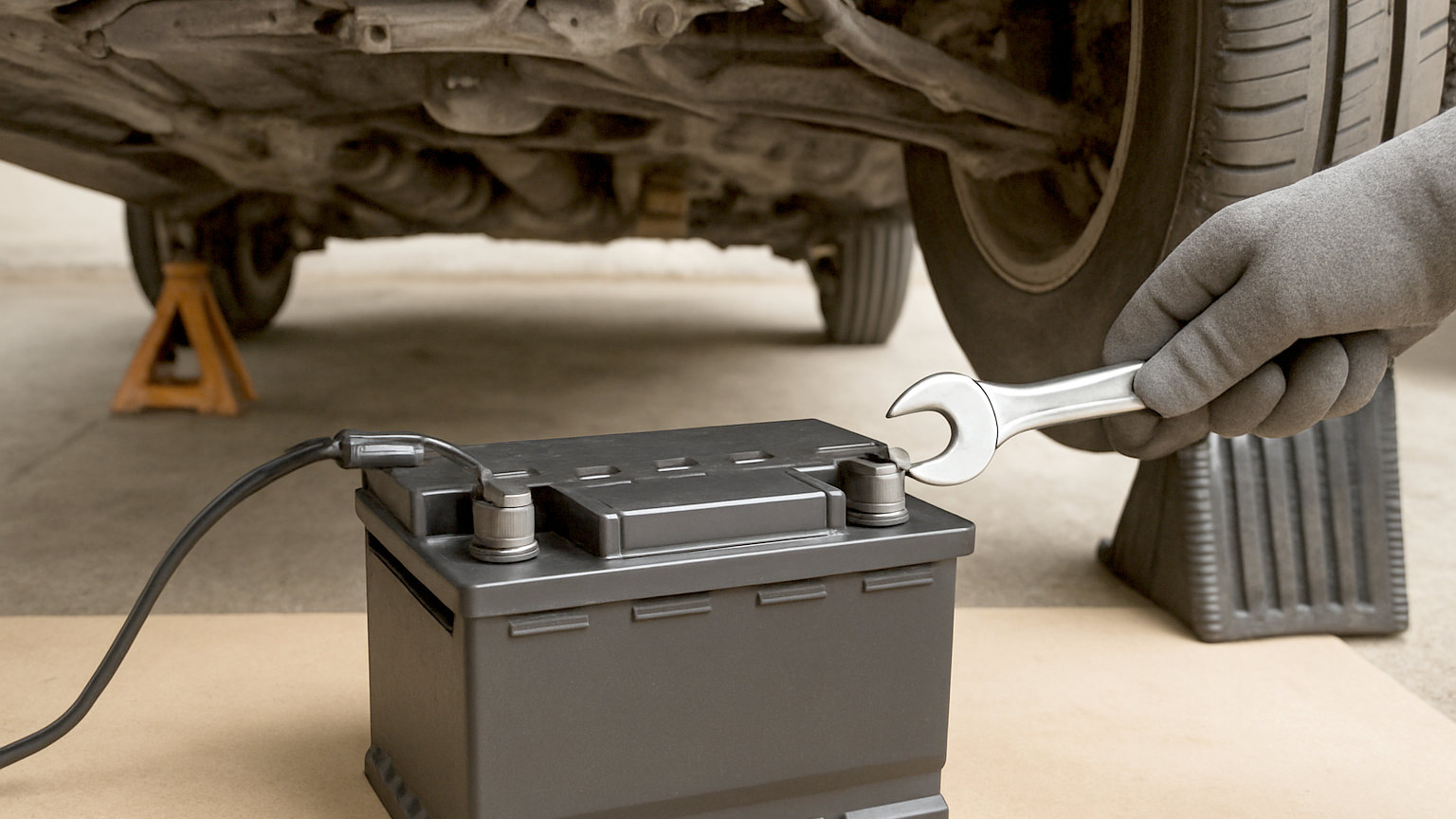
On a car built twenty years ago, fitting a battery meant undoing two clamps. On many modern cars there is an additional step, where the new battery has to be registered with the vehicle so the charging system knows it is dealing with a fresh unit. It takes a couple of minutes with the right tool, it is skipped constantly, and the consequence is a new battery that never quite performs as it should.
What does the battery management system do?
It monitors the current flowing into and out of the battery, along with voltage and temperature, and builds a picture of the state of charge and state of health over time. From that it decides how hard to charge, whether to allow stop-start to operate, and whether to shed non-essential electrical loads. The whole strategy is built around an estimate of how old and how worn the battery is, which is why the system needs telling when that changes.
What happens if it is not registered?
The car continues charging the new battery according to the profile it had learned for the old worn one, which generally means undercharging. A battery held permanently below full charge sulphates and loses capacity, so the replacement ages faster than it should and can fail within a year or two. Stop-start may also behave oddly, either refusing to operate or operating when the battery cannot really support it.
Which cars need it?
Broadly, anything with stop-start, anything with a regenerative or intelligent charging system, and most vehicles from certain manufacturers built in the last fifteen years. Some require full registration including the battery type and capacity, some only need a reset telling the system a new battery is present, and some need nothing at all. The handbook rarely says, so the practical answer is to ask the supplier or check the manufacturer requirement by registration.
Does the battery type need entering as well?
On many systems, yes, because AGM and conventional batteries require different charging voltages. Registering an AGM battery as a conventional one, or the reverse, means the car applies the wrong charging profile, which either undercharges it or overcharges it. If the car came with an AGM and you fit an AGM, the type still needs confirming rather than assuming the system will detect it.
Can you do it yourself?
Sometimes. A few cars have a menu procedure or a sequence involving the ignition and pedals that performs a reset, and a good aftermarket diagnostic tool will handle registration on many mainstream vehicles. Basic code readers that only read fault codes will not. If you fit your own batteries regularly, a tool capable of battery registration pays for itself quickly, since the alternative is a workshop visit for a two minute job.
What should you ask when buying a battery?
Whether registration is required for your car, and whether the fitting price includes it. Mobile fitting services and fast fit centres vary considerably on this, and some will fit a battery without carrying it out at all. It is a reasonable question to ask before agreeing to the work, and a supplier who does not know the answer for your vehicle is telling you something useful.
What if a battery was fitted without registration?
It can be done afterwards, and it is worth doing rather than leaving. The system will have been mischarging in the meantime, but a battery that has only been fitted for a few weeks or months will usually recover once the correct profile is applied. Combining that with a full charge from a mains conditioner puts it back where it should be, and it is a great deal cheaper than replacing a battery that failed early for an avoidable reason. If the battery has already been in place for a year or more without registration, have it load tested at the same time, since it may already have lost capacity that registration alone will not restore.


