
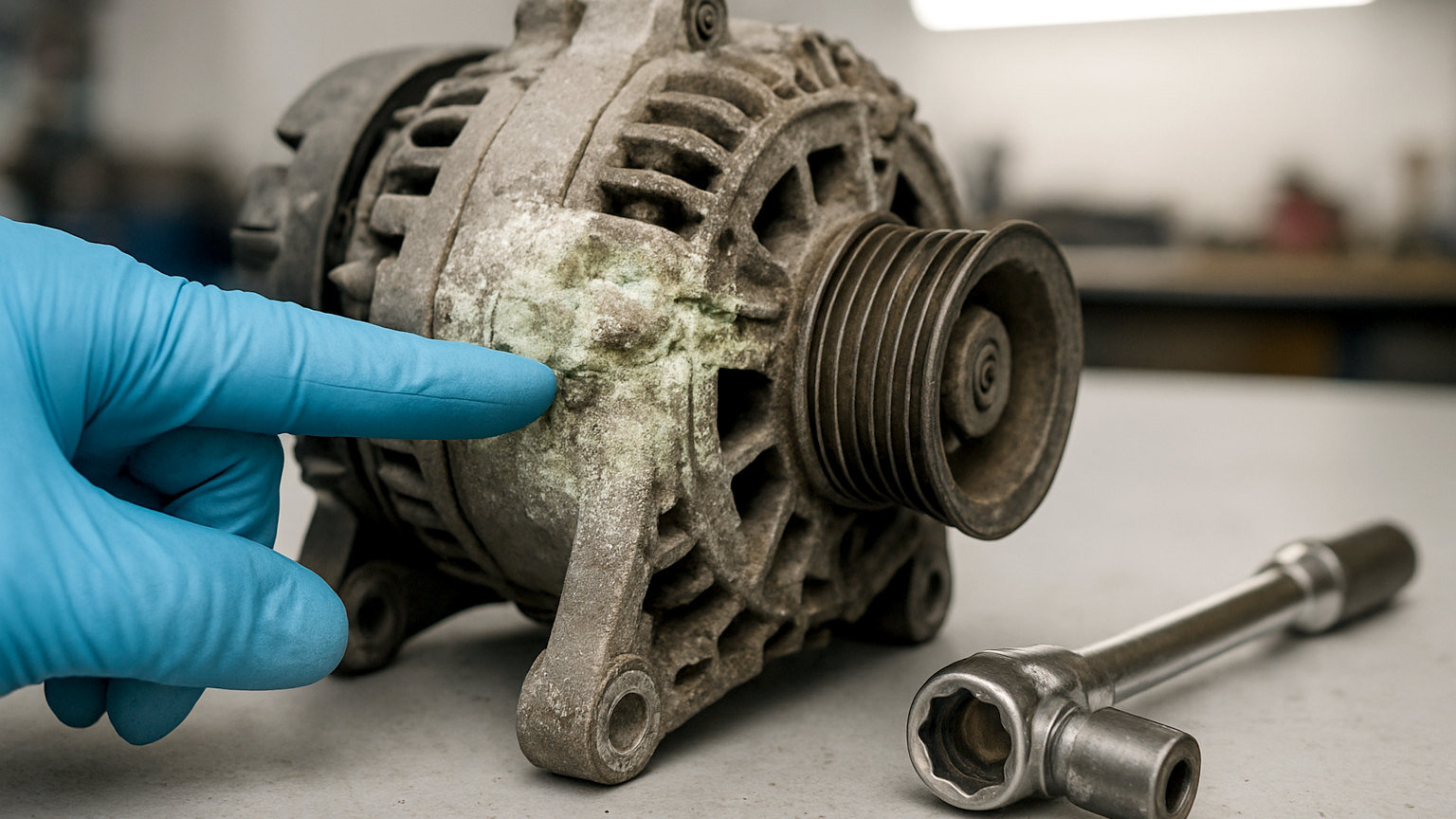
A factory alternator commonly lasts well over a hundred thousand miles, so one that fails at forty thousand, or a replacement that fails within a year, has usually been given a reason. Finding that reason matters, because fitting another unit into the same conditions produces the same outcome and the second failure is rarely covered by anybody. There are five causes that account for most premature failures.
How does a failing battery kill an alternator?
A battery that has lost capacity or developed an internal short presents a continuous heavy demand, so the alternator runs at or near maximum output constantly instead of tapering back once the battery is full. That generates heat in the windings and the diodes, and heat is what kills them. This is the most common cause of a replacement alternator failing early, and it is why the battery should always be tested when an alternator is replaced.
Does belt tension matter?
A great deal. A belt that is too tight applies constant side load to the alternator bearings and will destroy them within months, and on cars with a manually adjusted belt this is a common installation error. A belt that is too slack slips, which causes undercharging and glazing, and a worn automatic tensioner produces flutter that hammers the pulley. If a new alternator has become noisy quickly, the belt system is the first place to look.
What does oil contamination do?
Alternators are usually mounted low or to one side of the engine, directly beneath components that leak. Oil from a rocker cover gasket or a leaking filter housing soaks into the windings, degrades the insulation and attracts dirt that blocks the cooling airflow through the unit. Power steering fluid and coolant do the same. An alternator that has failed with an oily casing has told you exactly what to fix before fitting the replacement.
Can water damage one?
Yes. Alternators are air cooled and open to the elements by design, so they tolerate rain and road spray, but they do not tolerate immersion. Driving through standing water deep enough to reach the unit can wet the windings and the brushes, and a car recovered from a flood will frequently need one regardless of whether it starts. Repeated pressure washing of an engine bay aimed directly at the alternator does similar damage over time.
Do added electrical loads shorten its life?
They can. The alternator is sized for the vehicle as it left the factory, with a margin for normal use. Substantial additions such as large audio systems, extra lighting, winches or refrigeration draw more than that margin allows, and the alternator responds by running at full output far more of the time. Where heavy accessories are fitted, an uprated unit is a sensible investment rather than a luxury.
Are cheap replacement units a false economy?
Often. Quality varies enormously in the aftermarket, and the failures usually come from the parts that do the work: the diodes, the regulator and the bearings. A reputable reconditioned unit from a specialist rebuilder frequently outlasts the cheapest new one, and it comes with a warranty that means something. Ask what warranty applies and whether it covers labour, since fitting the same part twice is the real cost.
What should be checked when one is replaced?
The battery, on a load test rather than a voltage reading. The belt, tensioner and pulleys, all replaced if worn. Any oil leak directly above the alternator. The main output cable and the earth strap, both cleaned and checked for voltage drop. Doing those five things adds very little to the bill and it is the difference between a repair that lasts a decade and one that comes back next winter.
Does driving style affect it?
Only indirectly. Very short journeys leave the battery permanently undercharged, which makes the alternator work harder for longer on every trip, so the same driving pattern that shortens battery life also shortens alternator life. Regular longer runs help both.


