
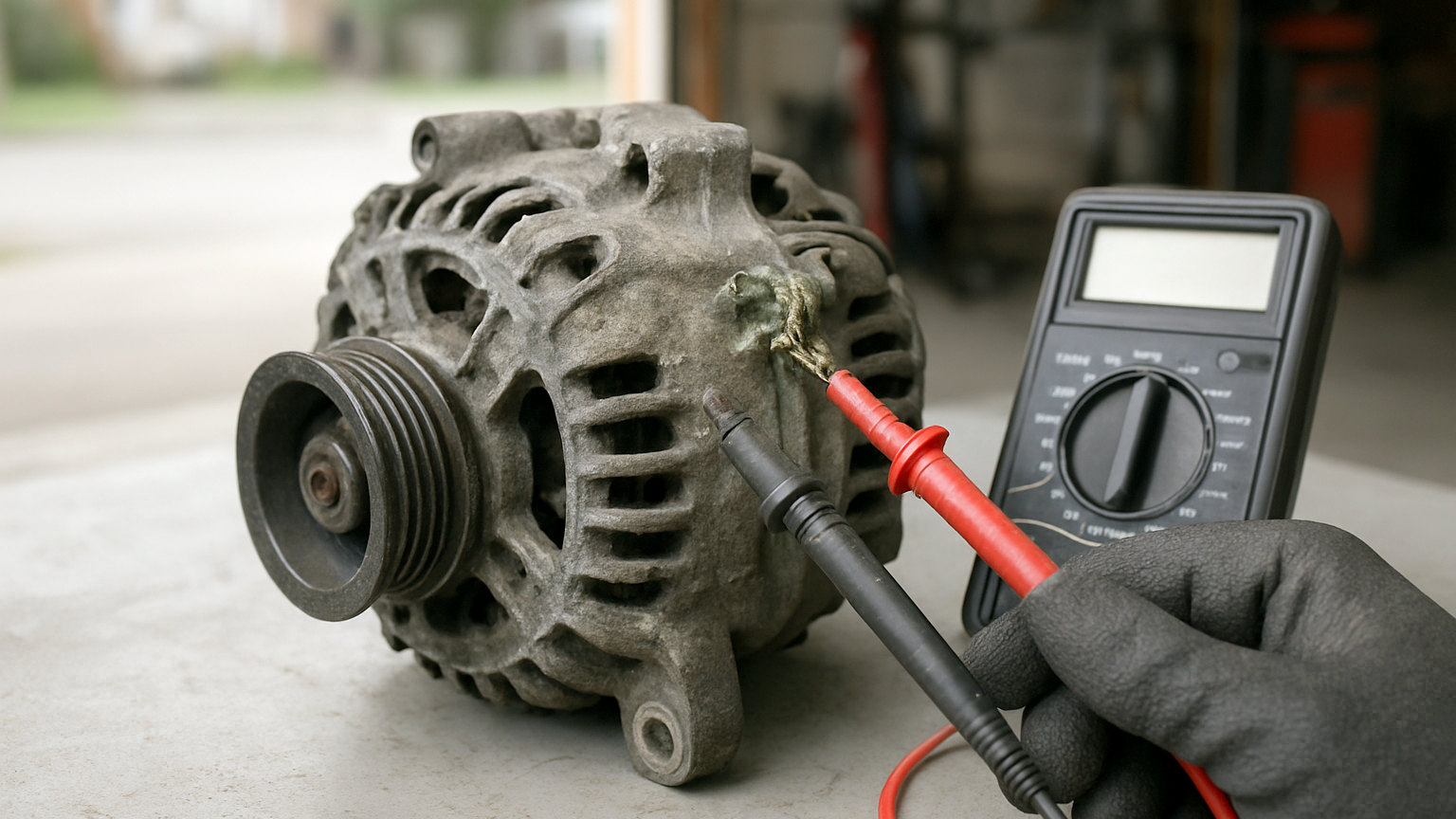
Testing an alternator does not require removing it, and the basic check needs nothing more than a cheap multimeter and two minutes. The principle is straightforward: with the engine running, the alternator should be raising the voltage at the battery well above its resting level, and that rise is what tells you charge is going in. Everything else is refinement on that one measurement.
What is the basic voltage test?
Measure across the battery terminals with the engine off and note the reading, which should be around twelve point six volts on a charged battery. Start the engine and measure again. The reading should rise noticeably, typically to somewhere between thirteen and a half and fourteen and a half volts on most cars. If it does not rise at all, the alternator is not charging. If it rises above roughly fifteen, it is overcharging, which is equally damaging.
Why test under load as well?
Because an alternator can produce adequate voltage with nothing switched on and still be incapable of supplying real demand. Switch on the headlights, heated rear screen, blower on full and wipers, then measure again with the engine at a fast idle. The voltage should stay above resting level, ideally not far below the unloaded figure. A reading that collapses towards twelve volts under load means the alternator cannot keep up, even though it passed the simple test.
What is a voltage drop test?
A check on the wiring rather than the alternator, and it catches faults that are frequently blamed on the unit itself. With the engine running and loads switched on, measure between the alternator output terminal and the battery positive post, then between the alternator body and the battery negative. Each reading should be very small, a few tenths of a volt at most. Anything larger means a corroded cable or a poor earth is losing the charge before it arrives.
Does the belt need checking first?
Always, because a slipping belt produces exactly the symptoms of a failing alternator and costs a fraction to fix. Look for glazing, cracks across the ribs and contamination with oil or coolant. Check the tensioner moves freely and holds tension. A belt that squeals when the electrical load is switched on is slipping under the extra drag of the alternator, and no amount of testing the alternator will address that.
What about diode faults?
An alternator produces alternating current internally and converts it using diodes. When one fails, output drops and alternating current leaks into the system, which is known as ripple. Symptoms include dim or flickering lights, a battery that never quite charges, radio interference, and occasionally a battery that drains overnight through the failed diode. A meter set to measure alternating voltage across the battery with the engine running should read very close to zero; anything meaningful suggests a diode problem.
Do smart charging systems change the readings?
Considerably, and this catches people out. Many modern cars vary charging voltage deliberately to save fuel, reducing output when the battery is full and raising it during braking. A perfectly healthy system can therefore read little above resting voltage at the moment you happen to measure. On those cars a diagnostic tool reading the battery management data is more reliable than a meter, and a single low reading should not be treated as a diagnosis.
What should you do with the results?
No rise at all points at the alternator, its belt, or the main cable. A rise that collapses under load points at a tiring alternator or a poor connection. A high reading points at the voltage regulator. Large voltage drops point at wiring. Take those figures to a garage rather than a verdict, because the numbers narrow the repair far better than a general complaint about charging does.
What safety precautions apply?
Keep hands, sleeves and meter leads clear of the belt, the fan and the pulleys, all of which move without warning. Never disconnect the battery while the engine is running as an improvised test, since that can damage modern electronics severely.


