
Alternators rarely stop dead. They usually decline over weeks or months, producing less current than the car needs, and the symptoms appear first in whichever systems demand the most. Because those symptoms look like a dozen unrelated faults, the alternator is often the last thing suspected, and people frequently replace a battery or two before anyone measures the charging voltage.
What is usually the first sign?
A battery that goes flat and is replaced, then goes flat again. The pattern is so common it is close to diagnostic on its own. If a new battery has failed within weeks and the car is not standing for long periods, the charging system is the first thing to check rather than the second battery. Buying another battery without a charging test is the most expensive mistake available here.
What do the lights tell you?
Headlights that are noticeably dim at idle and brighten as the revs rise indicate output that is only just adequate. The same applies to dashboard illumination that pulses in time with the engine, or interior lights that dim when another load switches on. At night these are much easier to spot than during the day, which is one reason the fault so often announces itself on a dark winter evening.
Why do unrelated electrical faults appear?
Because modern cars behave badly on low voltage. Control modules expect a stable supply, and when it sags they log faults, reset themselves and misbehave in ways that appear entirely unconnected. Warning lights appearing at random, the infotainment restarting, central locking working intermittently, power steering assistance varying, and a scattering of unrelated fault codes are all classic low voltage symptoms. Any workshop faced with that pattern should measure charging voltage before anything else.
What noises does a failing alternator make?
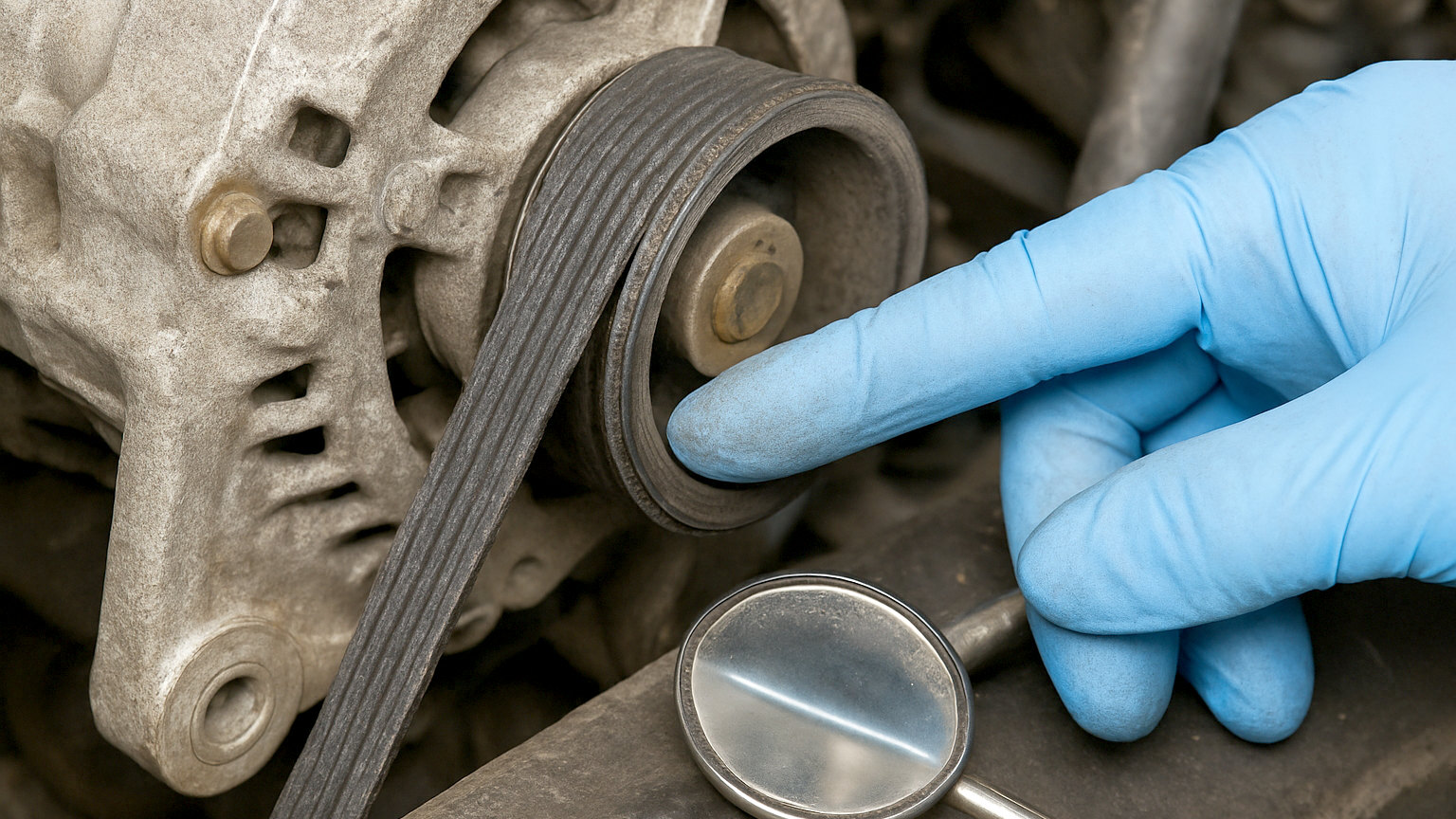
A whine or growl that rises and falls with engine speed rather than road speed, coming from the front of the engine. That is usually the bearings. A grinding or rumbling suggests they are close to seizing, which risks shredding the auxiliary belt and taking the water pump and power steering with it. A squeal when electrical loads are switched on is the belt slipping under the extra drag rather than the alternator itself.
Is a burning smell significant?
Very. A hot electrical smell around the engine bay can mean the alternator windings are overheating, or that a belt is slipping badly enough on a seizing pulley to burn rubber. Either way it should be investigated promptly rather than driven on. Combined with a battery light and dimming headlights, it suggests the unit is failing rapidly rather than gradually.
What about a battery that boils or smells of eggs?
That is the opposite fault and it matters just as much. A voltage regulator that has failed high sends too much charge into the battery, which gasses, gets hot, may swell its case and gives off a rotten egg smell. This destroys a battery within weeks and can damage bulbs and electronics. It produces no warning light on many cars, so a battery that keeps failing without any dimming symptoms is worth checking for overcharging as well as undercharging.
Which symptom means stop?
The battery warning light illuminating while driving, since the car is then running on stored charge with a limited number of minutes available. Also any grinding from the alternator, any burning smell, and any combination of charging warning with a rising temperature gauge, which suggests a snapped belt has taken the water pump with it. Everything else on this list justifies a prompt appointment rather than an immediate stop.
How quickly does it usually deteriorate?
Unpredictably, which is the frustrating part. Worn brushes can produce intermittent symptoms for months before failing completely, while a diode or regulator fault can go from a flicker to a total loss of charge within a single journey. Because the failure mode is not gradual in any reliable way, symptoms that have appeared recently are worth acting on rather than monitoring to see how they develop.


