
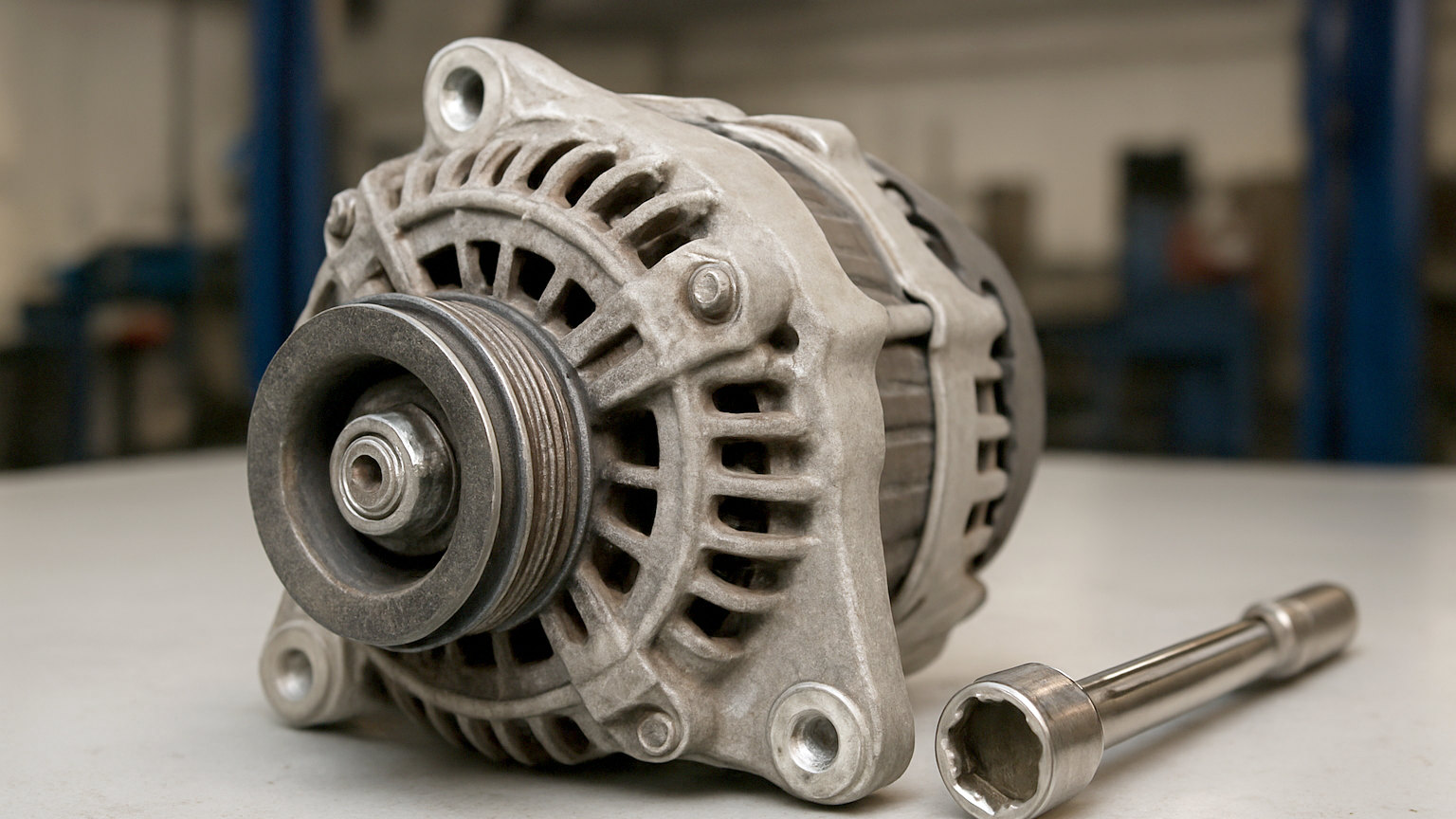
The honest answer is that you can drive exactly as far as the battery will carry you, and no further. With the alternator not charging, everything the car uses is coming out of a store that is not being replenished, and when that store empties the engine management stops and the car cuts out. Estimating how long that takes is guesswork, which is precisely why the advice is to keep the journey short.
What determines how far you get?
The state and health of the battery when the light came on, and what you are running. A good battery on a dry afternoon with nothing switched on might manage half an hour or more. The same battery at night in the rain, with headlights, wipers, blower and heated screen, might last fifteen minutes. A tired battery that was already struggling may give you a couple of miles. There is no reliable figure to plan around.
What should you switch off?
Heated rear screen and heated seats first, since they are among the heaviest loads and the least essential. Then air conditioning, radio, interior lights and phone charging. Keep headlights on if visibility requires them, because being seen is worth more than a few extra minutes. Wipers stay on if it is raining. The aim is to strip the load back to what is genuinely needed to drive safely, nothing more.
Why is switching the engine off the risky part?
Because restarting takes a large burst of current from a battery that is already being drained, and it may well be the thing that finishes it. If you stop for fuel or to check something, there is a real chance the car will not start again. So if you do stop, stop somewhere you would be content to wait for recovery, rather than on a forecourt or a busy roadside.
Does a jump start help?
Only briefly. Jump leads from a running car will start the engine, but as soon as the leads come off you are back on battery power alone with nothing charging. It gets a car off a dangerous spot, which is worth doing, but it does not extend the journey meaningfully. A better use of a donor car is to leave the leads connected for several minutes first, putting some charge into the flat battery before setting off.
When should you not drive at all?
If the temperature gauge is rising along with the battery light, because that combination suggests the auxiliary belt has snapped and it drives the water pump on many engines. Continuing risks a warped cylinder head, which is a far larger bill than a recovery call. Also if there is a burning smell, a grinding noise from the alternator, or if the journey involves a motorway where losing power in a live lane would be dangerous.
What if the car cuts out while moving?
Expect the steering to become very heavy immediately and the brakes to become hard after two or three presses, since both rely on the engine running. Use the momentum you have to coast to the side, brake firmly with more pressure than usual, and put the hazard lights on while there is still enough charge to run them. Knowing this in advance makes it far less alarming if it happens.
Is recovery the better choice?
Usually. A recovery call is inexpensive compared with the consequences of stopping in the wrong place, and it removes the guesswork entirely. If you are close to home or a garage on quiet roads in daylight, driving there is reasonable. If it is dark, wet, motorway or unfamiliar territory, the sensible decision is to stop somewhere safe while you still have the power to choose where that is.
What should you tell the recovery service?
That the battery warning light is on and the car is running on battery power alone, since that tells them the vehicle may not restart and may need transporting rather than jump starting. Mention it if the temperature gauge has risen too, because a snapped belt changes what they bring and how the car should be moved.


