
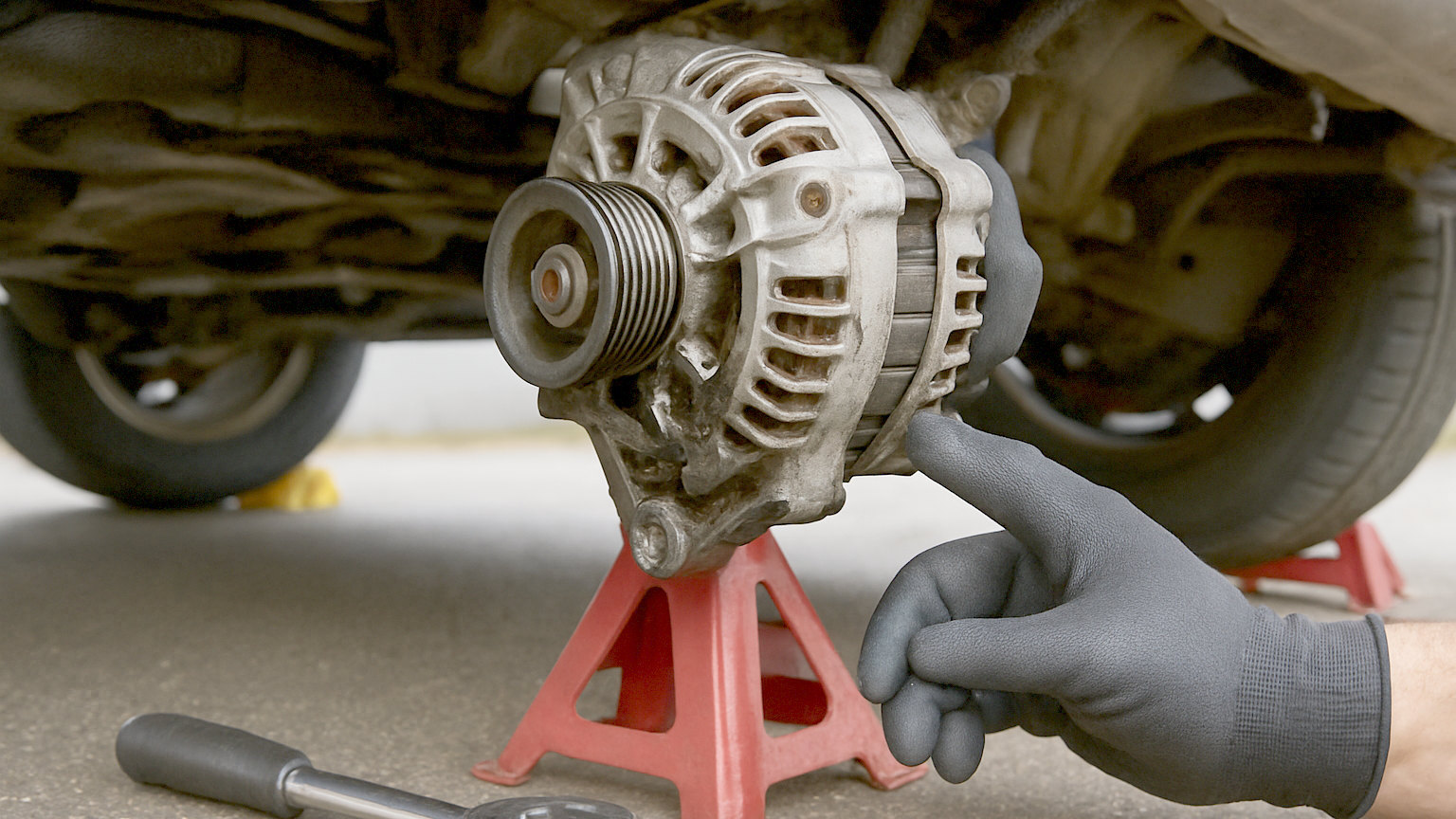
The red light shaped like a battery is one of the most misread symbols on a dashboard. It is not telling you the battery is low; it is telling you the charging system has stopped putting current back in. From that moment the car is running entirely on whatever the battery holds, and when that runs out everything stops, including the engine.
What is the light actually monitoring?
It monitors the difference between battery voltage and alternator output. When the engine is running normally the alternator produces more voltage than the battery, and the light stays out. If output falls to battery level or below, the light illuminates. That is why it comes on with the ignition before starting and goes out once the engine fires, since the alternator has taken over at that point.
How long can you keep driving?
Less than most people hope. A healthy battery might run the essentials for perhaps twenty to forty minutes in daylight with nothing switched on, and considerably less at night in the rain with headlights, wipers, blower and heated screen all drawing power. Modern cars with more electronics fare worse. When the voltage falls far enough the engine management stops working and the car cuts out, usually without warning.
What should you switch off?
Everything that is not needed to keep moving safely. Heated rear screen and heated seats first, since they draw heavily. Air conditioning, radio, phone charging, interior lights. Keep the headlights if it is dark, because being seen matters more than the extra few minutes. Avoid switching the engine off, because with a discharged battery it may not restart, so if you stop, stop somewhere you are happy to be recovered from.
Where should you head?
Home or a garage, whichever is nearer, and not the far side of town on the strength of feeling fine. Route matters too: a motorway with no hard shoulder is a poor place to lose power, so ordinary roads are the better choice if the distance is similar. If the light appears at the start of a long journey, do not begin it. Recovery from a driveway is a great deal simpler than recovery from a live lane.
Is it always the alternator?
Usually, but not always, and one alternative matters urgently. If the auxiliary belt has snapped, the alternator stops turning and the light comes on, but on many engines that same belt drives the water pump, so the engine will overheat within minutes. If the battery light and the temperature gauge both start rising, stop straight away rather than pressing on. Other causes include a failed voltage regulator, a corroded main cable or a blown fusible link.
What does a flickering light mean?
An intermittent fault rather than a total failure. Worn brushes inside the alternator make contact unreliably, a slipping belt lets output fall momentarily, and a loose or corroded connection does the same. A light that flickers at idle and goes out when revved is a classic early warning that the alternator is on its way out, and it is worth acting on while you still have a choice about when and where.
What happens next?
Have the charging system tested, which takes minutes and is free at many garages and parts retailers. Expect the battery to be tested too, since a battery deeply discharged by driving with no charging is often damaged and may need replacing alongside. Do not simply fit a new battery and carry on, because an alternator that is not charging will flatten that one exactly as it flattened the last.
Can you prevent it happening again?
Partly. Most alternators fail through age, but early failures usually have a cause worth eliminating, most often a tired battery working the unit constantly at full output, an oil leak soaking the windings from above, or a belt tensioned incorrectly. Having those checked when the alternator is replaced adds very little to the bill and is the difference between a repair that lasts and one that returns.


