
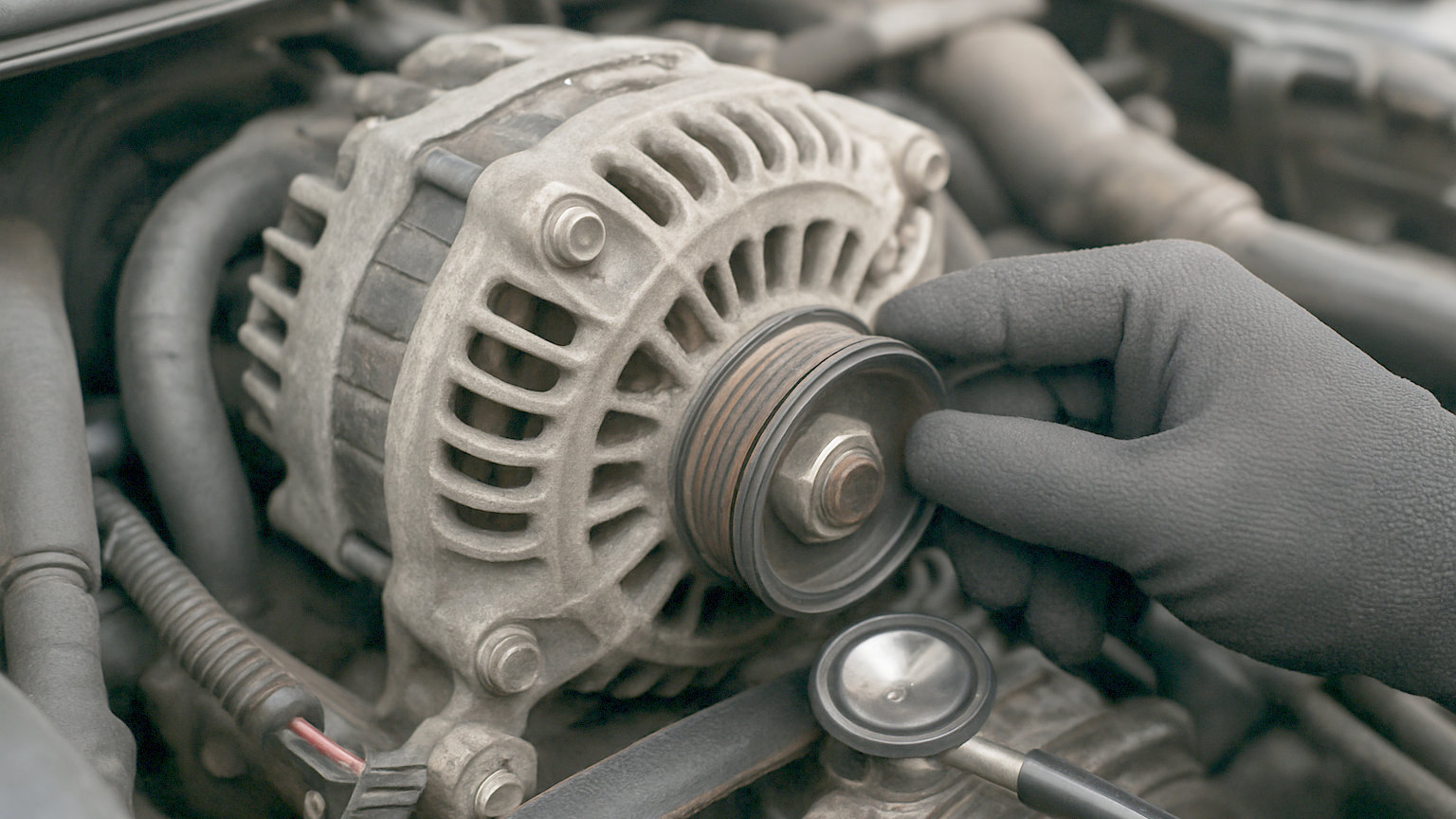
An alternator sits at the front of the engine among several other belt driven components, all of which can make similar noises, so identifying it by ear alone is unreliable. What helps is that alternator noises follow engine speed rather than road speed, and that some of them change when you switch electrical loads on, which no other component does. Those two observations narrow it down considerably.
What does bearing noise sound like?
A whine or growl that rises and falls precisely with engine revs, audible from the front of the engine and often more obvious at idle in a quiet space. It usually starts subtly and becomes more insistent over weeks. As the bearings deteriorate further the noise becomes a rumble or grinding, and at that point the unit is close to seizing. Bearings are the most common mechanical failure in an alternator.
How do you confirm it is the alternator?
Switch on the headlights, heated rear screen and blower while the engine idles and listen for a change. Loading the alternator makes it work harder, so a noise that alters when you do that is coming from the alternator or the belt driving it. A mechanic will confirm with a stethoscope on the casing, or by removing the auxiliary belt and running the engine briefly, which silences everything the belt drives at once.
Is it the belt rather than the alternator?
Frequently. A squeal rather than a whine, particularly on a cold damp morning or when a heavy electrical load switches on, is usually the belt slipping under the extra drag rather than the alternator complaining. Inspect the belt for glazing, cracks and contamination, and check the tensioner still holds tension. A slipping belt also causes undercharging, so it produces electrical symptoms as well as noise.
Why is grinding urgent?
Because a seizing alternator can lock solid, and when it does the auxiliary belt is either shredded or thrown off entirely. On many engines that same belt drives the water pump and the power steering, so a seizure at speed means losing charging, steering assistance and engine cooling in the same moment. That is a genuine safety concern rather than an inconvenience, and grinding should be dealt with promptly rather than monitored.
Can the pulley be the problem?
Many modern alternators use an overrunning pulley containing a one way clutch, which allows the alternator to freewheel as engine speed fluctuates and reduces strain on the belt. When it fails, it either locks solid or slips, producing rattling or grinding from the pulley itself and often belt squeal. It is a separate component from the alternator on many designs and can sometimes be replaced on its own, which is considerably cheaper.
What if the noise appeared after a belt change?
Then the belt, tensioner or routing is the first suspect rather than the alternator. An overtightened belt puts heavy side load on the alternator bearings and will destroy them within months, and an incorrectly routed belt produces noise immediately. A new belt on a worn tensioner will also squeal. If the noise is new and the work is recent, the two are almost certainly related.
What should you do about it?
Have the belt and tensioner inspected and the charging voltage measured at the same time, since noise and charging problems often share a cause. If the alternator bearings are confirmed as worn, replace or recondition the unit rather than waiting, because the failure mode is sudden and takes the belt with it. Ask for the belt to be replaced alongside, since it has to come off anyway and its condition is rarely perfect by that stage.
Is a noisy alternator still charging?
Often yes, at least initially, since worn bearings do not immediately affect the electrical side. That is why a car can whine for weeks with no warning light and no starting trouble. It is not a reason to leave it, because the mechanical failure that follows takes the belt and everything it drives with it, but it does mean there is usually time to book the work rather than abandon the journey.


