
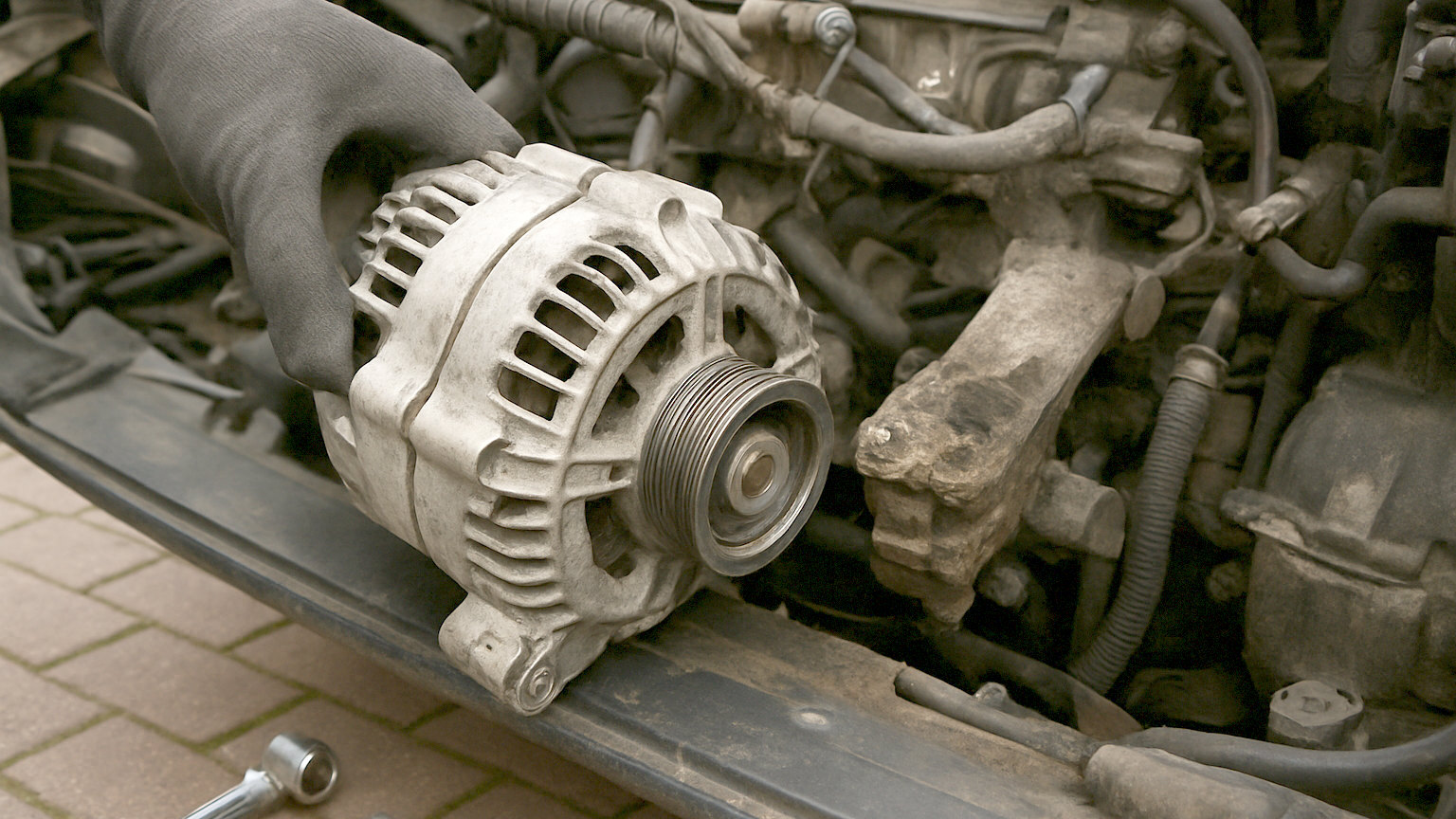
Most drivers know what happens when an alternator stops charging. Far fewer know that an alternator can charge too much, and that this is the more destructive of the two faults. Overcharging produces no dashboard warning on many cars, so it is often discovered only after a battery has been destroyed or a run of bulbs has failed, and the cause is a component that is otherwise working perfectly.
What voltage counts as too high?
Most cars charge somewhere between thirteen and a half and fourteen and a half volts, measured at the battery with the engine running. Brief excursions slightly above that are not unusual, particularly on smart charging systems recovering energy during deceleration. Sustained readings above roughly fifteen volts are a problem, and anything approaching sixteen is actively destroying the battery. The measurement takes a minute with a cheap meter.
What causes it?
Almost always a failed voltage regulator. Its job is to control the current fed to the rotor windings so that output stays constant regardless of engine speed, and when it fails in the high direction the alternator simply produces whatever the revs allow. On most modern units the regulator is built into the alternator, which is why the repair usually involves replacing or reconditioning the whole assembly rather than a single part.
Can the wiring cause it instead?
It can, and it is worth checking before condemning the alternator. Some regulators sense system voltage through a separate wire, and if that connection is corroded or broken the regulator sees a lower voltage than actually exists and raises output to compensate. A poor earth between the alternator body and the engine can produce the same effect. These are cheap faults with expensive symptoms, so voltage drop testing is worth doing first.
What damage does it do to the battery?
Excess current forces the electrolyte to break down and gas off, so the battery loses water it cannot replace on sealed units, the plates buckle and the case can swell or crack. The battery gets hot after driving and gives off a rotten egg smell from the gases produced. A new battery subjected to this can be finished within a few weeks, which is why a second premature failure should trigger a charging voltage check rather than a third battery.
What else gets damaged?
Bulbs are the most visible casualty, since filament bulbs are sensitive to voltage and will fail far more often at sixteen volts than fourteen. Beyond that, control modules, sensors and infotainment equipment are designed around a specific supply range, and sustained overvoltage stresses them. Repairing an overcharging fault promptly is therefore about protecting the whole vehicle rather than just the battery.
Are there warning signs before the damage?
Several, if you know to look. Headlights that appear unusually bright, particularly at higher revs. Bulbs failing more frequently than they used to. Heavy corrosion appearing quickly around the battery terminals. A battery that is warm after a journey. A smell around the engine bay after driving. None of these will illuminate a dashboard warning on most cars, which is why they are so often noticed only in retrospect.
What should you do about it?
Stop driving it any distance and have the charging voltage measured, then the sensing wiring and earths checked before the alternator is replaced. Once repaired, have the battery tested, since it has almost certainly been damaged. Do not simply fit a new battery and continue, because an overcharging system will destroy that one as quickly as it destroyed the last.
Is there any way to check it yourself regularly?
A cheap plug-in voltmeter that sits in the cigarette lighter socket displays system voltage continuously while you drive, which makes both overcharging and undercharging immediately visible. They cost very little and they turn an invisible fault into something you would notice within a day. On any car that has already destroyed one battery for unclear reasons, it is a sensible thing to leave plugged in.


