
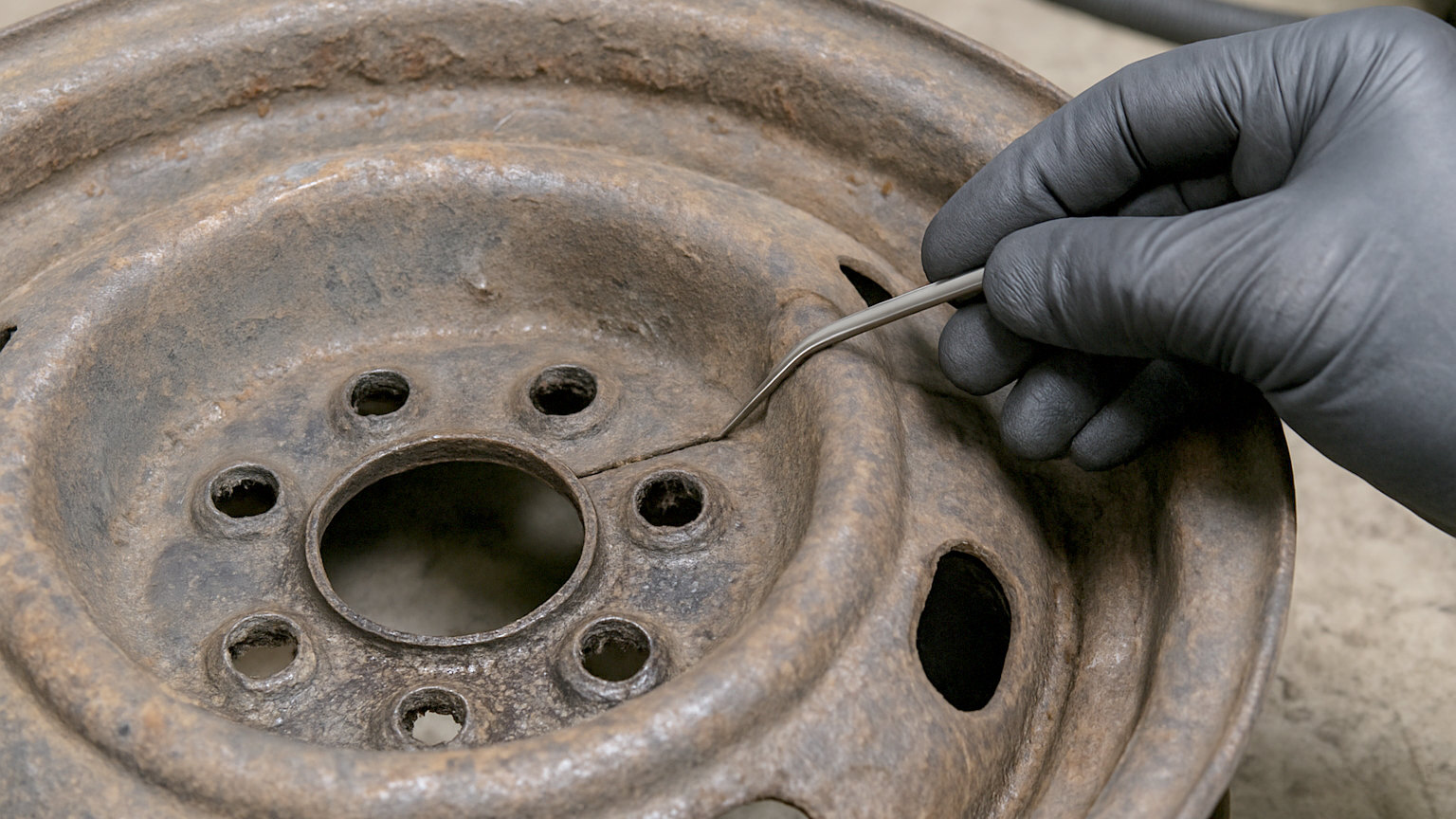
Wheels are assessed at the MOT for security, for damage that affects their strength, and for whether anything fouls as they turn. Several of the failures involve areas an owner never inspects, particularly the inner rim, and a few minutes with the wheels turned to full lock before the test prevents most of the surprises.
What counts as insecure?
A missing wheel bolt or nut, one that is loose, or one that is obviously the wrong type for the wheel. Testers check that the correct number are present and that the seats match. A car running with one fixing missing is a straightforward failure and a genuine safety concern, since the remaining bolts carry loads they were not designed for.
What damage causes a failure?
A cracked wheel, a badly distorted rim, or damage that has weakened the structure. Light kerbing and cosmetic corrosion do not fail, since they do not affect strength. The distinction is structural rather than aesthetic, which is why a scruffy but sound wheel passes while a tidy looking one with a hairline crack in the inner rim does not.
Is corrosion a failure?
Only where it has weakened the wheel. Surface corrosion and lifting lacquer are cosmetic. Corrosion severe enough to have eaten into the rim, particularly around the bolt holes, is a different matter. Steel wheels rusted through at the centre where the bolts locate are the version that most often fails, and it is worth checking on older cars.
What about fouling?
Testers check that the wheels and tyres do not contact anything through the full range of steering and suspension movement. This is where aftermarket wheels, spacers and lowered suspension cause problems, since a combination that clears when parked may foul the arch liner or a suspension component at full lock with the car loaded.
Do wheel trims matter?
An insecure trim that could detach is assessed, and one that obscures the valve or has sharp edges can be recorded. It is a minor point compared with the rest, and worth checking simply because a loose trim is easy to fix and irritating to fail on. Trims are usually removed anyway so the tester can see the wheel properly.
Are locking nuts a problem?
They can be, indirectly. A tester may need to remove a wheel, and without the key that is impossible, which can prevent parts of the inspection being completed. Leaving the locking wheel nut key in the car when it goes for its test is a small courtesy that avoids the car coming back with work not done.
Is the spare tested?
Not in the boot. If a space saver or temporary spare is fitted to the car at the time of the test it must comply with the requirements for that position, and one fitted to the front is likely to cause problems. Fitting the proper wheel before the test, if the car is running on a spare, is the simplest way to avoid the issue.
How should you check beforehand?
Turn the steering to full lock and inspect the inner rim of each front wheel for cracks and heavy corrosion, and look behind the rears with a torch. Check every bolt is present and tight. Look for anything rubbing on the arch liner. And confirm the locking key is in the car. That covers essentially everything the tester will assess.
What about aftermarket wheels?
They are not a failure in themselves, provided they are secure, undamaged, correctly fixed and nothing fouls. What causes problems is the combination of non standard wheels, spacers and lowered suspension, where the tyre can contact an arch liner at full lock. Checking that at full steering lock with the car loaded is worth doing before the test rather than discovering it on the certificate. A tester will also want the locking wheel nut key available in case a wheel needs to come off.


