A vague sense that a car has changed is worth taking seriously, because drivers are remarkably good at detecting difference and remarkably poor at describing it. The useful approach is a short ordered list of checks running from free to expensive, since the cheap causes account for a surprising share of complaints and eliminating them first saves diagnostic time.
What comes first?
Tyre pressures on all four wheels with a gauge, checked cold and against the placard figures rather than the sidewall marking. Unequal or low pressures change handling more than almost anything else and cost nothing to correct. This single check resolves a meaningful proportion of complaints, and skipping it is how people end up paying for alignment they did not need.
What comes next?
A proper look at all four tyres. Tread depth measured across the full width rather than at the deepest point. Both sidewalls including the inner face, checked for bulges and cuts. Whether the tyres match across each axle. And the wear pattern, since a feathered or one sided pattern points at alignment or a worn component before anything else is measured.
Has anything changed recently?
The most valuable question and the one people forget to ask themselves. A pothole, a kerb strike, new tyres, a wheel change, brake work or suspension repair immediately before the change is almost certainly connected. Sequence narrows the field enormously, and mentioning it when booking the car in saves an hour of investigation.
Is anything running hot?
After a drive, carefully compare the temperature of each wheel, taking real care since they can be extremely hot. One noticeably hotter than the others indicates a dragging brake or a failing bearing, both of which change how the car behaves and neither of which requires equipment to detect. It is a thirty second check that identifies a specific corner.
Is there play anywhere?
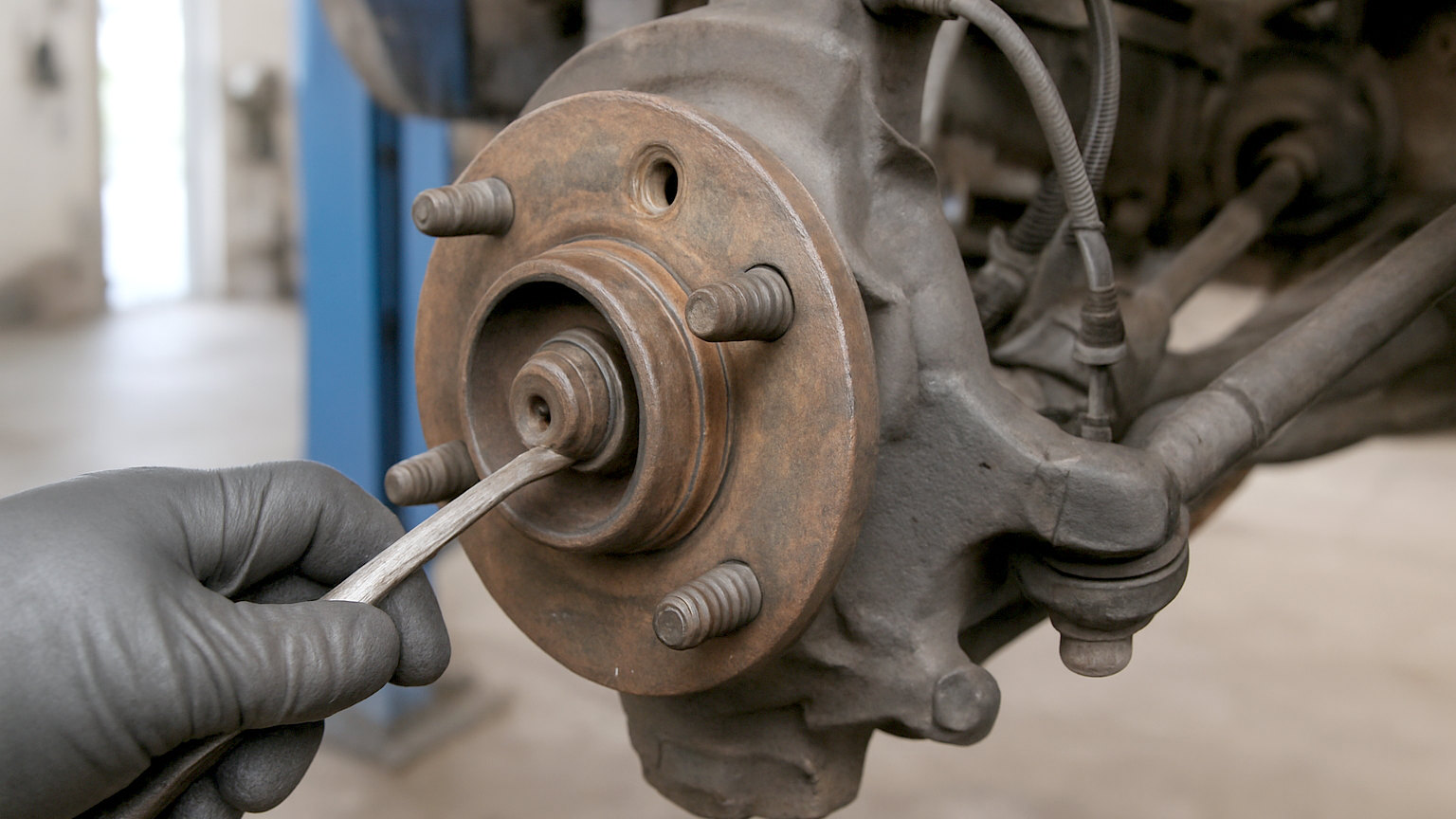
With the car safely on axle stands, rock each wheel at twelve and six o clock for bearings and ball joints, and at three and nine for steering joints. Repeat the first with someone pressing the brake pedal to separate a bearing from a suspension joint. Inspect every rubber boot for splits. That covers the components most likely to have changed.
When should the dampers be tested?
Once the free checks are clear, and particularly on a car past about sixty thousand miles. A damper efficiency test gives a percentage per corner and it is the only practical way to assess something that degrades invisibly. It is also the most commonly overlooked cause of a car that feels vague, floaty or unsettled.
When does alignment come in?
After the tyres, the play and the dampers have been dealt with, since alignment set on a car with worn components has to be paid for twice. A four wheel measurement with a printout is what identifies whether the geometry is genuinely wrong, and it also reveals a bent component through an out of specification caster or camber reading.
What means stop rather than investigate?
A bulge in a sidewall. A sudden change accompanied by a noise. Any vibration that is worsening quickly. A soft or sinking brake pedal. A burning smell with a hot wheel. And anything that appeared within days of wheels being removed, since loose fixings are both possible and serious. Those justify stopping and looking rather than continuing.
What should you tell a garage?
What changed, when it changed, and what happened immediately beforehand, rather than a diagnosis. Describing the conditions in which it feels wrong, whether that is braking, cornering, motorway speed or over bumps, points a workshop at the right system straight away and saves diagnostic time you would otherwise pay for.
A short phone video taken on the road, with the speed and conditions described aloud, is worth more than any adjective when the fault refuses to appear on the day of the appointment.
Going out in the car with the technician is better still, since ten minutes pointing at the symptom saves an hour of looking for it.